
How Can MES Collect Production Data from Legacy Machines without Data Interfaces?
Legacy equipment does not necessarily preclude data collection. The key is to first identify the required data and then evaluate feasible pathways such as discrete signals, pulses, current, or manual production reporting.
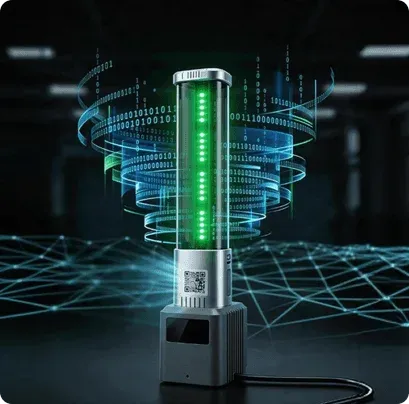
The absence of a standard data interface does not necessitate replacing equipment. MES data collection can begin with a small number of verifiable signals and shop-floor operational records.
Define the management questions you want to answer first
Equipment data collection is not about connecting all signals to the system. For many factories, the first step is simply to determine if the equipment is running, how long it has been stopped, how much output it has produced, and when an anomaly occurred.
The clearer the data objectives, the fewer data points are required, making the retrofit risk and validation cost easier to control.
Common non-intrusive collection paths
If the equipment has available discrete signals, relays, or pulse signals, it is possible to read the status without altering the original control program. For equipment lacking standard interfaces, current sensing, external counting, or smart stack lights can also be evaluated as alternatives.
Manual data such as work orders, conforming products, and reasons for downtime can be supplemented by simple and user-friendly shop-floor terminals. Combining automatic signals with manual operational information is often more practical than striving for full data collection at once.
From single-machine validation to expansion
Start by selecting one piece of equipment with relatively stable operation and clear improvement potential. Validate signal meaning, offline store-and-forward, metric definitions, and shop-floor workflows. Once validated, develop a standard integration approach for similar equipment.
The specific data collection methods, implementation scope, and metric definitions must be confirmed on the shop floor based on the equipment, electrical conditions, and management objectives.