
How to Reduce Changeover Time: Separate Actions before and after Stoppage
After completing an order, the team only starts looking for the next set of tooling once the equipment has stopped. Tooling is returned, but the program version hasn't been confirmed. After the first-off inspection, operators, maintenance staff, and quality control are all waiting. The production manager notes that the changeover took ninety minutes, demanding the team to work faster. However, the real time loss isn't from the disassembly actions, but from extensive preparatory work that could have been completed in advance, left until after the machine stopped.
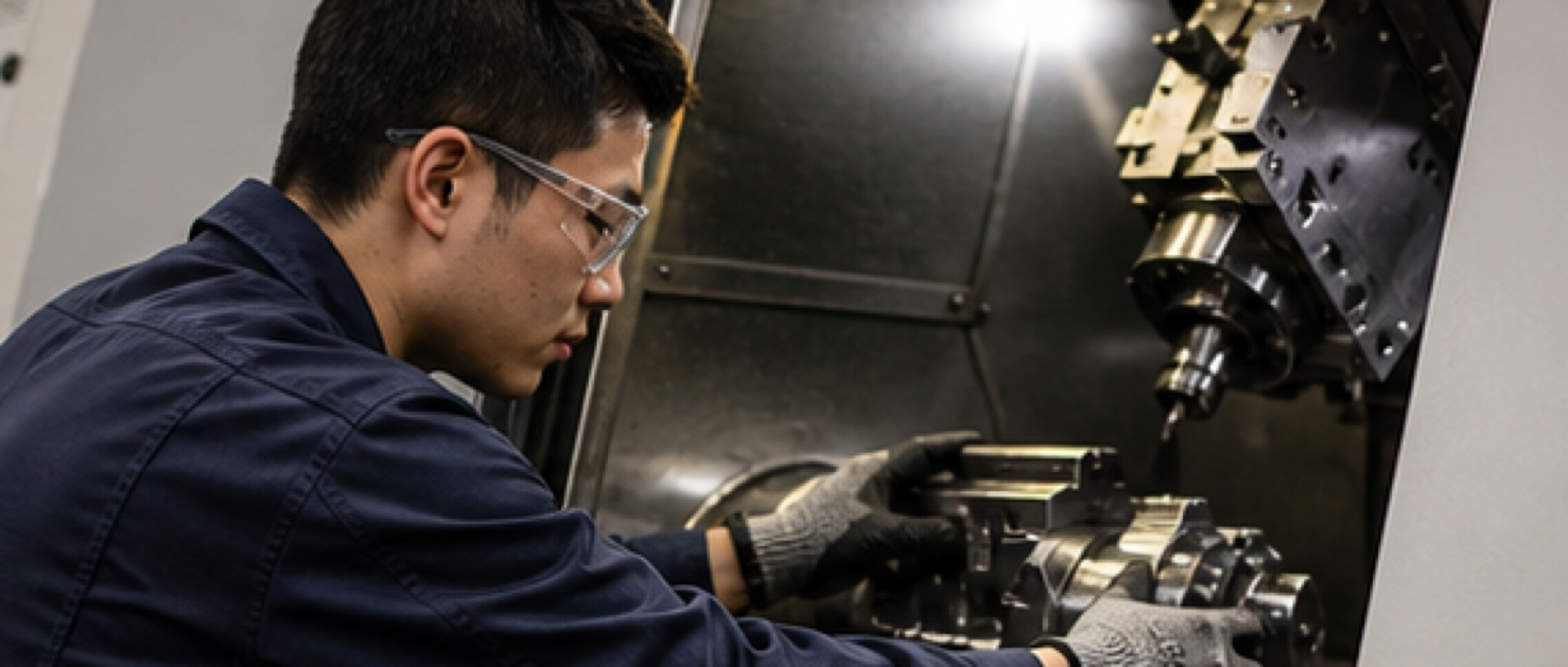
Once an order is completed, the equipment has already stopped, and the team only starts looking for the next set of tooling; the tools have been returned, but the program version hasn't been confirmed; after the first-off inspection, the operator, maintenance technician, and quality inspector are all waiting. The production manager watches the 'changeover took ninety minutes' and asks the team to work faster. However, the real time-consuming tasks are not the disassembly and assembly actions, but a large amount of preparation that could have been completed in advance, which is left until the machine stops.
The first step in changeover improvement is not to time each action with a stopwatch, but to divide the actions into two categories: internal tasks that must be done while the machine is stopped, and external tasks that can be completed while the equipment is still running. For factory owners, this is a chain of shop-floor facts from preconditions, order acceptance, processing to closure. As long as the boundaries are not clearly defined, the shop floor will become more chaotic with more pressure, and the team leader is more likely to blame the waiting time as their own efficiency issue.
Step 1: Capture the entire transformation in the correct sequence
First, select a high-frequency product switch and record the entire process from the completion of the previous conforming product to the confirmation of the first-off inspection for the next product. Do not only focus on the operator; also record finding the tooling, receiving materials, adjusting the program, calling for inspection, cleaning the shop floor, and waiting for a decision.
Each action should be recorded with four fields: start time, end time, executing position, and what was being waited for at that time. In the first round, do not rush to discuss right or wrong, nor should you set a standard time first. Many factories have very complete paper processes, but in reality, the shop floor may take a different path due to tooling occupation, materials not arriving, or unclear permissions; first, clearly understand the real path, so that improvement will not become a demand for frontline workers to 'do faster'.
Step 2: Categorize actions into before, during, and after shutdown
Actions that can be completed before the machine stops typically include confirming the next order, checking materials, preheating or cleaning tooling, preparing tools and measuring instruments, downloading and verifying the program, and scheduling the first-off inspection. During the stoppage, only keep actions that must involve the equipment, such as safety shutdown, disassembling old and installing new tooling, connecting and positioning, necessary adjustments, and trial operation. After the stoppage, the first-off inspection, site restoration, and returning remaining materials are handled.
The focus of this table is not to make categories look good, but to identify 'why it wasn't done in advance.' If tools cannot be issued in advance, it is a warehouse rule issue; if programs cannot be confirmed in advance, it is a version permission issue; if quality cannot be scheduled, it is a scheduling and order acceptance mechanism issue. Do not attribute cross-departmental conditions to the preparation inadequacy of team leaders. Otherwise, those who actively accept orders may do more and make more mistakes, taking responsibility beyond their authority, while those who do less and make fewer mistakes may pass the waiting time to the next shift.
Step 3: Prioritize removing waiting tasks from the shutdown window
First handle actions that do not require spending money and can be externalized. Place the next set of tooling in the designated area in advance, ensure materials are complete according to orders and batches, complete version verification of programs during equipment operation, and inform quality of the expected inspection time. Each external preparation should have a completion marker, not just a message in the group saying 'already notified.'
Create a six-item checklist for pre-machine startup: order lock, material completeness, tooling availability, complete tools and measuring instruments, correct program version, and first-off inspection resources already responded. If any of the six items are incomplete, the team leader will know where the risk lies and can escalate, transfer, and assign responsibility according to rules. It is not acceptable to require the team leader to gather all departments through personal relationships when they do not have scheduling authority.
Step 4: Optimize the actual internal actions
After external preparations are stable, focus on the actions during machine stoppage, such as disassembly, positioning, connection, and adjustment. Whether to use standardized fasteners, whether to place tools in fixed positions, whether to perform actions simultaneously by two people, and whether to reduce repeated measurements and back-and-forth movements should all be based on safety and quality considerations.
The standard for internal actions is not 'how long the experienced technician took,' but how long a regular qualified person can consistently complete the task when all conditions are ready. Only recording the fastest time will force the shop floor to hide waiting and risks; only by including all prerequisite conditions in the standard can changeover time be repeatable.
Step 5: Manage the first piece separately
Many factories include the waiting time after first-off inspection in changeover time without providing quality with a clear order acceptance time. As a result, production says changeover is slow, while quality claims they do not know when to send samples for inspection. It is necessary to record the expected inspection, actual inspection, order acceptance, and feedback times, and clearly define the escalation position for any delays.
If the first-off inspection is nonconforming, it is necessary to distinguish whether the issue stems from changeover actions, program parameters, material problems, or measurement issues. The root cause determines the responsibility and corrective actions, and cannot be uniformly attributed to 'long machine setup time.'
Focus on three changes per week
First, check how much waiting time remains within the downtime window; second, assess the completeness rate of the six prerequisite conditions; third, review the first-off confirmation and re-adjustment reasons. Do not focus solely on the total minutes, as a reduction in total time may result from under-recording actions, delayed cleaning, or starting the machine with risks.
Small, loosely managed factories can start with whiteboards and designated zones to make the preparation for the next order visible; mid-sized growing factories should focus on establishing cross-departmental order acceptance and version confirmation; large, mature factories should reduce hierarchical approvals to enable standard components, programs, and first-off inspection resources to enter the preparation window earlier.
Changeover time is not solely determined by the speed of the operator, but by the combined readiness of the order, materials, tooling, program, quality, and permissions. By separating actions before and after the machine stoppage, it becomes clear which minutes should be genuinely removed from the machine downtime window.
I am Huang Chaoxing, inventor of the TreeMES stack-light MES system. Follow me for more practical factory-management methods.
