
ERP, MES and PLM: How the Three Systems Fit in Manufacturing Digitalization
The same order is viewed as customer, quantity, and delivery date in sales; as drawings, bill of materials, and process in engineering; and as equipment, batches, production reporting, and quality records on the shop floor. Despite implementing several systems, managers still spend time manually reconciling data and tracking versions, often due to unclear responsibilities of ERP, MES, and PLM and who should report to whom.
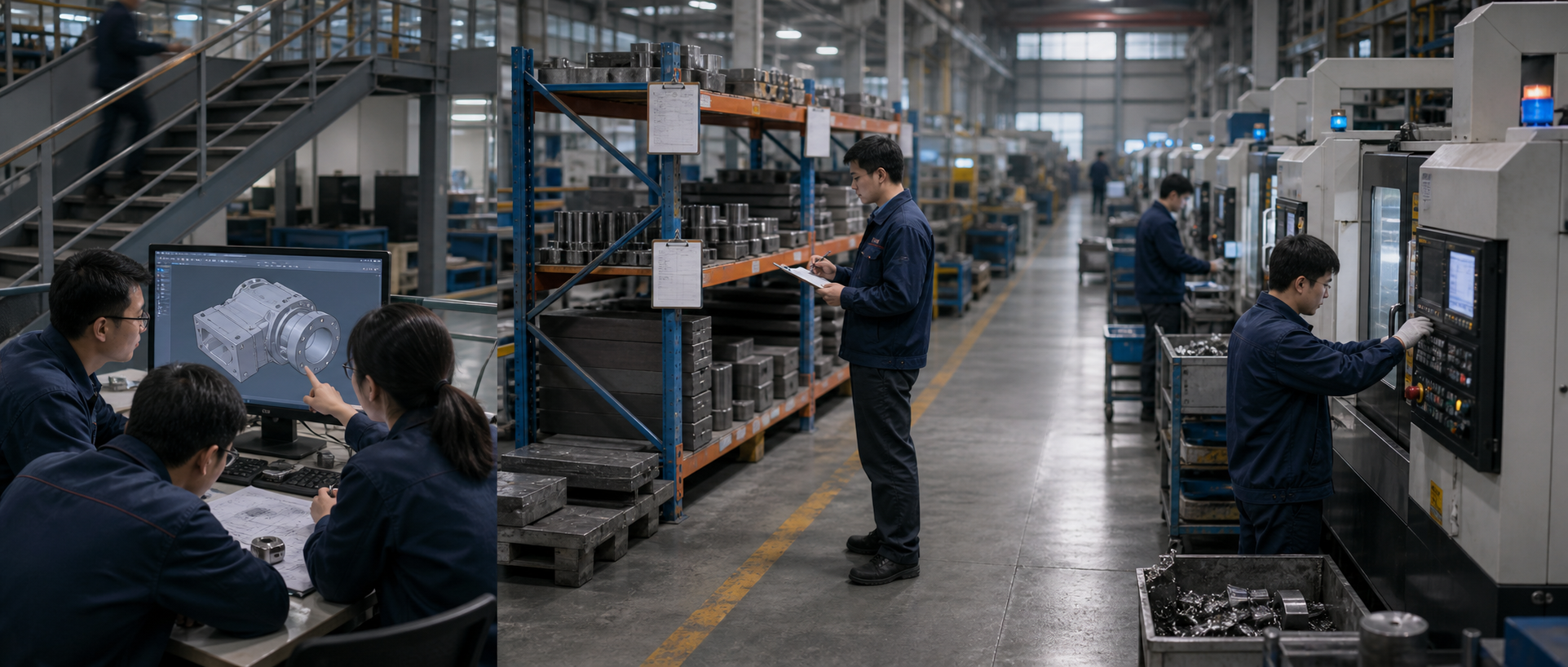
The same order is viewed differently across departments: sales sees it as a customer, quantity, and delivery date; engineering sees it as drawings, bill of materials, and process routes; and on the shop floor, it becomes equipment, batches, production reporting, and quality records. Even after implementing several systems, factory owners still spend time manually reconciling data, often because it's unclear what each system—ERP, MES, and PLM—is responsible for and what information should be shared.
Understanding these three systems can be done by following a single order: PLM answers 'which product version is to be produced'; ERP answers 'what resources are needed, when will it be completed, and how to account for costs'; and MES answers 'how will the shop floor execute this today and what records will be kept'. These systems do not replace each other but manage different levels of facts around the same order.
PLM: Manages product definition and the entire version life cycle
The core of PLM is managing product data and its changes. Drawings, engineering and manufacturing bills of materials, process routes, versions, and engineering changes must maintain relationships throughout the product lifecycle. NIST summarizes PLM as managing data flows related to products and processes, ensuring the right information reaches the right system at the right time.
PLM addresses three key issues: which product definition is currently allowed for production; whether drawings, bills of materials, and process routes are consistent; and from which order or serial number a change takes effect, along with how to handle the old version. PLM is not a drawing repository and does not track how many pieces a machine has produced today.
What PLM provides to ERP and MES should be a set of controlled master data: product codes, versions, bills of materials, process routes, quality requirements, and change scope.
ERP: Manages business plans, resources, and operating results
ERP's core focus is on business transactions and resources. Sales orders, procurement, inventory, material requirements, production planning, subcontracting, cost, and financial accounting typically form the enterprise-level backbone within ERP. NIST notes that ERP supports information integration for daily operations and tactical planning.
ERP addresses questions such as what the customer wants, how much, when it should be delivered, what needs to be purchased, whether inventory is sufficient, when production orders should be issued, and how actual consumption, completion, and costs are reflected in accounting. It can plan how much to complete this week but may not know if equipment has just stopped or if first-off inspection is pending.
ERP is not suitable for minute-level shop floor scheduling. ERP maintains the business ledger and resource ledger, while MES maintains the execution ledger. The two ledgers align through clearly defined interfaces.
MES: Manages shop floor execution, in-process status, and production traceability
MES sits between business planning and equipment control, managing dispatch, production reporting, WIP, quality, personnel, equipment status, material consumption, and traceability. ISA-95 typically places the business planning and logistics functions associated with ERP at Level 4 and manufacturing operations management associated with MES at Level 3.
MES answers questions such as which process the job order is in, who is using which equipment according to which version, how much was actually produced, how much is conforming, why the anomaly occurred, and whether material batches and product destinations can be traced. MES is not simply moving ERP pages to the shop floor, nor does it replace PLC.
After equipment downtime, material shortages, or quality pending decisions, MES must allow the status to enter dispatching and anomaly closure; completed work, consumption, labor time, and quality results are then fed back to ERP.
How the Three Systems Integrate: First, Define Four Data Lines
The first is from PLM to ERP: product coding, controlled BOM, version, and change scope, supporting procurement, planning, and inventory. The second is from PLM to MES: manufacturing BOM, routing, work instructions, program version, and quality requirements, supporting correct version execution on the shop floor.
The third is from ERP to MES: production orders, quantity, planned time, materials, and business priority. The fourth is from MES back to ERP: actual completion, consumption, labor time, quality results, and warehouse basis. Each line must clearly define master data ownership, trigger points, order acceptance, failure handling, and reconciliation responsibility.
The most dangerous situation is when all three systems can modify the same field. If product version is maintained separately in PLM, ERP, and MES, eventually three 'latest versions' will appear. The first principle of system integration is that each fact has only one authoritative source, clearly defining modification permissions, handover, and closure boundaries.
When boundaries are unclear, positions may overdo or underdo tasks: taking initiative may lead to overstepping and taking responsibility, while not taking action may leave no one to escalate. System construction must simultaneously clarify responsibilities, authorization, and risk handling rules.
Which System to Implement First: Determined by the Order of Questions
If drawings, BOM, and change control are lost, first address PLM; if orders, procurement, inventory, cost, and finance are disconnected, first stabilize ERP; if ERP has orders but the shop floor still relies on paper orders and monthly production reporting, lead time, WIP, quality, and traceability are invisible, then implement MES.
Not all factories need all three systems simultaneously. Small, loosely managed factories can start by controlling coding, versions, and processes; medium-sized growing factories should integrate PLM, ERP, and MES for one product family; large, mature factories should prioritize eliminating duplicate master data and historical interfaces.
A 90-day implementation plan can be structured as follows. The first 30 days involve identifying the target objects, authoritative fields, and responsible positions. The next 30 days focus on selecting a real order to run through the definition, planning, execution, and reporting processes. The final 30 days expand the scope to validate changes, exceptions, order cancellations, and rework. It is not sufficient to only test normal orders; the system must remain aligned even after changes occur.
Digitalization of the manufacturing industry is not about purchasing ERP, MES, and PLM systems together, but ensuring that product definitions, business planning, and shop-floor execution flow continuously around the same order. PLM focuses on what to do, ERP calculates how much to do and the business outcomes, and MES focuses on how to do it on the shop floor. With clear boundaries, unique master data, and verifiable handover, the three major systems can be connected into a usable digital main line.
I am Huang Chaoxing, inventor of the TreeMES stack-light MES system. Follow me for more practical factory-management methods.
