
Why Quality Rework Problems Surface at Handoffs
Why Quality Rework Problems Surface at Handoffs
Why quality rework problems surface at handoffs
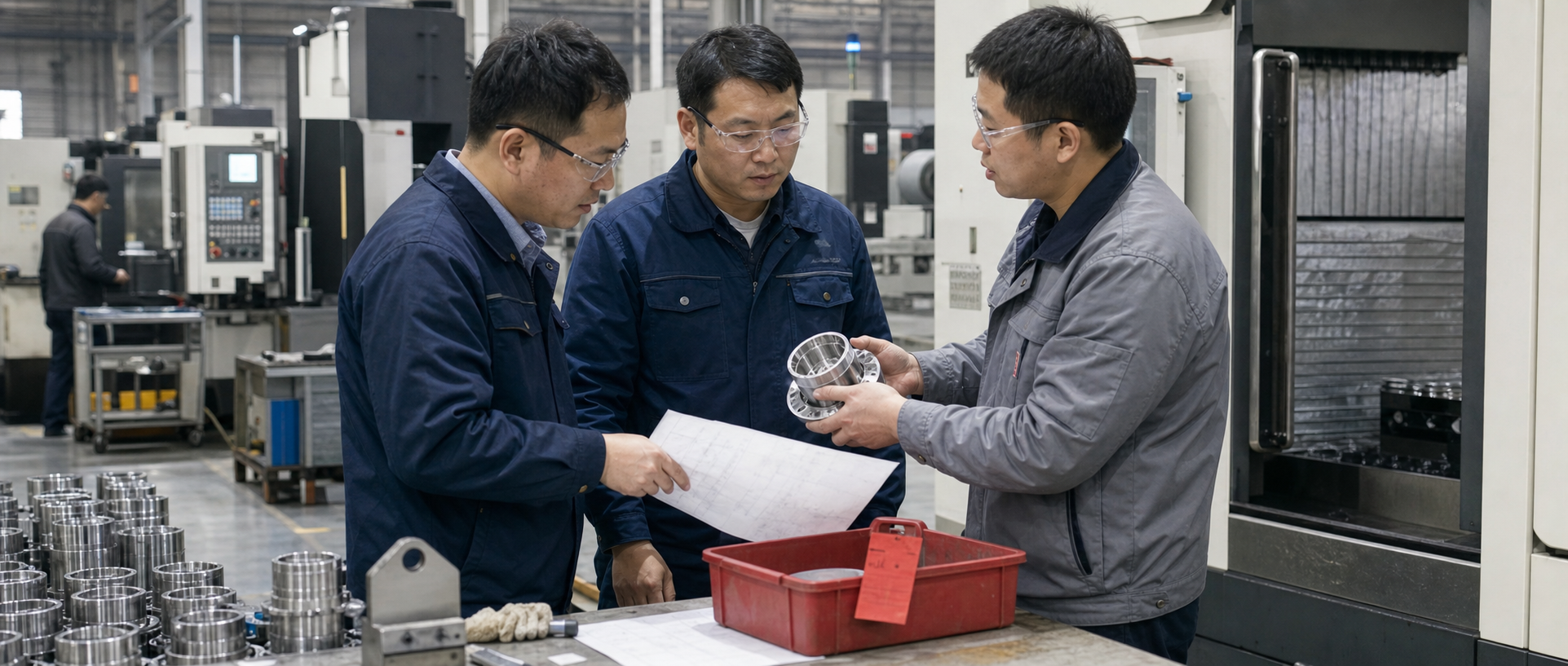
The first-off inspection was signed off in the early shift, but the batch produced in the afternoon had continuous issues with hole position deviations. Production claims they followed the drawings, quality states the first-off inspection only checked dimensions, and engineering says the change notice was sent yesterday. Individually, the three records appear correct, but together they fail to answer three key questions: which version did production receive, what items were covered by the first-off inspection approval, and who is responsible for the in-process materials once the anomaly occurred.
Many quality rework issues are not due to a single person's sudden carelessness, but rather the thinning of information and responsibility during handoffs. The previous position may have 'passed on' documents or products, but the next position did not 'receive' them according to the same standard; the status changed, but the receiver was unaware; the risk had already occurred, yet the escalation boundary still relied on personal judgment. In the end, the factory owner sees only the number of reworks, while frontline workers experience three unverified handoffs.
The first handover: What does engineering and technology hand over to production?
A design change is not just about replacing a drawing. The drawing version, bill of materials, process route, machining program, tooling status, and inspection requirements must be consistent from the same effective batch. If engineering only sends a new file in a group chat, but production still holds an old work order, machine program, or paper process card, the shop floor will face a situation where everyone follows the official documents, yet the results are still wrong.
This handoff should at least clarify six things: the recipient, the current version, the effective order or serial number, how to handle the old version, the receiving position, and the evidence of completion. Production receiving an order is not just replying 'received,' but being able to prove that the work order, program, tooling, and shop-floor documents are aligned. Decisions involving rework, scrap, concession acceptance, or order resequencing should be reverted by engineering, quality, and planning according to their authority, and not let team leaders exceed their authority and take responsibility.
NIST's research on digital threads in manufacturing emphasizes that product definitions must reliably flow between design, manufacturing, and quality; digitizing documents does not mean that downstream processes have received the same version that can be executed. Therefore, the focus of handoffs is not just signing another name, but whether the next position can use evidence to determine 'I have received a consistent set of information.'
Second handover: What exactly is released in the first-off inspection release?
Passing the first-off inspection as qualified is often misunderstood on the shop floor as 'it's okay to proceed,' but the approval of the first-off inspection must have clear boundaries: based on which drawing and process version, which characteristics were checked, what measuring tools were used, and which equipment, program, shift, and batch were covered by the approval. Conditions that trigger re-inspection after tool changes, parameter adjustments, equipment switching, program modifications, or cross-shift production should also be specified in advance.
Quality personnel are responsible for judgment but may not be aware of recent machine parameter changes. Production teams are accountable for output but may not see the inspection scope behind first-off records. If the system only saves the word 'qualified,' the handoff is just a result, not a traceable basis for judgment. Proactive line stops for verification may impact output, while continuing production risks expanding rework. This is the real conflict of 'more done, more errors; less done, less errors.'
A first-off handover card can retain eight fields: product and order, drawing version, program or process version, equipment and tooling, inspection items, measured results, release scope, approver and time. Before batch production starts, production accepts the order based on these eight items. Any critical condition change automatically changes the original release status to pending review, rather than continuing to use it.
Third handover: Processes and shifts cannot just hand over quantity
The most common handover is just 'how much has been done and how much remains.' The actual causes of rework are often omitted: which products are pending judgment, which parameters were temporarily adjusted, which defects have been identified, which reworks are still open, and which batches should not continue to flow.
This handover requires a minimal fact chain: object and quantity, version and batch, quality status, completed actions, unresolved risks, next responsible person, and latest confirmation time. Unresolved states must have clear isolation markings. Products cannot automatically flow backward until the next process receives and confirms them. When the issue is outside the supervisor's authority, there must be clear escalation and transfer channels, not requiring them to 'flexibly coordinate' all departments.
Small, loosely managed factories can start with controlled paper handovers for high rework lines. Medium-sized growing factories should link engineering changes, first-offs, and process statuses. Large mature factories should prevent having many systems with full approvals but still inconsistent product statuses across different systems.
Reviewing a real rework chain in 72 hours
Owners don't need to build a complex system first. Select the most recent rework incident and trace back within 72 hours: at which handover point did the information gap first appear, who was the first to know, what did the receiver rely on to continue production, which position had the authority to stop, and which evidence could have exposed the risk earlier. The review should focus on a single product batch, not start by blaming attitudes. First, reconnect the broken handover into fields, trigger conditions, and take-on responsibilities.
Quality rework issues often surface at the final inspection, but their root causes are typically embedded in handoffs between engineering and production, between first-off inspection and mass production, and between preceding and succeeding processes. Changing 'sent out' to 'the other party accepts according to the same standard' and replacing 'notified' with 'status with evidence closed' will transform rework from recurring firefighting into a manageable issue.
I am Huang Chaoxing, inventor of the TreeMES stack-light MES system. Follow me for in-depth insights into the management logic behind frontline stories in manufacturing.
