
Production Schedules Keep Changing? Put These Five Constraints on One Sheet
Production schedules keep changing? Put these five constraints on one sheet
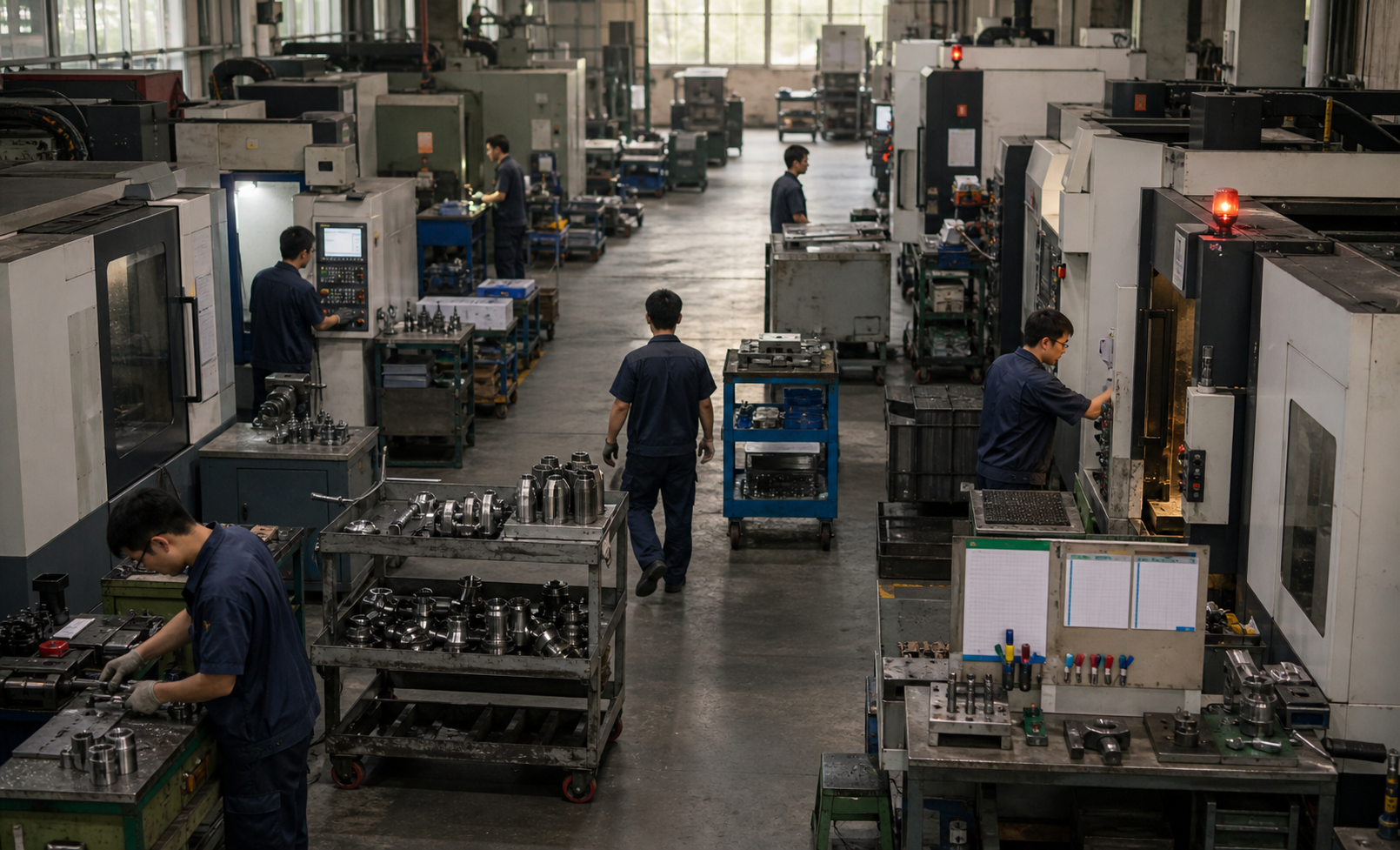
The order just confirmed at the morning meeting was disrupted when the warehouse reported key materials were not ready by 9 a.m., equipment stopped unexpectedly at 10 a.m., and sales requested an urgent order to be inserted at 11 a.m. The planner revised the schedule three times. The shop floor supervisor said, 'It will change again in the afternoon,' and the team started working on the easiest orders first. By evening, machines were all busy, but the actual orders committed for delivery that day were still stuck at the first process step.
Frequent changes in production schedules do not necessarily indicate the planner's incompetence. The shop floor faces multiple conflicting objectives, including process sequence, equipment capacity, personnel, tooling, materials, quality status, and delivery dates. The issue is often not whether the planner can calculate, but that constraints are scattered across different positions: the system shows equipment is available, but the shop floor knows the tooling is not yet arrived; the plan shows materials are complete, but quality has locked a batch of them. Factory owners should protect the executable priority on the shop floor, not a schedule that looks fully booked.
Don't rush to implement more complex algorithms. Place the following five types of constraints on one sheet first, so that scheduling is based on visible, updatable, and traceable information.
Step 1: Check the order and process sequence
Record order details, delivery date, quantity, priority, process route, and the relationship between preceding and succeeding processes. For products that require heat treatment before precision machining, the process sequence cannot be skipped just because a machine is idle; if the customer allows partial delivery, the minimum delivery quantity must be clearly defined.
This section addresses the questions of 'who to do first' and 'whether it can be split.' Priority levels should not only be marked as urgent, very urgent, or extremely urgent; they should also record who requested it, when, and based on what customer commitment it was adjusted. Sales can propose business needs, but when it involves displacing other orders, it must be confirmed by someone who is responsible for making delivery decisions.
Step 2: Check equipment and tooling capabilities
Record available equipment, machining capabilities, planned downtime, fault status, changeover time, dedicated tooling, and critical tools. Equipment being online does not mean it can produce all products; even same-model equipment may not be interchangeable due to differences in precision, fixtures, programs, or maintenance status.
Schedulers do not need to judge all technical details, but equipment and process positions must provide clear availability status and failure times. Simply stating in a group chat that "this machine may not be suitable" leaves risk in personal memory. After a status change, who accepts the order, how long for assessment, and whether alternative resources are available, should all be recorded in the constraint table.
Step 3: Check the material and quality status
Do not only look at inventory on hand; check whether the required batch for the order has arrived, is inspected and qualified, is not reserved by other orders, and whether alternative materials have been approved. Materials in warehouse but awaiting inspection cannot be considered as available for production; in-process rework that has not been closed cannot directly proceed to the next process.
This section should be maintained separately by warehouse and quality, with the scheduler only reading the unified result. Having the scheduler call each department to confirm is equivalent to turning cross-departmental data issues into personal coordination problems. Those who actively accept orders are prone to overdo and make mistakes, taking on responsibility beyond their authority, while those who do less are only required to say "it's in the system," leading to scheduling being constantly rejected by the shop floor.
Step 4: Check personnel and shifts
Record key positions, qualifications, shifts, expected absences, and available replacements. Having enough personnel does not necessarily mean having the right skill mix. If night shift operators are available but no first-piece inspection authorization, the machine may be ready but will wait after the first piece.
Distinguish between "must be completed by specific qualifications" and "is usually done by experienced technicians." The former is a hard constraint, while the latter may be a training and standardization issue. Mixing the two will lead to scheduling long-term reliance on a few individuals while failing to identify real capability gaps.
Step 5: Check shop-floor disturbance and rearrangement boundaries
Set a trigger condition for each type of disturbance: when equipment downtime exceeds a certain duration, reorder production; if materials arrive late, initiate changeover; who approves urgent orders; and when quality hold items must escalate. Also define a freeze window, such as not changing the sequence for the next two hours unless a safety, quality, or customer stoppage exception occurs.
Freezing is not rejecting change, but protecting on-floor execution. Each reorder may involve changeover, material retrieval, program verification, and in-process transfer; if change costs are not recorded, the office will treat modifying a table entry as zero cost.
This sheet is updated only three times a day. Once at the start of the shift: confirm if the five constraints are complete and whether the next shift can be executed. Once during the shift when a disturbance occurs: record the change, affected orders, responsible role for acceptance, and the next confirmation time. Once at the end of the shift: verify committed orders, reasons for incomplete tasks, and transfer responsibility.
The sheet should include at least nine fields: constraint type, object, current status, effective time, expiration time, source position, affected orders, responsible person for handling, and closure basis. The scheduling sequence is just an output; these fields are the inputs that explain why the schedule is arranged that way.
the factory owner reviews reorders three times a week and asks four questions: which constraint was wrong initially, who knew it first, when the information entered the schedule, and who bears the cost of the reorder. If the answer is always 'too many temporary situations,' it indicates the factory has not turned disturbances into manageable facts.
Small, loosely managed factories can start with a whiteboard to manage daily constraints; medium-sized growing factories should integrate planning, warehouse, quality, and equipment status; large mature factories should reduce redundant data entry and distinguish between automatic reorder suggestions and manual operational decisions.
Production scheduling is not about filling machines with orders, but about continuously protecting the most critical delivery commitments when constraints are constantly changing. By listing the five types of constraints on a single sheet, planning has a basis, and the shop floor knows who is responsible for handling changes.
I am Huang Chaoxing, inventor of the TreeMES stack-light MES system. Follow me for more practical factory-management methods.
