
Customer Returned a Box—Why Can’t the Factory Trace Which Machines Produced It?
At 9:10 a.m., a customer sent a photo showing two products with slightly different surface colors mixed in the same box. The outer box label indicated they came from the same production batch. The quality manager immediately requested a traceability investigation, but the warehouse could only confirm when the box was released, and the shop floor could only confirm which order was completed on a specific day. There were no records detailing which machines were involved, which shift produced them, whether any rework was done, or which raw material reel was used. No single record could connect these details.
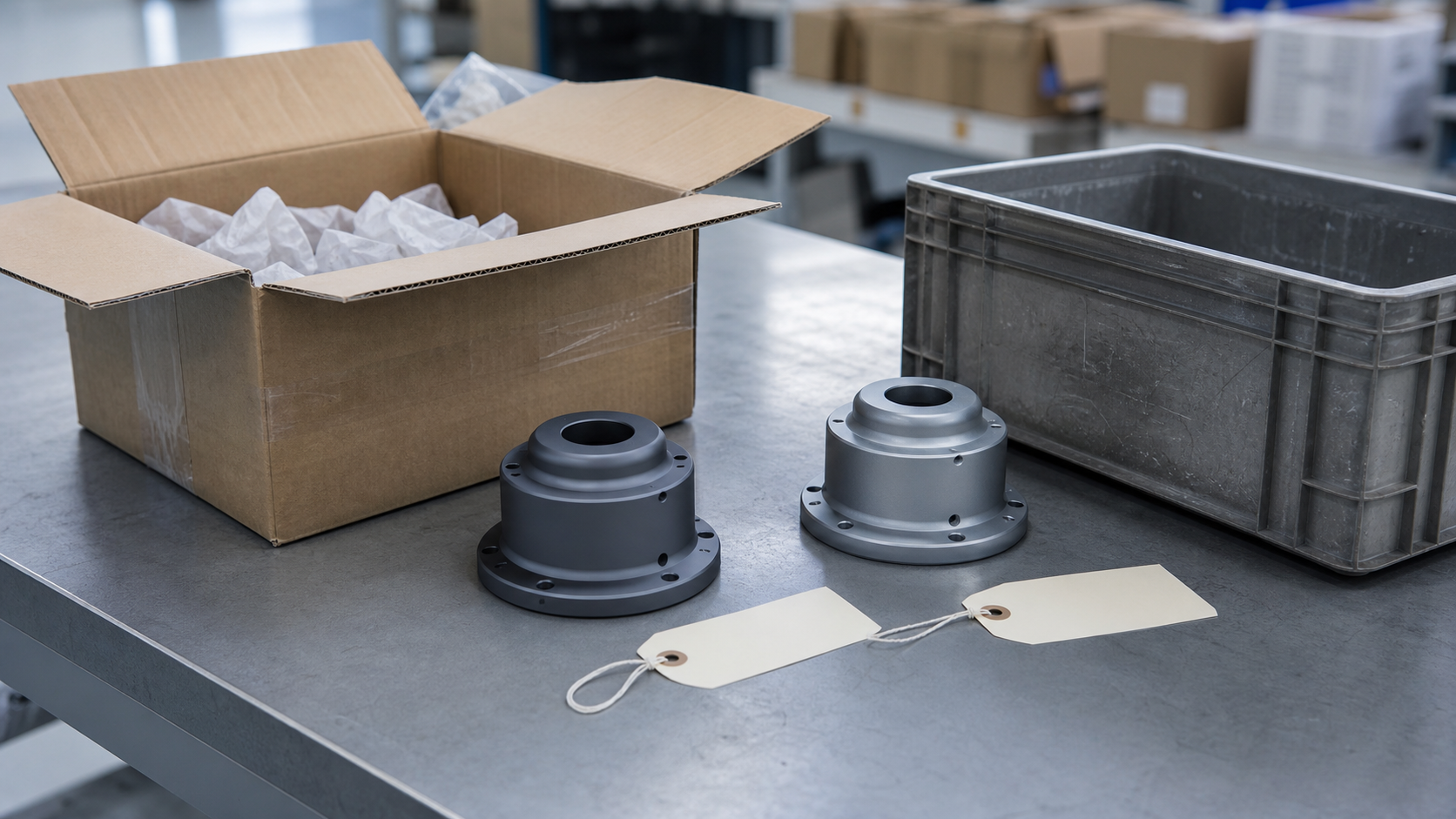
The customer returns a box of goods—why can't the shop floor trace which equipment it passed through?
At 9:10 AM, the customer sent a photo showing two products with slightly different surface colors mixed into the same box of parts. The outer box label indicated they came from the same production batch. The quality manager immediately requested a trace, but the warehouse could only confirm when the box was released, and the shop floor could only confirm which order was completed on a particular day. There were no records of which machines were involved, which shift, whether there was rework, or which raw material reel was used, making it impossible to trace the full path.
Two hours later, three answers emerged in the meeting. Production claimed there was no mixing during the shift, the warehouse stated that the transfer records were complete, and quality stated that the outgoing inspection was passed. Each department had records, yet no one could answer where the product in the customer's hands had traveled.
The most challenging aspect for the factory owner is not just the return of a box of goods, but the uncertainty of the risk boundary. Recalling only this box risks missing related issues, while expanding to the entire batch may freeze products that are not at risk. What is truly missing is not more forms, but a traceable batch fact chain that can trace from finished goods back to inputs and from inputs to their destinations.
1. Being able to trace the batch doesn't mean it can really be traced
Many factories have already assigned batch numbers to raw materials, work orders, and finished goods, but the batch number is just an entry point. What traceability really needs to answer is: what object, at what time and location, experienced what action, who confirmed it, and how objects were related to each other.
For example, a reel of raw material may be split into three boxes and sent to two lines. The raw material batch is related to the material requisition form, but not necessarily to specific equipment, shift, or finished box. If semi-finished goods are reworked and re-entered into the line without recording the new conversion event, the system may appear continuous, but the actual path has been broken. When packaging combines multiple small batches into one pallet, if only the pallet is scanned without retaining the relationship between boxes and pallets, a customer's return of one box may result in the entire pallet or even the entire work order being frozen.
Therefore, traceability should not only check if there is a code, but also whether relationships are retained during each split, merge, conversion, and movement. The input and output of the manufacturing process are especially critical: which batch of material was used, on which machine it was processed, which batch of semi-finished goods was formed, and which finished goods it later entered.
2. The batch chain is most likely to break at the fourth handover
The first step is receiving and warehousing. If supplier batch, internal batch, inspection status, and storage location are recorded separately, after warehousing, only internal numbering remains, and the original source is stored in another table.
The second step is material issuance from the warehouse. The quantity issued is clearly recorded, but when a box of materials is distributed to two lines, the specific destination often relies on handwritten notes, verbal communication, or group chat updates. The warehouse completes the outbound process, but the shop floor does not complete the receiving confirmation.
The third step is process transition. Mixed materials, replenishment, changing reels, rework, unboxing, and batch merging may alter object relationships. To avoid production stoppage, materials are often sent into the line first, and records are added later; when busy, the most critical associations are often overlooked.
The fourth step is packaging and shipping. If the relationship between finished product boxes, pallets, shipping documents, and customer orders is only recorded at the total quantity level without hierarchical details, it becomes impossible to precisely narrow down the scope when issues arise.
These gaps are not only due to operational habits but also reflect real-world incentives. Recording more often increases takt pressure for operators, additional verification by the warehouse slows down material issuance, and a team leader reporting mixed batches may first bear the responsibility for production stoppage. Simply asking for stronger traceability awareness without reducing actions or clarifying responsibilities means the safest choice remains underreporting, delayed recording, and post-event supplementation. If those who actively accept orders always end up doing more and making more mistakes, easily taking blame, while those who do less and make fewer mistakes can pass the problem on, then splitting, merging, and rework records will be difficult to close on time; management must simultaneously clarify authorization, escalation, and liability boundaries.
3. Start by connecting the facts with five questions
First, determine which object is being traced: raw material box, turnover tray, batch of semi-finished products, finished product box, or individual serial number. The object hierarchy must match the risk level; not all products require tracing to the individual level, but high-risk components traced only to the work order are often too coarse.
Second, what event occurred: receiving, inspection, material issuance, line-up, changeover, rework, packaging, movement, or shipment. Only status without events means the cause of the status change remains unknown.
Third, when and where the event occurred. Time should correspond to shifts, and location should be traceable to storage location, line, equipment, or workstation, not just the shop floor.
Fourth, who performed the action and who confirmed the result. Responsibility is not for assigning blame after an incident, but to quickly identify the context during an anomaly.
Fifth, how the objects are related. Disassembly should show the source, merging should indicate what was combined, changeover should record input and output, and packaging should maintain the relationship between boxes and pallets.
By incorporating these five questions into the same event record, the factory owner can see a continuous path, rather than piecing together information from three separate systems: warehouse, production, and quality.
4. Don't chase the entire factory first—start with a two-way drill
First, select a product with high complaint risk and a relatively clear flow path, and conduct a small-scale simulation for one week. Randomly select a box of finished goods from the day, and trace backward to raw materials, equipment, shifts, inspection, and rework.
Second, take another batch of raw materials at random and trace backward to identify which work orders, semi-finished products, finished product boxes, and customer shipments they entered. Third, use a checklist to verify three things: whether the complete trace can be found within the agreed time frame, whether the account numbers balance out, and whether the relationships remain intact during splitting, merging, and rework. Do not immediately assign blame when tracing fails; instead, first review whether the issue stems from unnumbered objects, unrecorded events, unconfirmed handovers, or whether shop-floor actions are too heavy to execute.
Small, loosely managed factories can start with paper batch cards and fixed storage locations. Medium-sized growing factories should focus on establishing object relationships between warehouse, production, and quality management. Large or maturely managed factories should check the numbering mapping and permission boundaries between systems to avoid situations where each system is complete on its own but inconsistent when integrated.
When a customer returns a box of goods, the most valuable thing is not immediately proving that "this is not our responsibility," but rather quickly clarifying which products may be affected, which can be excluded, and what steps should be taken next to freeze relevant processes. The endpoint of traceability is not adding another code, but ensuring that every split, transformation, and handover leaves a relationship that can be reconstructed.
I am Huang Chaoxing, the inventor of the TreeMES stack-light MES system. Follow me to explore the management logic behind the stories of manufacturing frontline operations.
