
Work-in-Process Keeps Growing? Set Three Limits around the Bottleneck
Work-in-process keeps growing? Set three limits around the bottleneck
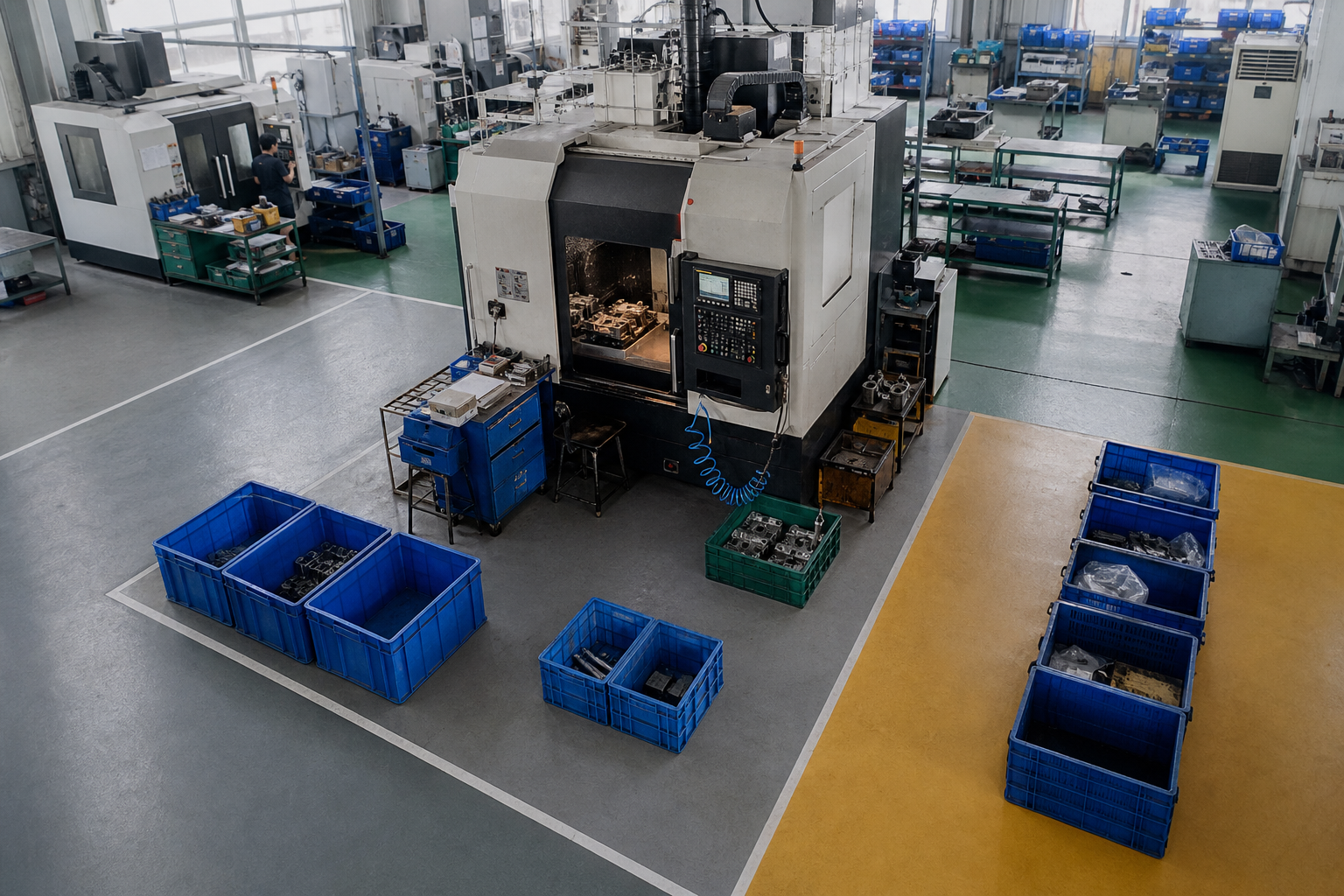
Dozens of semi-finished products pile up in front of the bottleneck equipment, while the previous process continues to chase the schedule and the downstream process keeps demanding materials. The factory owner sees every machine working hard, but the delivery date keeps getting delayed. The problem is usually not due to lack of effort on the shop floor, but because no one has set limits on where production can continue and where it must stop to handle abnormalities.
For factory owners, this article addresses only one issue: using three limits to expose overproduction, quality in question, and delayed responses early on, and handing shop-floor actions to those with authority.
Work-in-process is not necessarily better when it is less. Maintaining smooth flow requires a necessary quantity; however, increasing inventory can obscure quality, changeover, and equipment fluctuations. Starting with a one-week small experiment is more reliable than designing a complex kanban system from the beginning.
First Limit: Keep Only Consumable Amount Before the Bottleneck
First, select one product family and one real bottleneck, rather than pushing across the entire plant at the same time. Record the actual consumption rate, changeover cycle, and common fluctuations of the bottleneck equipment per hour, then determine a container upper limit that can be understood within a shift.
Once the upper limit is reached, the previous process stops producing the same item. The shift leader must make a choice: switch to the next item, support the bottleneck, or expose material shortages and quality issues. Without a rule to stop, the upper limit is just a line on the floor.
Team leaders are responsible for production output but may not have cross-departmental authority. Taking initiative to accept orders can lead to overproduction and errors, while waiting for instructions may result in accountability issues. Therefore, the handling, escalation, transfer, and closure processes after reaching capacity limits must clearly define boundaries.
Check three things: whether containers are standardized, whether quantities are easily visible, and who has the authority to stop production when limits are exceeded. Do not focus on precise formulas first; ensure that everyone shop-floor sees the same status first.
Second Limit: Only Confirm Status After the Bottleneck
Accumulation after the bottleneck is more likely to mix inspected, reworked, and normal products. The three states must be separated. Pending inspection items should not occupy the capacity for normal flow and should not be quietly moved to the next process due to tight deadlines.
Each container should only answer four questions: what it is, how many there are, its current status, and who the next destination is. Although the system has records, if the physical containers cannot be identified, discrepancies between the account and actual inventory may still occur.
When the downstream limit is reached, the focus should not be on urging movement but on confirming why the downstream process is not consuming the work: personnel shortages, pending inspection, equipment downtime, or changes in the production sequence. The cause determines the action.
Third Limit: Set Abnormal Area Capacity Based on Closing Ability
The rework and pending inspection areas are most likely to become black holes. Capacity should match the daily ability to inspect, rework, and close these items. Expanding the area without capacity will only prolong the retention of problems.
Set three time limits for the abnormal area: entry time, time to reach a conclusion, and time for escalation beyond the deadline. Quality is responsible for determining the issue, production for isolating the boundary, and planning for reordering based on available quantities; when permissions are insufficient, the plant manager handles the decision.
How to Run a One-Week Experiment
On the first day, only measure without rushing to reduce inventory. On the second day, determine the three upper limits and assign responsibilities. From the third to fifth day, record the reasons for each time the limit is reached. On weekends, review the three most common blockages and adjust only one upper limit or one response rule.
When recording, separate 'reaching the limit' from 'line stoppage.' Reaching the limit only requires shop-floor confirmation of the next step; true line stoppage should still be decided by safety, quality, equipment status, and job permissions, not replaced by color signals.
First verify the container, then verify the status, then verify the response clock. The checklist only includes fields that can drive action; anyone can determine the next step within a single screen.
Small, loosely managed factories can use containers and ground markings; medium to growing factories can integrate status into the system; large, mature factories should prevent excessive rule layers. Regardless of how simple the tools are, ensure downstream demand signals are preserved.
Finally, evaluate three outcomes: whether the bottleneck has reduced waiting time, whether exceeding the limit triggers real action, and whether urgent orders are still resolved by cutting in line. The value of limits is not in organizing the shop floor neatly, but in exposing overproduction and delayed responses early.
I am Huang Chaoxing, inventor of the TreeMES stack-light MES system. Follow me for more practical factory-management methods.
