
Zero Accidents in a Row Does Not Prove Shop-Floor Risk Is Lower
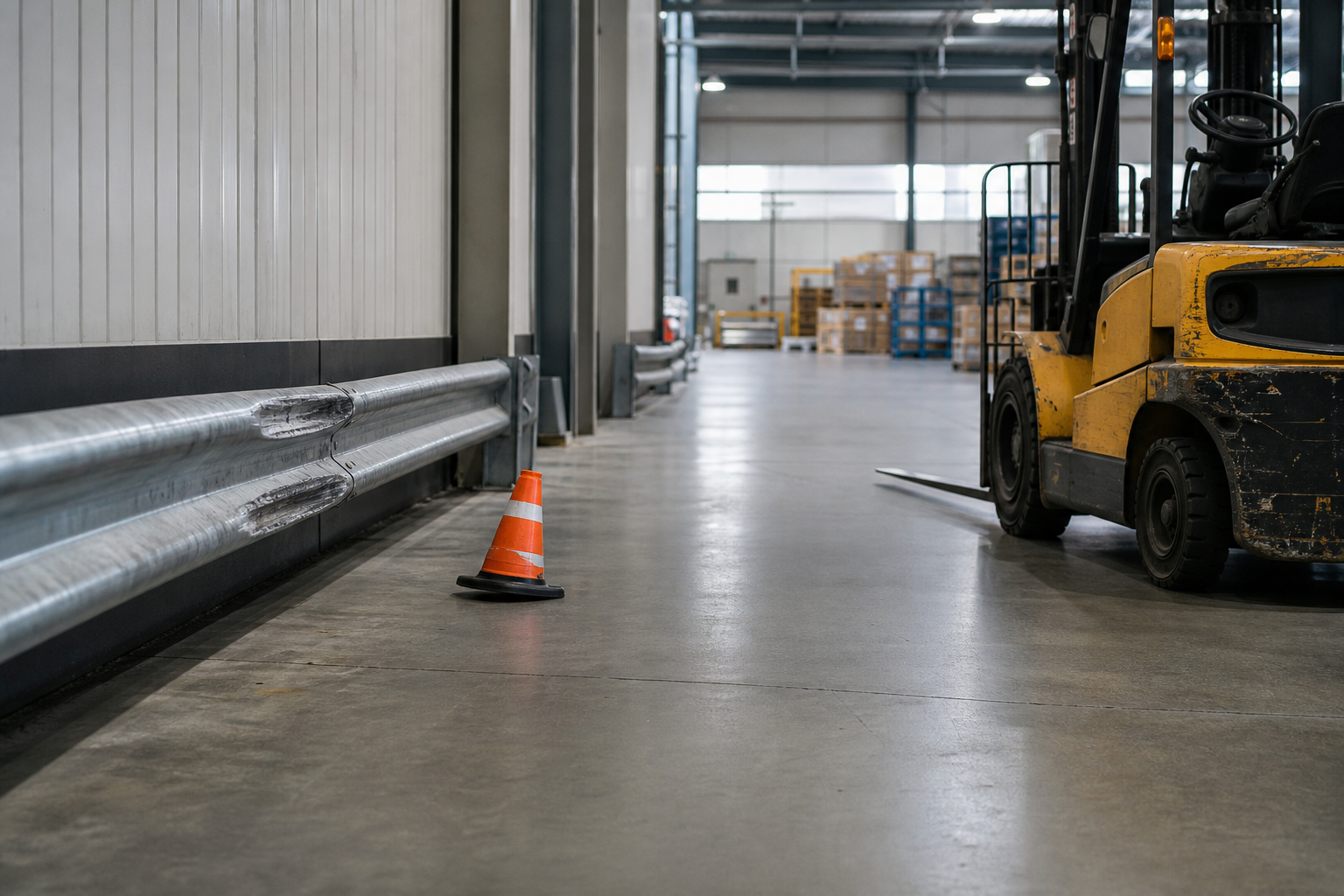
The safety dashboard has shown zero incidents for three consecutive months. Then maintenance mentions two forklift contacts with the same guardrail, and a night-shift operator reports a near slip—events that caused no injury and never entered the formal statistics.
Why does continuous zero accidents not mean the shop-floor risk has really decreased?
At the monthly meeting, the safety dashboard shows zero incidents for three consecutive months. The factory owner is about to commend the team when a maintenance worker mentions that a forklift has struck the same guardrail twice. A night-shift operator also reports a near slip. No one was injured, so neither event entered the formal statistics.
Zero incidents are certainly valuable, but they only indicate that severe consequences were not recorded. If management equates zero incidents with zero risk, the shop floor may learn to protect the numbers rather than expose dangers earlier.
What factory owners really need to assess is whether risks are identified, whether the correct personnel have taken ownership, and whether corrective actions are closed out—not whether the dashboard remains green.
Outcome signals only reflect the past
Incident counts, injury numbers, and days lost due to injury are result signals. They can alert that a process has failed, but they cannot alone prove that daily inspections, training, maintenance, and corrective actions are effectively preventing the next incident.
The absence of incidents over a short period may also result from changes in production volume, luck, or reduced exposure time. Large, mature factories need more rigorous statistics, while small factories should at least distinguish between 'no incident occurred' and 'risk was controlled.'
Zero incident incentives may alter reporting behavior
If team bonuses are tied solely to zero incidents, a single honest report could result in the entire team losing their reward. Employees may face peer pressure, and team leaders might be inclined to explain minor incidents as personal matters.
This is not merely an attitude issue. Employees have a responsibility to report incidents but may not have the authority to stop operations, isolate equipment, or demand corrective actions. Reporting more increases the risk of explanation and accountability, while not reporting avoids immediate consequences, leading to self-preservation behaviors.
If the transfer, handling, and escalation of reports lack defined timelines, proactive individuals may end up being blamed. Over time, the implicit rule of 'more work, more mistakes' and 'less work, fewer mistakes' may develop, with real signals remaining outside formal records.
Managers should check whether the system unintentionally penalizes reporting. Rewards can be redirected toward identifying hazards, completing corrective actions, participating in debriefs, and following scheduled maintenance, making 'speaking up' a beneficial action rather than a threat to performance metrics.
Near misses provide earlier indicators
Near-misses such as almost slipping, forklifts nearly hitting people, or loose guards that did not cause injury can reveal when, where, and how risks occur, as well as their recurring patterns. Repeated similar signals are more valuable to track than isolated incidents.
Effective record-keeping does not require lengthy reports. It simply requires answering what happened, who might have been affected, how it was handled, and who will close the issue. A 'reminded' without a responsible person and a deadline does not lead to real preventive actions.
Each week, select one high-frequency near-miss event and follow it to the shop floor to verify whether corrective actions were effective. If the same issue reoccurs during a different shift, it indicates the organization has only completed the record but has not turned the experience into a stable practice.
Factory owners should monitor three types of signals simultaneously
The first category includes incidents and injuries, the second includes hazards and near-miss events, and the third includes the rate of timely closure of corrective actions and recurrence. Only by combining these three categories can one determine whether risk is decreasing or if reporting is simply reducing.
First, review the outcomes; second, examine near-miss events; third, verify corrective action recurrence. Turning these three into a weekly checklist supports action more effectively than solely pursuing zero incidents.
Managers should also randomly ask frontline staff: Will they be blamed after reporting an issue? Can team leaders temporarily stop dangerous actions? How often do specialized positions accept orders? Answers are closer to the real safety culture than visual displays.
Zero incidents should not be doubted, nor should they be worshipped. A good shop floor aims for no harm while also allowing bad news to emerge early. The more impressive the numbers, the more important it is to confirm that risk is being controlled, not that voices are being suppressed.
I am Huang Chaoxing, inventor of the TreeMES stack-light MES system. Follow me for ongoing analysis of shop floor management and digitalization trends in manufacturing.