
Can Outsourced Parts Go Straight to Production? Reconcile Quantity, Quality and Revision
Outsourced parts arrive in the evening and planning wants them released for overnight production. The warehouse counts the boxes and inspection samples a few parts, but production later finds a quantity discrepancy, unresolved quality status, and one box made to an outdated drawing.
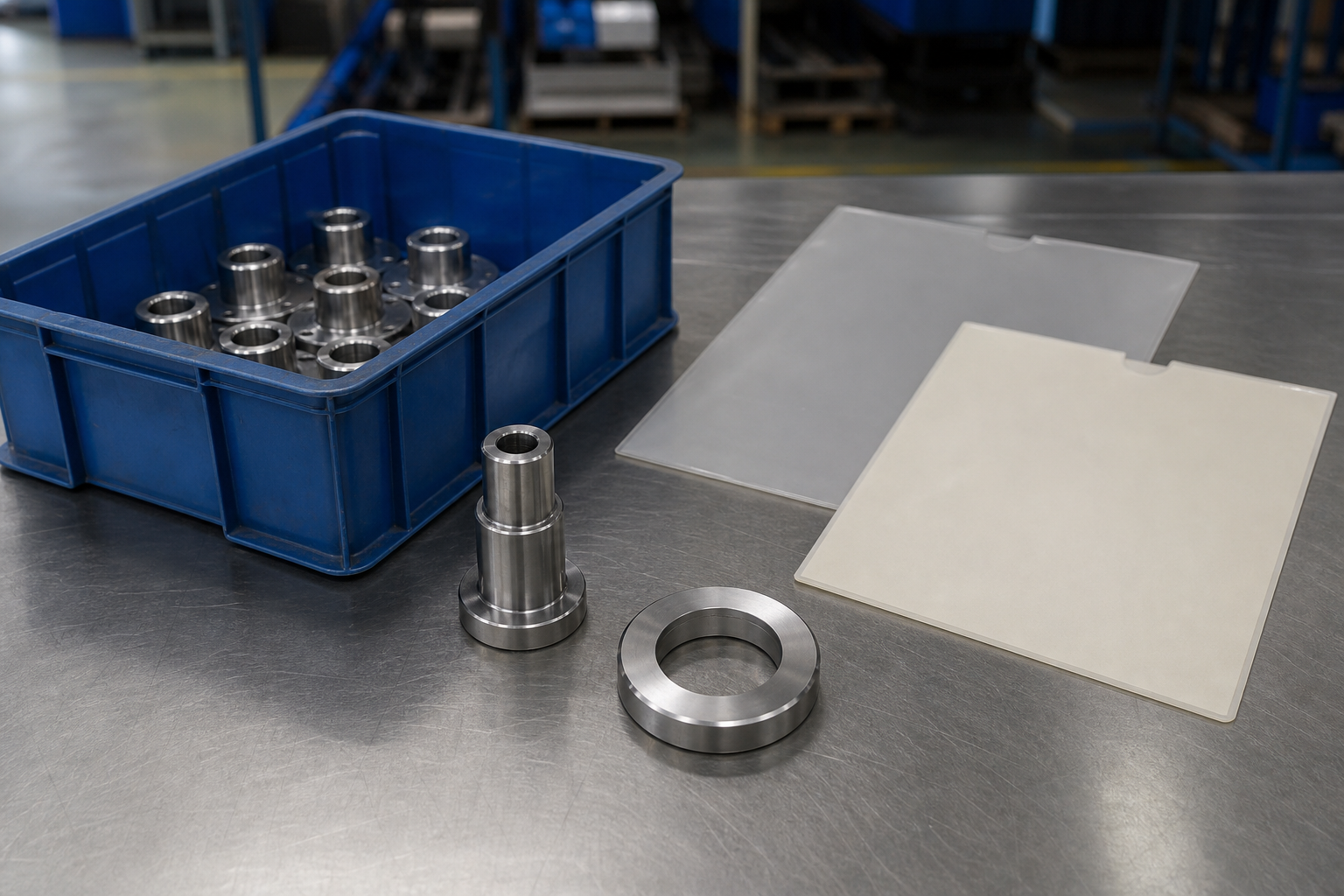
Outsourced parts arrive in the evening and planning wants them released for overnight production. The warehouse counts the boxes and inspection samples several parts. After production starts, however, the team finds a quantity discrepancy, unresolved quality status on some items, and one box still based on an outdated drawing. The tighter the deadline, the easier it is to collapse three different controls into a single ‘arrival’ event.
The outsourced supply chain is not a straight line from order to receipt. Engineering changes, batch deliveries, rework returns, and temporary concessions all alter the identity of the material. First, align the three accounts of quantity, quality, and version, then decide which parts can enter production.
What factory owners need is not a thicker receiving report, but clarity on which batch is usable, who has accepted the order, and which shortage must be escalated, even under tight deadlines.
The First Book: The Quantity Account Answers Where the Physical Objects Are
The quantity account should not only record the total number from the purchase order, but also track the number of units received this time, stored, issued, isolated, returned, and short. The sum of these six numbers must match the actual physical inventory, not be balanced at the end of the month.
Each container should be associated with at least the supplier batch, arrival time, part number, and current quantity. Relationships must be maintained after unboxing, reboxing, or reshipment, otherwise the system shows one batch, but the shop floor has become multiple sources.
When quantities do not match, the warehouse has the authority to suspend material issuance first; production plans cannot bypass discrepancies by producing part of the order, as once containers enter the shop floor, the gap will become an implicit waiting time for production.
The Second Book: The Quality Account Answers Whether It Can Be Used Currently
Conforming, pending, rework, concession acceptance, and return must be distinct statuses. Inspection conclusions must be tied to specific batches and quantities, not just stated as 'sample inspection passed' in reports, leaving the shop floor to guess whether the entire box is usable.
Quality records must clearly document the basis for judgment, inspection time, responsible person, and conditions for invalidation. If a batch of parts is accepted by concession due to temporary deviation, it should clearly specify the applicable work order and quantity, and cannot become a long-term verbal rule for continued release.
Pending items must not occupy normal usable quantities. Production can see them but cannot change their status on their own; if quality does not reach a conclusion in time, the plan should feed back the impact to the customer or adjust the sequence, with the plant manager deciding the course of action.
Book Three: The Version Account Answers What Requirements to Follow
Version records connect procurement requirements, drawing or model versions, change effective dates, supplier confirmation, and the current batch. Simply sending the latest version drawing to a group does not mean the supplier has produced according to the new version.
During incoming inspection, the order-referenced version, accompanying proof, and key features of the physical item must be verified. If a change takes effect during external processing, the disposal of in-process items from the old version must also be confirmed, and the responsibility cannot be entirely shifted to incoming inspection.
How to Close the Loop on the Three Accounts Within Ten Minutes
The first step is to link the three accounts using a batch number, the second step is to verify quantity accuracy, quality suitability, and version consistency, and the third step is to synchronize the system and physical status. If any answer is unclear, the container remains isolated.
In the first week, only select one high-risk outsourced component for trial. Daily reviews identify gaps causing delays, determining whether the issue lies with supplier information not arriving, internal responsibility not being accepted, or unclear version activation rules; address one bottleneck at a time.
This approach is suitable for small, loosely managed factories with frequent outsourcing and medium-sized growing factories; large or mature factories with existing supplier platforms should also prevent dispersed responsibilities. If transfer, handling, and closure remain only in system pending tasks, the shop floor will still produce less and make fewer errors. The plant manager should clearly define order acceptance authority, time-out accountability boundaries, and cross-departmental coordination mechanisms.
The value of the three accounts is not in filling out three more forms, but in ensuring that each outsourced component answers three simple questions before going online: where is it, is it currently usable, and according to which requirements was it made. Clear answers ensure that urgent orders do not rely on risk-taking for speed.
First, secure the boundaries, then pursue speed.
I am Huang Chaoxing, inventor of the TreeMES stack-light MES system. Follow me for more practical factory-management methods.