
Every Machine Is Busy—Why Is the Entire Line Slowing Down?
The shop floor daily report shows that several key machines are operating near their target utilization, and operators are largely busy. However, the factory owner observes that semi-finished goods are piling up between two processes, urgent orders are bypassing regular ones, and the final inspection is still waiting for the preceding parts to be complete.
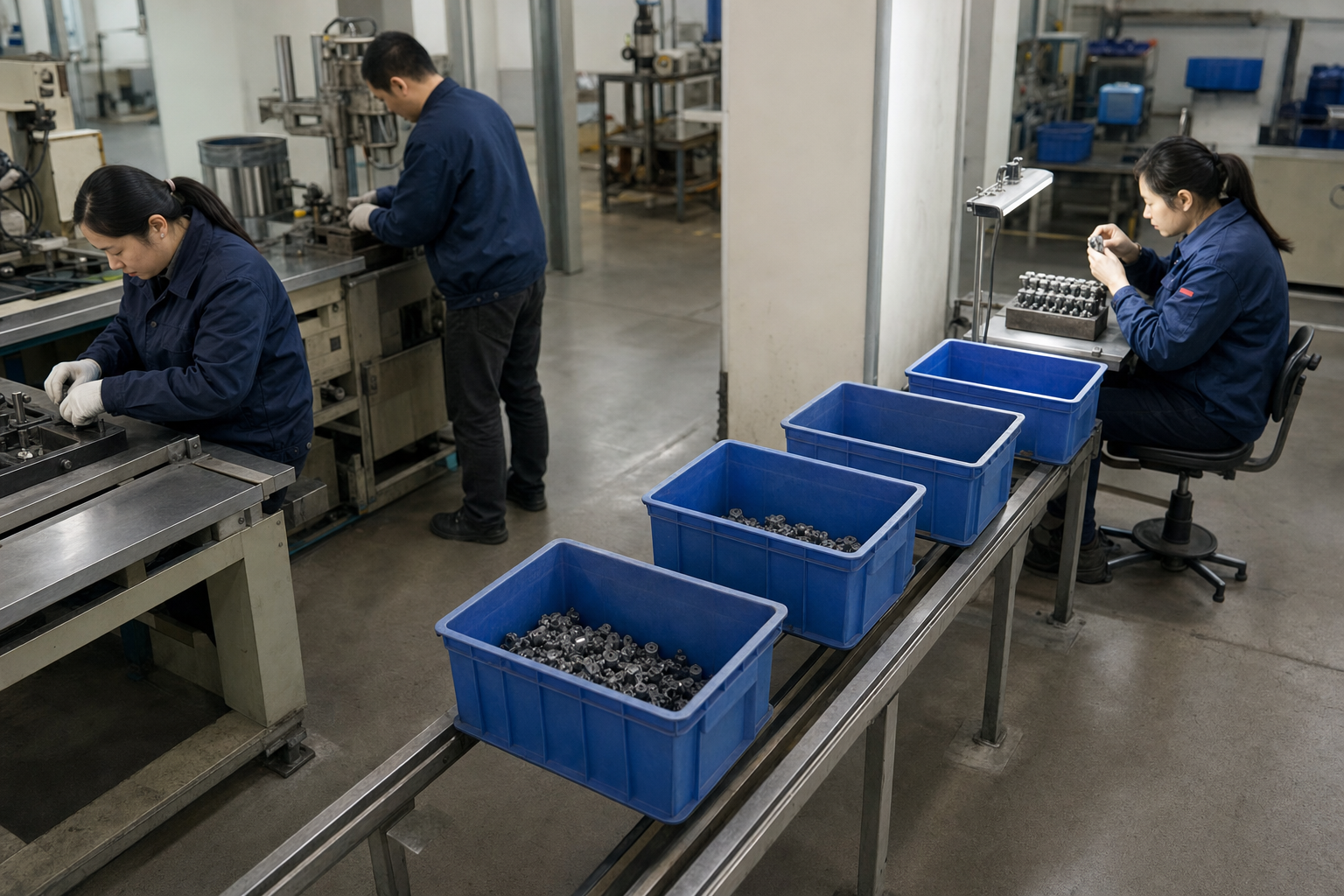
The shop floor daily report shows that several key machines are operating near their target utilization, and operators are largely idle. However, when the factory owner arrives on site, he finds semi-finished products piling up between two processes, urgent orders bypassing regular ones, and the final inspection still waiting for parts to complete the batch.
Machine utilization indicates local resource occupation, while order speed requires smooth flow across the entire line. These are not the same metric. If each position aims for 'no downtime,' the shop floor will continuously advance material input, shifting waiting time from machines to work-in-progress and delivery dates.
The real question is: which segment determines the entire line's output, where are orders waiting, and does the current product mix shift the bottleneck?
For factory owners, this is also a question of performance authority and responsibility boundaries. Planning focuses on delivery dates, production on output, and equipment on uptime. Whoever stops non-urgent orders first will bear the risk of explanation and accountability. When rewards still focus on local busyness, doing less and making fewer mistakes is safer than overall coordination.
Partial Overload Can Create More Waiting
Upstream equipment, aiming for high utilization, often continues processing non-urgent batches. Once parts complete this stage, if downstream processes cannot take them, they must enter a queue. Equipment data looks good, but order flow time is extended.
Work-in-progress is neither the less the better nor the more the safer. Insufficient buffer causes downstream shortages, while excessive buffer hides priority and quality issues. Managers should set reasonable boundaries for the critical path, not let each machine pursue maximum output independently.
Product Mix Changes Bottleneck Location
When producing different products on the same line, the required time for each process varies. Some product types may make heat treatment the bottleneck, while others may make inspection the bottleneck. Using last month's average load to schedule today's orders can show all equipment as busy, but it fails to identify who determines delivery dates.
Each day, recalculate critical processes based on product mix and then arrange material release order. Planning focuses on the total time for the entire order, while the shop floor focuses on the queue before and after the bottleneck. Equipment operators focus on equipment failure and changeover losses. These three perspectives must align with the same batch of orders.
This explains why adding an extra non-bottleneck machine does not necessarily increase overall line output. It may only push more semi-finished products to the bottleneck earlier, making the shop floor appear busier, but the real constraint remains unchanged.
Shift Management Goals from Availability to Flow
First, select the three most urgent orders, map out the remaining processes and current waiting status. Second, identify common constrained resources, check shift, changeover, material, and quality status. Third, only release tasks that the bottleneck can handle.
Morning meetings should not only ask how long each machine ran yesterday, but also ask three questions: where are the orders waiting, what can the bottleneck complete today, and how much in-process inventory is still allowed ahead. Answers should be updated daily, making them closer to delivery than a fixed utilization ranking.
Small factories can start by using floor areas and whiteboards to limit queues. Growing medium-sized factories should link order release with bottleneck capacity. Large or mature factories must prevent departmental performance from pushing local efficiency higher again.
The shop floor is well aware of the issues with material buildup, but if job bonuses are based solely on output and machine uptime, stopping to wait for the correct order can be disadvantageous. Management must align lead time, work-in-progress boundaries, and on-time delivery within the same evaluation framework; otherwise, the most rational choice on the shop floor will still be to keep machines running at full capacity.
Not all factories need complex scheduling systems. Start by having the plant manager accept orders, the shop floor supervisor verify bottleneck constraints, and the team leader control material release based on authority. If limits are exceeded, escalate the issue. Only after the order is confirmed should the process be closed. Transfers and handling must be documented, ensuring that those who actively coordinate do not make unnecessary or incorrect actions.
Busyness does not equate to flow. A truly efficient production line is not one where every machine runs continuously, but rather where the correct orders pass through the entire line at a controlled pace.
I am Huang Chaoxing, inventor of the TreeMES stack-light MES system. Follow me for ongoing analysis of shop floor management and digital transformation trends in manufacturing.
