
More Exceptions in the System—Why Does the Shop Floor Stop Even Later When It Matters?
Many factories have been recording exceptions into their systems in recent years. Alarms, stoppages, material shortages, pending decisions, rework, and red points are increasing, making the interface more comprehensive.
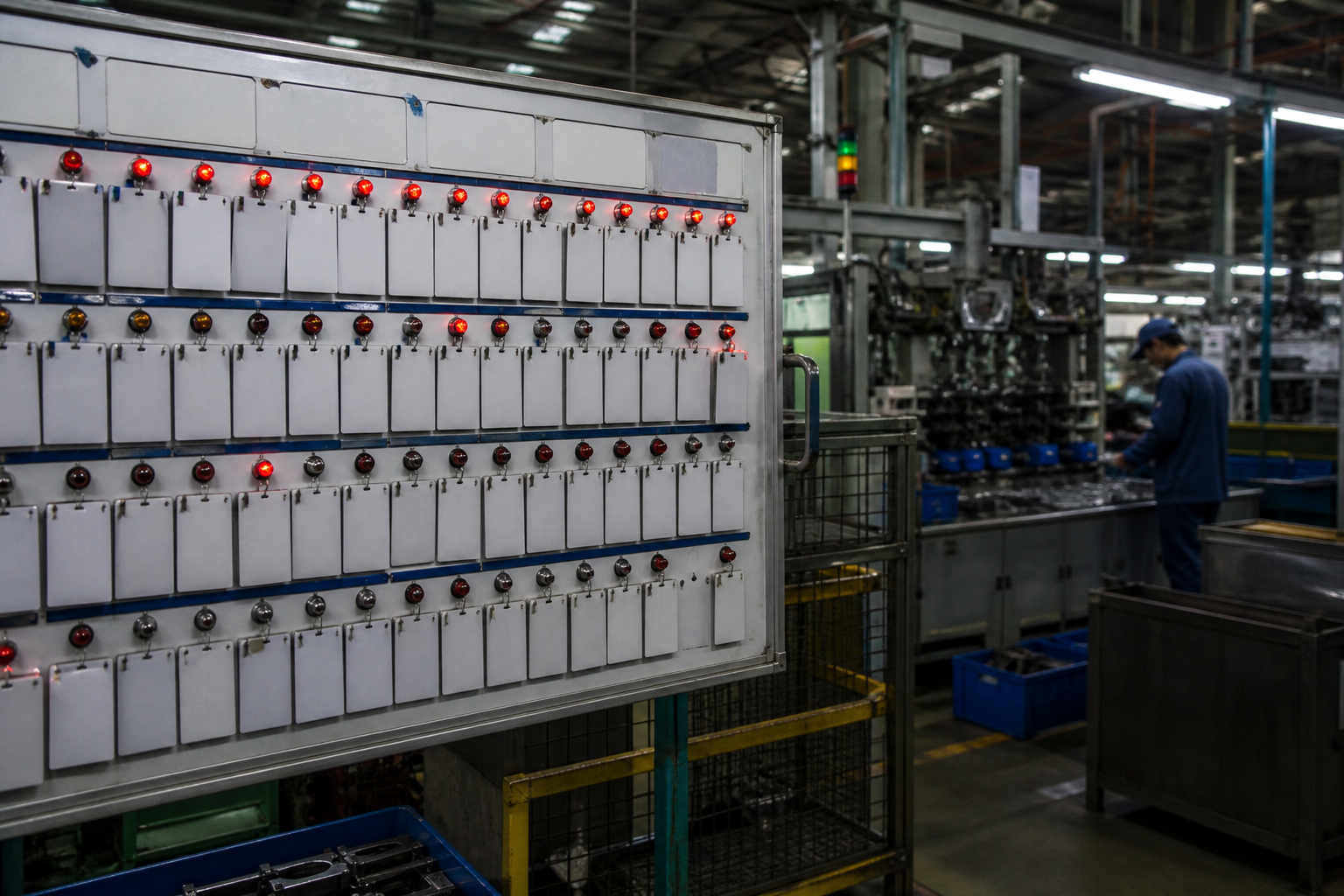
Why Stopping the Line Later Can Persist Even as Exception Records Improve
Many factories have been recording exceptions into their systems in recent years. Alarms, stoppages, material shortages, pending inspections, and rework generate an increasing number of red indicators, making the interface more complete.
However, when it comes to stopping the line, upgrading processes, or changing sequences, the shop floor often lags behind. It's not due to a lack of data, but because the system has turned exceptions into a registration entry rather than a decision-making one.
The large exception screens on the walls are filled with red cards, yet team leaders and engineers continue to push the production line forward while observing.
Many factory owners misjudge the situation here: they believe that once exceptions are recorded in the system, management will naturally become faster. In reality, the speed of collection has increased, but the speed of decision-making has not kept up.
For factory owners, what truly matters is not system screenshots, but who has the authority to stop the line, who is responsible, and who must take ownership of the exception once it occurs. Without these boundaries, the system will only make the problem appear more organized.
The Easiest Thing for the System to Do First Is to Leave Traces
Documentation is important, but documentation and triggering action are two separate things. The system can alert you to what has happened, but it does not necessarily indicate who must take responsibility now.
If responsibilities and escalation rules are not clearly defined, more red points will be seen as pending tasks in the background.
If engineering, quality, and production can all report exceptions, but no one is authorized to make decisions, the shop floor will default to postponing system action. It seems everyone is cooperating, but everyone is waiting for someone else to take the risk.
The More Exceptions There Are, the More Likely It Is to Drag the Shop Floor
When everyone can report exceptions, the real scarcity is not the ability to detect them, but the ability to prioritize. Who handles it first, who escalates it, and which exception warrants a line stop often lacks a unified standard.
What truly slows down the shop floor is not the visibility of exceptions, but the perception that all exceptions are equally important. The result is continuing production until the impact becomes more obvious.
Why Is It Even Later When It’s Time to Stop?
Many systems design exception statuses as reported, in progress, and closed, but fail to integrate stop-line thresholds, escalation time limits, and decision-makers into the process.
As a result, the shop floor develops a self-protecting logic: register first, pass it on later, and let the system have a record. As long as no one has clearly made a decision, continuing production becomes the default, easiest action.
Whoever stops the line may be questioned about production output; whoever only registers the issue appears safer in the short term, leading to 'it's not my responsibility' becoming a stable behavior.
What Should the Factory Owner Really Focus On?
It's not the number of red points or the total number of exceptions on a given day, but rather how long it takes for someone to clearly acknowledge the issue from when it first appears, and how long it takes to decide whether to continue or stop the line after that.
If these two time intervals continue to lengthen, even the most complete system will merely become a more aesthetically pleasing waiting queue.
Put the System Back into Action
First, write down the conditions that must trigger a stoppage, escalation, or cross-departmental coordination in a fixed manner, so that each shift doesn't have to guess. Second, set a single current responsible person for each exception by default. Third, place short-term feedback during the shift rather than only in the daily report.
Some factories have few types of exceptions, and a whiteboard is enough for the shift leader; however, if there is frequent cross-shift, cross-quality, and cross-machine coordination, 'register first, decide later' cannot be expanded into a default mechanism.
Small, loosely managed factories should first identify the three most critical types of exceptions; mid-sized growing factories should focus on improving escalation and decision boundaries; large factories must prevent the system from becoming too comprehensive, eventually leading to no one willing to accept and close the exception.
The factory owner can directly forward these three mechanisms to the plant manager, shop floor supervisor, and team leader as daily inspection steps: who is responsible for receiving the exception, how long it takes to escalate, and who has the authority to stop the line. This will transform the system from a traceable tool into a management action.
The value of the system lies not in making exceptions more comprehensive, but in enabling the line to stop earlier when it should and escalate faster when it needs to. Otherwise, more red points will only make the shop floor more accustomed to continuing forward.
I am Huang Chaoxing, inventor of the TreeMES stack-light MES system. Follow me for continued analysis of shop-floor management and digital transformation trends in manufacturing.
