
Materials Show Ready—Why Does the Line Stop for a Shortage 20 Minutes after Startup?
At 7:40 a.m., just 20 minutes into the early shift, an injection-molding machine stops for lack of material. The system shows the order as fully kitted, and planning says it was released the previous night.
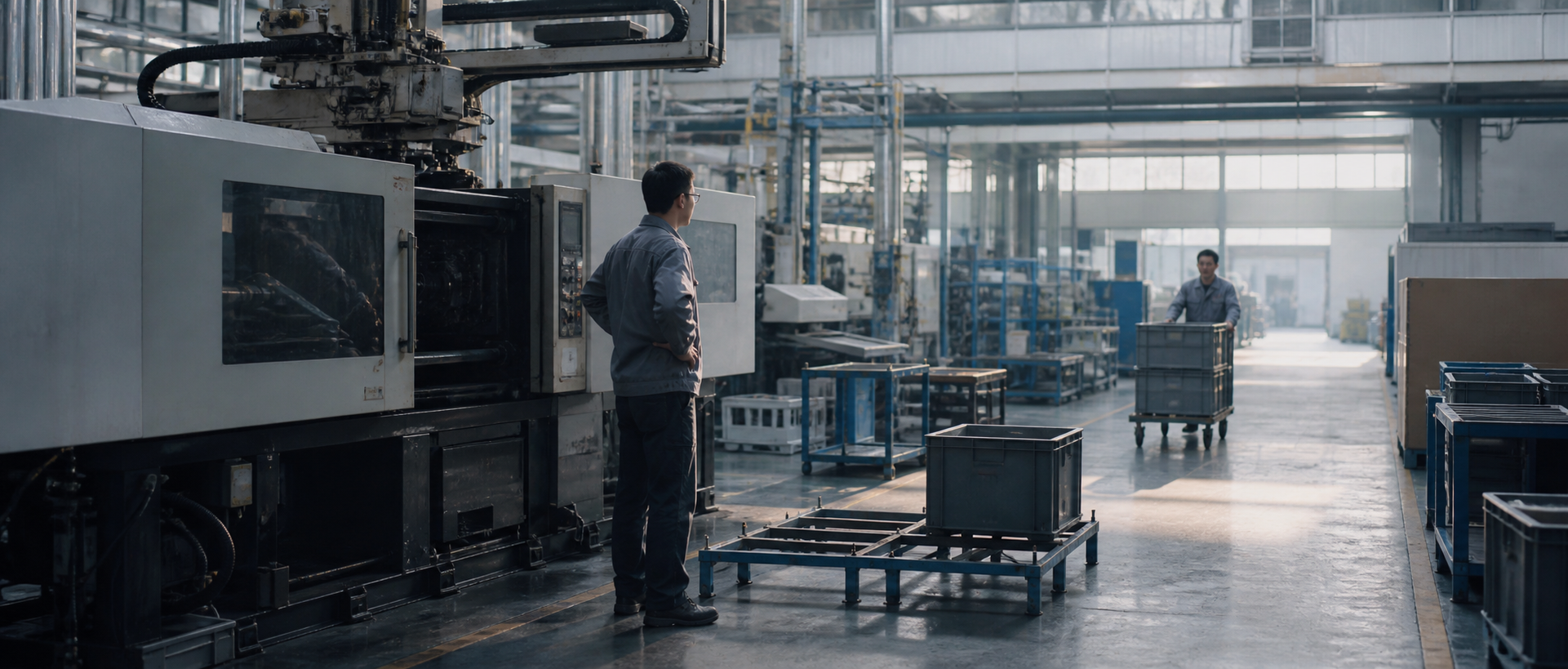
At 7:40 a.m., just 20 minutes into the early shift, an injection-molding machine stops for lack of material. The system shows the order as fully kitted, and planning says it was released the previous night.
The warehouse says the materials are in stock, the team leader says they counted before starting up, and the delivery person says they delivered once according to the order. But when the machine stopped, everyone realized the real issue wasn't the total amount—it was the box right in front of the workstation.
Many factories interpret being complete as a promise at the order level, so as long as it appears sufficient on the books, they assume the production line can run continuously.
For factory owners, this isn't just about the warehouse delivering slowly once; it's about the shop floor not turning completeness into a fact at the workstation level.
The shop floor supervisor is responsible for maintaining the rhythm, the warehouse is responsible for maintaining the inventory records, the delivery person only has fixed route authorization, while the team leader has to accept the order first to ensure the machine starts up. The benefit is the current shift's output, the risk is the next shift's downtime, and when the boundaries get mixed up, cooperation becomes self-preservation.
First Breakpoint: Order-Based Picking, Not Workstation-Based
In many factories, completeness is calculated based on orders or work orders. If the warehouse has it, the books show it, and it can be assembled today, it will be recorded as complete.
The production line requires available material at a specific time, at a specific workstation, and in a specific container. If any of these conditions are missing, the line will be forced to stop after startup.
A common scenario is that the main ingredients are in place, but the auxiliary ingredients are still on the shelf on the other side; the barcodes are ready, but the returnable containers have not been delivered to the machine; the accounts show that they are all in place, but the last replenishment action is still missing on the shop floor.
Second Breakpoint: Materials in Warehouse Don't Equal Materials at the Beat
Storing materials in the warehouse is a warehouse action; delivering materials to workstations in sync with the production line is a distribution action. If these two actions are not recorded separately, the shop floor will mistakenly treat 'in warehouse' as 'ready to produce.'
If the delivery route, replenishment frequency, and workstation receipt are not defined with a consistent metric, the team leader may prioritize starting the equipment to maintain production and then wait for the next box while working.
Third Breakpoint: Temporary Borrowing Masks Risks
When the line stops, the most common remedy is not to trace the root cause but to borrow a bit from the adjacent machine first. In the short term, this seems like putting out a fire, but in the long term, it hides the real shortage.
Even if the warehouse account is fine and the shop floor temporarily recovers, the real disruption lies in the subsequent replenishment sequence, inventory judgment, and the factual basis for the next shift.
Whoever truthfully records the issue as 'workstation not ready' will bear the pressure of material shortages; whoever borrows a little to cover temporarily may seem to be solving the problem in the short term. Thus, self-preservation will override accurate reporting.
Whoever takes the initiative to escalate, transfer, and close the material shortage handling will be more likely to take responsibility; whoever says 'let's see first' or 'this doesn't belong to me' may appear safer in the short term. The shop floor will then slide toward 'more work, more errors; less work, fewer errors.'
Change Complete Set to Three Confirmations
First, stop recording only the order completeness and instead break down key materials into the workstation list. Identify which main, auxiliary, packaging, and replacement materials must be ready before startup, and list them by machine.
Second, separate the status of materials arriving at the warehouse, arriving at the delivery truck, and arriving at the workstation. Especially for the final arrival at the workstation, someone must sign for receipt, preventing 'material in the warehouse' from replacing 'material in front of me.'
Third, any material borrowing, box replacement, or additional delivery must be recorded within ten minutes, informing the next shift whether today's supply is normal or if temporary measures have already been taken.
Not all factories require complex material replenishment, but in reality, when coordinating across warehouses and shift supervisors, experience-based material tracking should not be expanded into the answer for all work orders.
Small, loosely managed factories first test lines that are most prone to material shortages. Medium-sized growing factories should focus on strengthening the boundaries of their warehouses and distribution. Large factories must prevent situations where the system shows all materials are available, yet no one is responsible for the availability of tools at the workstation.
What owners should really pursue is not whether a warehouse manager ran slow today, but when this production order is considered complete, who confirms it at the workstation, and who is responsible for the last ten meters. If these three things are unclear, the system may show green, but the production line will still stop at the machine.
Whether the material preparation can support startup is not determined by whether the account is sufficient, but whether the workstation can continuously operate at this moment. Many production stops due to waiting for materials are not due to a lack of total quantity, but because the complete set has not been confirmed at the workstation.
I am Huang Chaoxing, inventor of the TreeMES stack-light MES system. Follow me to understand the management logic behind the stories of manufacturing frontline operations.
