
Reports Arrive on Time—Why Do Problems Escalate after the Shift Ends?
Reports arrive on time—why do problems escalate after the shift ends?
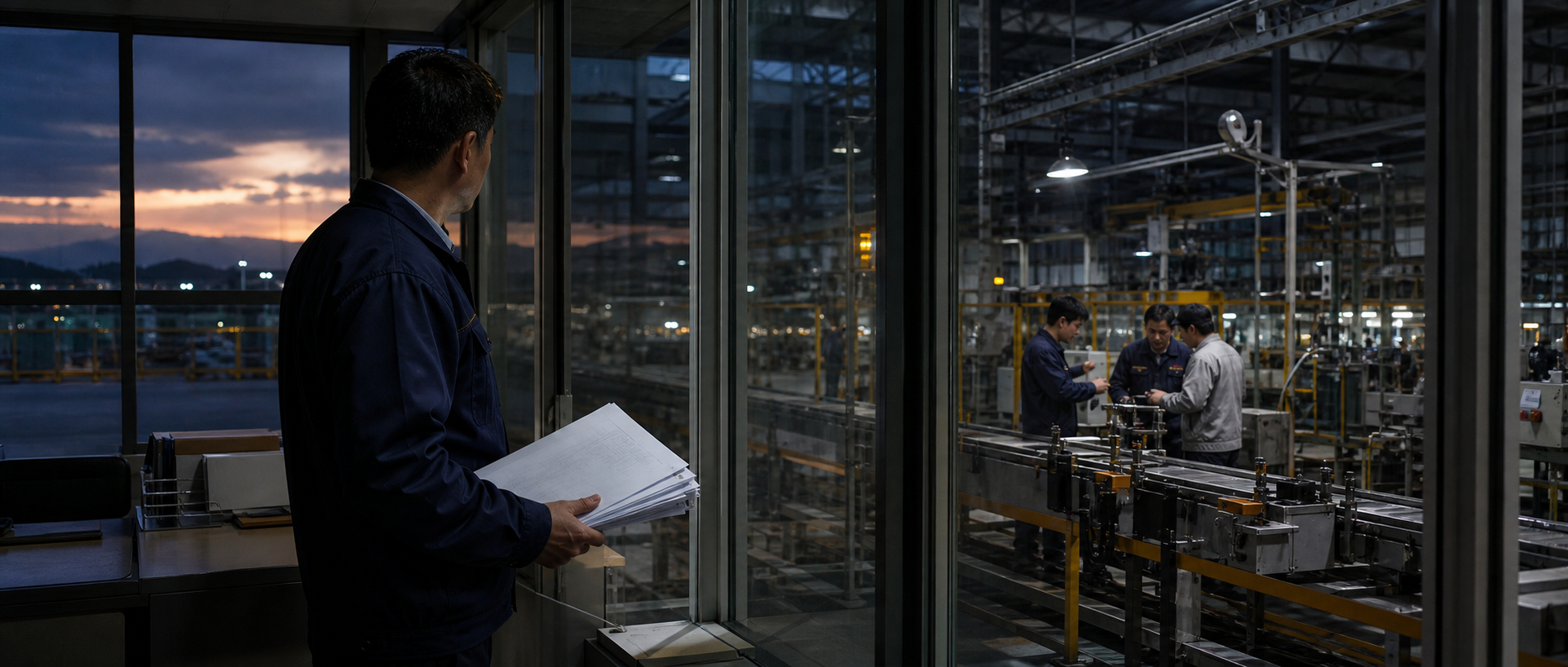
The more punctual the report is, the more likely it is that problems will be postponed until after the shift ends before being escalated.
Many factories have made daily reports, shift reports, and anomaly summaries increasingly timely in recent years. Numbers align just minutes before the shift ends.
However, when deviations, material shortages, pending inspections, or equipment fluctuations occur during the shift, shop-floor actions often get delayed, with issues only being reported in the shift's closing report once their impact becomes more apparent.
The issue is not that people lack the ability to write reports, but rather that the organization rewards completeness of reporting over early escalation. The more timely the report, the more likely shop-floor teams are to delay escalation until after the shift ends.
For factory owners, this is more dangerous than delayed reporting. It creates a false sense of security: data is present, processes are in place, and problems only surface later in a concentrated manner.
Shift supervisors are responsible for maintaining production output, shop floor managers for ensuring delivery, and plant managers have the authority to decide on line stoppages. The benefits of producing numbers during the shift fall to the current shift, while the risks—quality, delivery, and customer impact—shift to later stages. When authority and responsibility are misaligned, cooperation often gives way to self-preservation.
Why do on-time reports lead to late upgrades?
When shift supervisors know they are responsible for output and stability, their natural choice is not to escalate immediately, but to first assess whether they can handle the issue themselves. As long as there is an opportunity to recover, many problems are postponed.
If the reporting system only checks whether forms are filled out and at what time, it creates an unmonitored gap where 'timely decision-making during the shift' is ignored. On the shop floor, people are more concerned with submitting reports on time rather than raising issues early.
Whoever takes the initiative to escalate issues may face immediate production stoppage and output pressure. Those who wait until the end of the shift to report problems may appear safer in the short term. Over time, this leads to a habit of first recording issues and then deciding whether to escalate them.
If responsibilities such as accepting the issue, transferring it, and closing the abnormal handling are not clarified during the shift, the safest action becomes 'first document, then wait and see, and it may not be my responsibility.'
What the shop floor really lacks is not more screenshots
Many factories' abnormal and daily report groups are very active, with screenshots, numbers, and red/yellow/green status indicators. However, these materials mostly show what happened, not who is responsible for taking action now.
The speed of escalation is determined by the trigger threshold and the current responsible person. The degree of deviation that requires intervention, who can make a decision within minutes, and who confirms whether to continue or stop are the actual actions taken on the shop floor.
Without these predefined boundaries, the more polished the reports, the easier it is for the shop floor to shift responsibility to 'I have already reported it.'
Not all factories need to build a complex platform, but in reality, as long as shift supervisors, shop floor managers, quality, and equipment teams collaborate, issues should not be deferred to post-shift summaries.
More green lights does not mean less risk
Many owners focus on post-shift outcomes: whether production targets are met, whether abnormal counts are out of control, and whether daily reports are submitted on time. However, these are mostly outcome metrics, not pre-action indicators.
What should be monitored is how long it takes for an issue to be clearly acknowledged and assigned, and how long it takes to decide whether to continue or stop. If these two time intervals are extended, timely reporting becomes just a more orderly waiting list.
Change the report from off-duty file to mid-shift action
First, identify the three types of issues most damaging to delivery and quality, and set fixed escalation thresholds. Second, assign a single current responsible person to each issue by default. Third, include the acknowledgment and decision-making moments in mid-shift reviews, not just in end-of-shift summaries.
Small, loosely managed factories should first pull out the most common issues that are postponed to post-shift. Growing mid-sized factories should focus on improving the roles of those who acknowledge and make decisions. Large factories need to prevent the escalation process from becoming increasingly delayed despite expanding data fields.
If owners want to see real risks, they should not only ask whether reports are submitted on time but also ask which issues were raised early during the shift. The organization that is truly trained is not about form speed, but about what actions are taken first when facing risks.
The value of reports lies not in leaving issues to be clarified after the shift ends, but in ensuring that someone on the shop floor takes action, assesses, and resolves risks as they first emerge. Otherwise, the more timely the report, the more problems will be postponed until the last moment.
I am Huang Chaoxing, inventor of the TreeMES stack-light MES system. Follow me for ongoing analysis of shop-floor management and digital transformation trends in manufacturing.