
Mold Repaired and Dimensions Pass—Why Does the Process Drift an Hour Later?
At 9 a.m., a newly repaired stamping die was reinstalled. The repair technician stated it was fixed, and the quality inspector confirmed the first-off inspection was conforming. The team leader then resumed full production. An hour later, during a routine inspection, the dimensions began approaching the upper limit, forcing another shutdown.
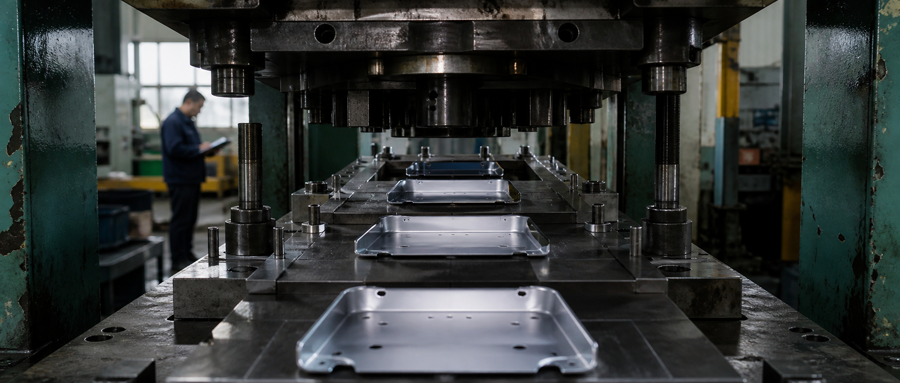
Why Does the Process Drift Again an Hour After the Size is Qualified?
At 9 a.m., a newly repaired stamping die was reinstalled. The repair technician claimed it was fixed, the quality inspector tested the first-off piece and found it conforming, so the team leader resumed full production. An hour later, during a routine inspection, the dimensions began approaching the upper limit, forcing another shutdown.
What puzzles the supervisor most is not that the die stopped again, but that each position seems to have completed its action: the repair technician has records, the first-off inspection has results, and the line startup has approval. Where exactly is the problem?
The answer often lies not in whether the die was repaired, but in the fact that the reactivation confirmation only proves a single moment, not that the combination of equipment, die, material, and parameters has entered a stable state.
The First Item is Qualified, Just the First Photo
In common practice, the repair technician focuses on cracks, gaps, and whether the die functions properly; the quality inspector checks whether the sample pieces are conforming; the team leader is concerned with whether the line can start up quickly. Although they look at different things, they all end the communication with the same 'production is allowed.'
If the first-off piece comes from a low-speed trial run, but full-speed production is resumed; or if the die temperature, lubrication level, and material tension have not stabilized, then the first-off piece can only indicate that the single piece is conforming, not that continuous production has stabilized.
Such factories are not lacking in responsibility, but rather in shared boundaries. When problems occur, operators fear stopping the line and taking responsibility, repair technicians feel that after reactivation, 'it's not my responsibility,' and team leaders, after accepting the order, lack the authority to coordinate, leading to natural breaks in transfer, handling, escalation, and closure.
Drift After an Hour, Clues Often Already Exist
Before dimensions gradually approach the upper limit, minor changes such as burr formation, altered stamping sounds, uneven ejection, or continuous fine adjustments to compensation parameters may already occur on the shop floor. These signals are scattered among operators, maintenance personnel, and quality inspectors and do not enter the same observation chain.
NIST's materials on equipment monitoring and diagnostics emphasize that condition data should help frontline personnel understand when and why performance thresholds are exceeded, while also considering downtime and quality. Simply recording the final downtime time still fails to explain how degradation occurs.
What the factory owner truly needs is not more sensors, but for the first hour after maintenance to leave comparable facts: trial stamping conditions, key dimension trends, abnormal signals, parameter adjustments, and production decisions.
Break Down the Restart into Three Confirmations
The first step is maintenance delivery. Maintenance personnel should clearly document what was changed, which risks still require monitoring, and how trial stamping is allowed, rather than just writing 'maintenance completed.'
The second step is controlled trial production. The team runs at agreed speed and quantity, and quality inspection verifies whether key dimensions continuously approach the boundary. Operators simultaneously record shop-floor changes such as sound, burr, ejection, and temperature.
The third step is stable production. Production is only released after the agreed quantity is completed, the trend has not worsened, and the remaining risks are taken over by someone else. If the boundary is triggered, it directly returns to the maintenance judgment, without relying on parameter adjustments to continue operating.
First Try a Pair of High-Frequency Maintenance Molds for a Week
Factory owners can select a mold that has been repeatedly repaired recently and fix four fields: the location of the repair, trial production conditions, trend observation items, and the authorized person for scaling up production. Medium-sized factories can connect these fields to maintenance work orders and first-off inspection records.
Mature factories should prevent overly detailed processes without any judgment. Each week, review the status of this mold—whether it has completed repair, is under controlled trial production, or has reached stable scaling. Not all factories need to build complex models; small factories can start with a simple table.
When the shop floor changes 'first-time pass' to 'process stability over a period,' repeated machine stops will no longer be solely the responsibility of the maintenance department but become a manageable issue that can be identified early and addressed promptly.
I am Huang Chaoxing, inventor of the TreeMES stack-light MES system. Follow me to understand the management logic behind the stories of manufacturing frontline operations.
