
Alarms Arrive Faster—Why Are Critical Exceptions Seen Later?
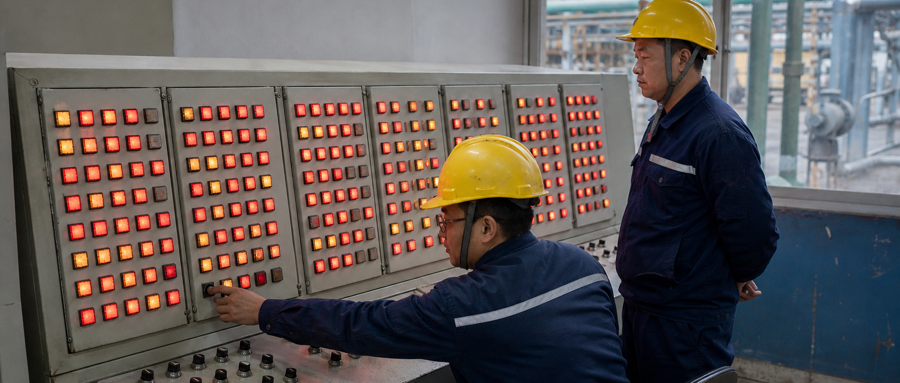
A machine's temperature fluctuation triggers multiple alarms on the screen, including communication, pressure, flow, and safety door alerts. The team leader continuously confirms and silences the alarms, but by the time the maintenance technician arrives, the critical temperature trend has been buried among dozens of notifications.
Why Are Critical Exceptions Seen Later If Alarms Arrive Faster?
A machine's temperature fluctuates, and the screen sequentially displays communication, pressure, flow, and safety door alarms. The team leader constantly confirms and silences the alerts, but by the time the maintenance technician arrives, the critical temperature trend has been buried among dozens of notifications.
the factory owner sees the system always alerting promptly and assumes it has strong early warning capabilities. However, shop-floor, the reality is different: too many alarms, too similar in priority, and unclear response actions. The louder the alarm, the less clear it is what to do first.
The value of alarms lies not in how many changes the system detects, but in its ability to direct human attention to the most critical point requiring immediate judgment and action.
Alarming for Every Change Equals No One Sorting
A machine can simultaneously sense dozens of signals, but humans can only understand and process them one by one. If prompts, warnings, faults, and interlocks all use the same color, sound, and pop-up, operators can only rely on experience to identify the root cause.
The UK's HSE suggests that each alarm should be useful, relevant, and have a clear response for the operator. Alarms should also allow enough time for operators to take action before the situation escalates.
This indicates that not all changes should trigger an alarm. Pushing uncompleted system judgments to the field results in frequent, unnecessary prompts that become background noise.
Alarm Flooding First Impacts Situational Judgment
A single anomaly can trigger a chain of consequences: spindle overload causing speed reduction, followed by takt time, temperature, and downstream waiting alarms. On the screen, it appears as four issues, but in reality, there is only one starting point.
The National Institutes of Health Facilities Technology Bulletin points out that during alarm floods, human processing capacity may become overloaded. The most dangerous aspect is not that no one sees the red light, but that people cannot identify which signal represents the root cause and which is merely a result within a limited time.
The Nuclear Regulatory Commission also lists the availability, procedures, communication, and training of auditory and visual alarms as important factors affecting personnel performance. Alarms are not just device-generated signals, but a human-machine collaboration mechanism.
First Ask 'Who Needs to Do What and How Long?'
First, eliminate alarm without action. Changes that only provide information and do not require immediate action should enter trend or event records, not occupy the highest level of sound and pop-up alerts.
Second, merge cascading alarms. Group a set of results under a main alarm based on equipment status and causal relationships, retain details for traceability, and display the most likely starting point on the homepage first.
Third, clearly define response. Each critical alarm should at least include the responsible role, confirmation time limit, first action, escalation conditions, and recovery standards. Operators should not wait for the red light to turn on before asking in the group who is responsible.
Step four, priority protection. Alarms related to personnel safety, equipment damage, and batch quality risks must be clearly differentiated; priority levels should not be arbitrarily increased based on what a department considers important.
Don’t Just Measure Alarm Closure Speed
If a team is penalized simply for not confirming promptly, the self-protective action most likely to occur is to first silence the alarm and then understand it. The system receives a quick confirmation, but the factory loses genuine response quality.
Operators fear mistakenly stopping equipment and being held responsible, team leaders worry about production output, and maintenance personnel are concerned about response time. If no one takes ownership, transfers, handles, escalates, or closes the alarm, the three parties will minimize actions and errors, silencing alarms first as self-protection. The plant manager must grant shutdown authority for critical alarms and separate compliance handling from efficiency penalties.
More effective root cause analysis should examine: whether the first action after an alarm is correct, whether it recurs, how many alarms lack defined actions, how many alarms occur during a single fault peak, and how long critical alarms are submerged.
Small factories should start by clearing high-frequency ineffective alarms from a bottleneck machine; medium-sized factories should establish priority levels and response cards; mature factories should then implement cause-and-effect suppression, status-based alarms, and flood analysis.
Factory owners can forward the root cause analysis table to plant managers, equipment supervisors, and team leaders, selecting one bottleneck machine to run for a week, focusing only on whether key anomalies are identified earlier and whether the first action is correct.
Alarms arriving faster does not necessarily mean greater safety. Only by reducing false alarms, highlighting real risks, and clearly defining response responsibilities can red lights stop being just screen noise and become reliable action triggers on the shop floor.
I am Huang Chaoxing, inventor of the TreeMES stack-light MES system. Follow me for ongoing analysis of shop-floor management and digital trends in manufacturing.