
Program Updated, but One Machine Still Uses the Old Parameters: What to Check
Program Updated, but One Machine Still Uses the Old Parameters: What to Check
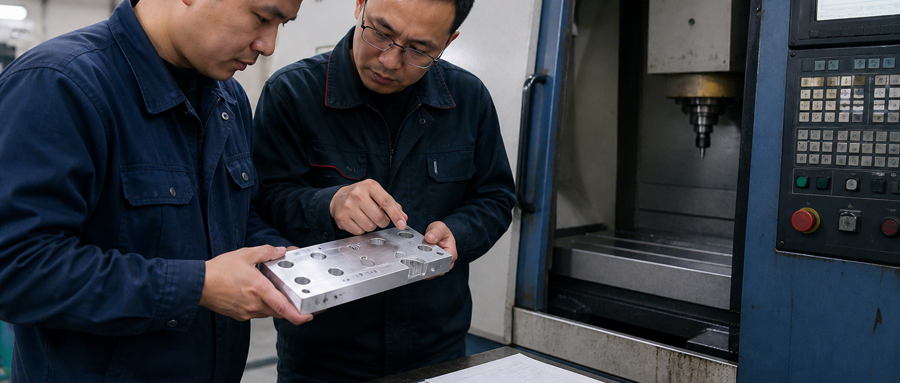
The program has been updated, why is a machine tool still processing according to the old parameters?
On Monday morning shift, the process engineer sent the updated machining program to six CNC machines. The first five produced acceptable first-off inspections, but the sixth continuously showed hole position deviations. The operator confirmed they selected the familiar program name, and the screen showed no errors, so no one realized it was still using the previous version from last week.
the factory owner saw only one machine making an error, but the shop floor faced full batch isolation: where did the old program come from, which products were affected, and whether other machines also had the same named version, all needed to be re-verified.
Such issues cannot be attributed solely to the operator selecting the wrong program. When program names, versions, release status, and the actual files on the machine are out of sync, even the most careful person may select the wrong option from a seemingly correct menu.
Files with the same name are most likely to create false positives
Many shops still transfer programs via shared folders or USB drives. The process engineer renamed "Final Version" and "Final Version 2" to the same product name, while shop-floor personnel only check the name, not the version number, checksum, or approver.
The NIST Manufacturing Framework recommends maintaining baseline configurations for manufacturing systems, recording software versions and parameters, and updating the baseline and retaining controlled rollback versions during upgrades. It addresses not file organization, but ensures that what each machine should be running at any moment can be verified.
The FDA's guidance on computer systems for food manufacturing also emphasizes that if a system controls the manufacturing process, the manufacturer must confirm it operates as intended. Just because a program can open and a machine can start does not prove that the selected version is the approved one.
Qualifying the first item cannot replace version confirmation
The old and new programs may differ by only one hole position, compensation value, or machining sequence. If the first-off inspection only measures standard dimensions and does not cover the changed characteristics, the error will be magnified across the entire batch after signing off.
A regulatory case involving an unverified version combination highlights that the issue is not only with the software itself but also with whether the actual software, firmware, and production objects align. The shop floor must also answer: who released it, which machine received it, who confirmed it, and which batch used it.
Change program distribution into a four-step closed loop
First, establish a unique identity. Bind the program number with product, process, version, release status, and validation value. The filename is for reading only and cannot serve as a version proof.
Second, restrict sources. Machines can only receive approved programs from a controlled directory; USB drives and local old copies are default non-production-ready. Even in emergencies, imports must have authorization and defined impact scope.
Third, read back confirmation. After sending, read the machine's actual version and key parameters and compare them with the controlled baseline. Only recording 'send success' cannot prove that the machine actually adopted the correct version.
Fourth, first-off inspection must cover the changes. The inspection plan should identify the characteristics affected by the current modification. Only after version confirmation and first-off results are both passed can mass production be unlocked.
Operators are responsible for output and may avoid frequent machine shutdowns for version verification; process engineers, though responsible for programs, may not have the authority to freeze equipment. Both parties are calculating gains and risks.
Medium-sized growing factories are particularly prone to increased responsibilities and incomplete authorization. Abnormalities from order acceptance, transfer, handling, escalation to closure must have someone in charge. When boundaries are unclear, the most practical self-protection on the shop floor is to do less and make fewer mistakes. The plant manager must clarify: who has the authority to stop the machine when the version is unclear, and who confirms within the specified time frame.
Small factories can start by controlling a shared directory and USB drives for one line; mature factories can then implement machine-level readback, layered permissions, and automatic locking. Not all factories need to build a central program library all at once, but the risk of arbitrary access to old versions cannot continue.
Factory owners can forward this inspection to plant managers, workshop supervisors, and team leaders to conduct random checks on a line: randomly select three machines, verify the controlled version, the actual machine version, and the latest batch records. If any of the three do not match, first close the loop, then discuss the automatic distribution rate.
The completion of a program update is not marked by the file being sent out, but by the old version no longer being misused, the actual version being readable, and the change characteristics having been validated. Only when these three points are achieved will the machine not execute outdated instructions under a familiar name.
I am Huang Chaoxing, inventor of the TreeMES stack-light MES system. Follow me to understand the management logic behind the frontline stories in manufacturing.