
Container Relabeled, but Batch Traceability Breaks at Repacking: What to Check
During the early shift, the warehouse split a full container of raw material into three totes. New labels on all three totes indicated the same material number, and quantities matched. In the afternoon, one tote was found to have an abnormal status, but the quality inspector could not determine which supply batch it came from, nor could they locate the other two totes to which work orders had been assigned.
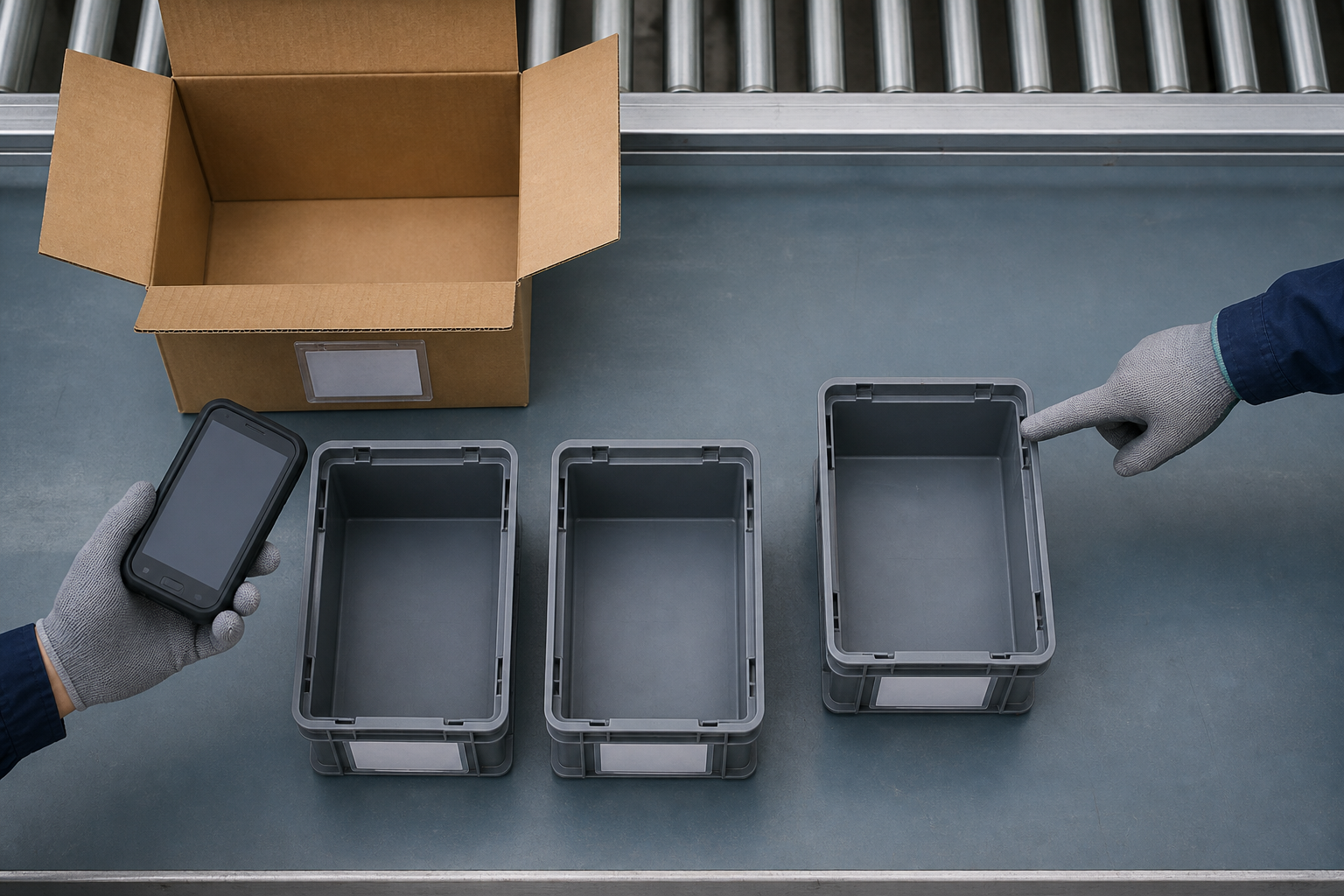
During the morning shift, the warehouse split a full package of raw materials into three returnable containers. The new labels all indicate the same material number, and the quantities match. In the afternoon, one box was found to have an abnormal status, but the quality staff could not determine which supply batch it came from, nor could they locate the other two boxes to which work orders had been assigned.
What the factory owner saw was a label missing a batch number, but what was on site was a complete distortion of traceability: which products may have used it, who performed the repackaging, and whether the abnormal box originated from the same batch as the already released material—all needed to be re-investigated.
Such issues are often attributed to warehouse carelessness. The real break point occurs when the physical identity changes carriers, yet the system still treats 'original packaging has been issued' as the end of the process.
Label Duplicates Name but Does Not Inherit Identity
When material moves from original drums, reels, or bags into smaller boxes, at least three things happen: carrier changes, quantity splits, and destination branching. Simply copying the material name is insufficient to answer questions about the source batch, current status, and remaining quantity.
FDA Q7A recommends that after repackaging, new containers should retain the material name or code, receipt or control number, quantity, and applicable retest dates. The key is not longer labels, but that the new container can still trace back to the original batch.
FDA also warns that container contents may differ from labels due to filling, repackaging, or labeling and label replacement errors during storage. A visually correct appearance only proves the label looks genuine, not that the box's identity has been confirmed.
Three Records Must Be Generated at the Same Time for One Dispensing
The first step is to establish parent-child relationships. Verify the original packaging and new returnable containers, generate a unique container number for each sub-box, and record the parent batch, split quantity, time, and personnel.
The second step is to inherit the status. If the original batch is in a status such as pending inspection, qualified, frozen, or returned, the sub-boxes cannot independently change to 'available'. Status changes must originate from the same approval source.
The third step is to write back the information. When sub-boxes reach the line, are assigned to a work order, returned to the warehouse, or scrapped, the container number and quantity must be recorded. Only tracking the material requisition form may fail to locate the final position of the boxes.
The FDA's guidelines on controlled manufacturing require that a unique batch identifier can link to suppliers, receipt dates, material status, and the final product, preventing in-process materials from being confused. This principle is particularly suitable for factories with batch-sensitive operations and frequent repackaging.
First Block the Three Most Realistic Detours
Warehouse staff are responsible for material issuance speed; the benefits of additional verification are not obvious, yet they may be held accountable for delays. Team leaders are responsible for production output; during temporary box replacement, they may take the boxes first and then complete the requisition later. Quality officers can freeze batches, but may not know where the physical items have gone.
Medium-sized growing factories are most prone to this issue of increased responsibilities and incomplete authorization. Abnormalities must have responsible parties at each stage from order acceptance, transfer, handling, escalation, to closure; otherwise, doing less and making fewer mistakes will become the self-protection choice for each position.
The plant manager must ensure: sub-labels cannot be printed without a parent batch, containers without a container number cannot be released to the shop floor, and anyone with authority must isolate materials when status is unclear. A checklist should clearly define responsibilities, deadlines, and conclusions from a root cause analysis.
Old labels also pose risks. Before reusing returnable containers, old markings should be removed or covered. Failed labels must be immediately discarded. It is prohibited to leave two still-scannable labels on the same container.
Small-scale factories can start with three high-risk materials, using container numbers combined with paper receipts. Mature factories should then integrate with warehouse, work orders, and quality status. Not all materials require the same level of detail, but batch-sensitive materials cannot trace only to the warehouse entrance.
Factory owners can have the warehouse and shop floor randomly select one repackaged container to trace back to the original batch, current status, remaining quantity, and destination. If any of the four items cannot be answered, the repackaging node should be fixed first, not wait until a quality issue occurs to search the entire inventory.
The completeness of the traceability chain is not determined by whether the original packaging has an inbound label, but by whether the identity, status, quantity, and destination of the material can be continuously proven after it has been transferred to a new container.
I am Huang Chaoxing, inventor of the TreeMES stack-light MES system. Follow me for insights into the management logic behind frontline stories in manufacturing.