
Supplier Changed Raw Material—Why Is Mass Production Unstable after a Successful Trial?
A batch of raw materials from a new supplier arrived at the factory, and a small trial produced 20 pieces with qualified dimensions and appearance. The shop floor proceeded with the original parameters. Starting from the second shift, equipment alarms increased, and yield fluctuated, while operators debated whether the variation was due to differing operating methods.
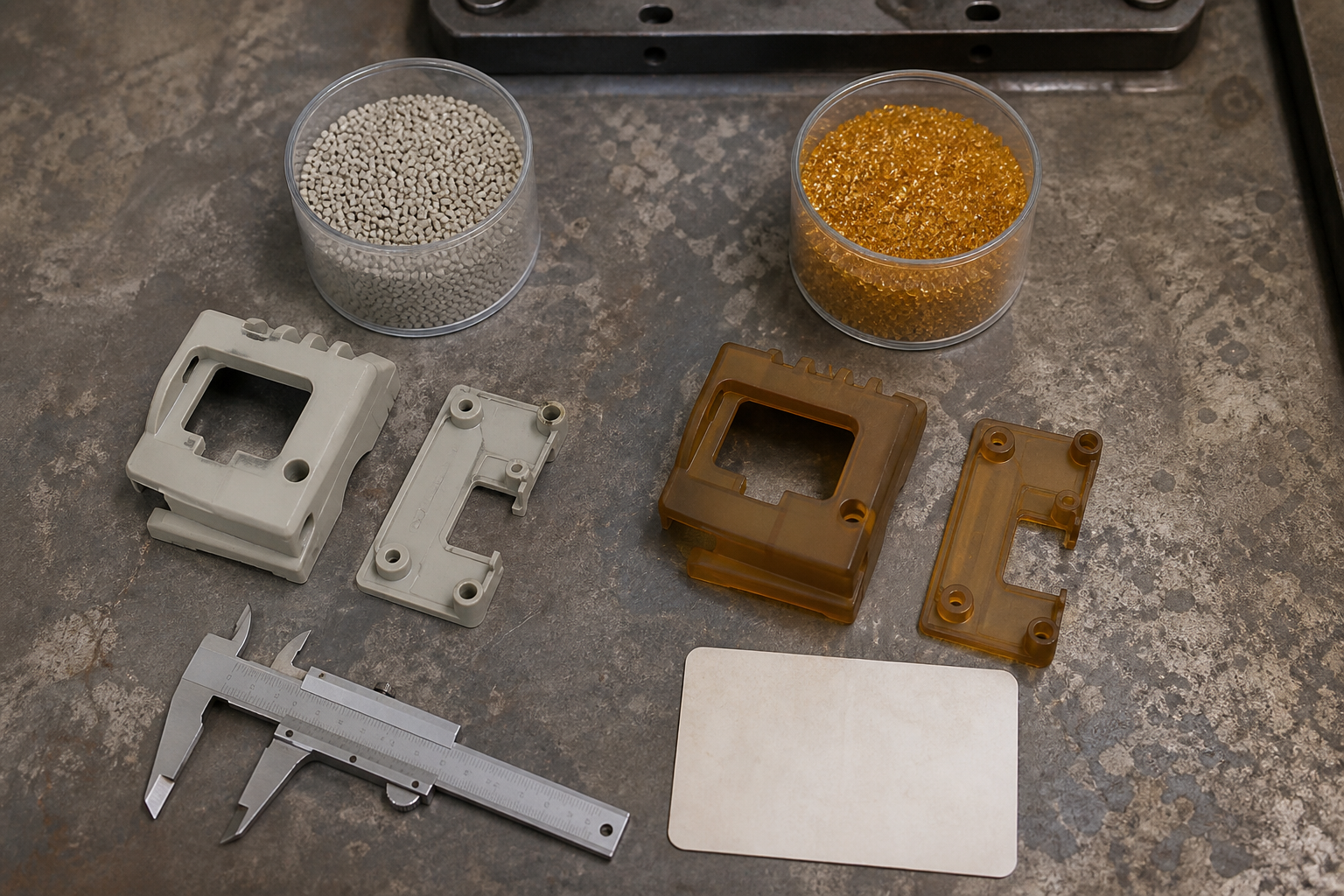
A batch of raw material from a new supplier entered the factory. Twenty samples were produced during a small trial, with dimensions and appearance meeting specifications. The shop floor then proceeded with full production using the original parameters. In the second shift, equipment alarms increased, and yield fluctuated unpredictably, yet the team continued to debate whether the operators' techniques were different.
What the factory owner sees is that the supplier has been approved and the incoming material has been released. What is missing on the shop floor is another kind of proof: whether the stability window of the existing process still holds after the raw material change.
This is not an isolated case for a single factory, but a common management scenario when changing materials. Trial production success only proves that a small number of samples can be made well, and cannot replace the observation of fluctuations under mass production conditions.
The Change Order is Signed, but the Risk Has Just Entered the shop floor
The raw material name and specifications have not changed, but this does not mean that viscosity, hardness, moisture content, surface condition, or processing response are the same. Changing the supplier source can bring new fluctuations into the equipment, molds, and process parameters.
FDA Q7 explicitly states that changing the source of a critical raw material should be included in a change control process. Materials should remain isolated until they are inspected, sampled, or tested and released. The key is to first identify the changes and then decide how to validate them.
The early shift often receives only a 'approved' notice. Shift leaders are focused on delivery and are reluctant to expand the trial production. Process engineers fear that proposing more validation will delay the schedule. Purchasing is concerned with delivery. Quality has the authority to release materials but may not have control over the equipment window.
When responsibility is diffused and deadlines are tight, the benefits of additional verification are not obvious, while delays may lead to accountability issues. Minimizing actions to minimize errors becomes a self-protection strategy. The original supplier's parameters are directly copied, files are closed, but production risks remain on the shop floor.
Split a Change Order into Three Pieces of Evidence
The first section is pre-change assessment. List affected products, key material properties, process parameters, inspection items, and inventory boundaries. Old and new materials, as well as mixed usage conditions, must be distinguishable through physical and batch records.
The second section is phased validation. Small-scale trials answer whether it can be done, expanded batches answer whether fluctuations will be amplified, and continuous shifts answer whether stability can be maintained after personnel, equipment, and environmental changes. Acceptance criteria must be clearly defined for each phase.
The third section is post-implementation review. FDA's ICH Q10 requires that after a change is implemented, it must be confirmed that the target has been achieved and that no adverse impact on product quality has occurred. Approval is not the end; stable operation is.
FDA's ICH Q9(R1) also reminds that process drift and excessive variation can lead to unpredictable quality, delivery, and yield outcomes. Focusing only on final pass rates can easily miss signals of parameters gradually approaching their limits.
What the Factory Owner Wants to Ask Is Not "Has There Been Approval?"
First ask four questions: Are new and old materials isolated? Can affected work orders be locked down? Are expanded batch acceptance criteria clear? Who will review the implementation and when?
Medium-sized growing factories often get stuck here: procurement, quality, process, and production each have a segment of responsibility, but no one is accountable for stable mass production. The plant manager should designate a change responsible person, with clear time limits for issue acceptance, transfer, escalation, and closure.
Not all factories require the same level of complexity. Some have few product varieties and stable raw materials, so they can initially focus on managing the three most critical raw materials. Small factories can start with paper batch cards and initial tracking, while mature factories can later connect supplier, inventory, process, and quality data.
System complexity does not necessarily mean effective control, and high-risk industry practices should not be generalized as a uniform solution for all factories. Tools can vary, but the change evidence chain must not be missing any links.
Factory owners can forward this checklist to the plant manager and workshop supervisor. On the same day, randomly select a closed supplier change record, trace it back to the actual work order, and check the continuous shift parameters and defect trends. If only the approval signature is visible but no implementation results, the change has not truly closed the loop.
Trial production passing addresses whether something can be made, while mass production verification addresses whether it can still be consistently done after changes in personnel, shifts, and fluctuations. Supplier material changes must address the latter question to avoid turning approval into a pass for risk.
I am Huang Chaoxing, inventor of the TreeMES stack-light MES system. Follow me for in-depth insights into the management logic behind frontline stories in manufacturing.
