
How to Resume Production After Equipment Maintenance: Four Safety and Quality Checks
Maintenance says the equipment is repaired, and production wants to restart immediately to recover output. As the operator presses Start, tools are still beside the guard and another maintenance worker is still collecting cables behind the machine.
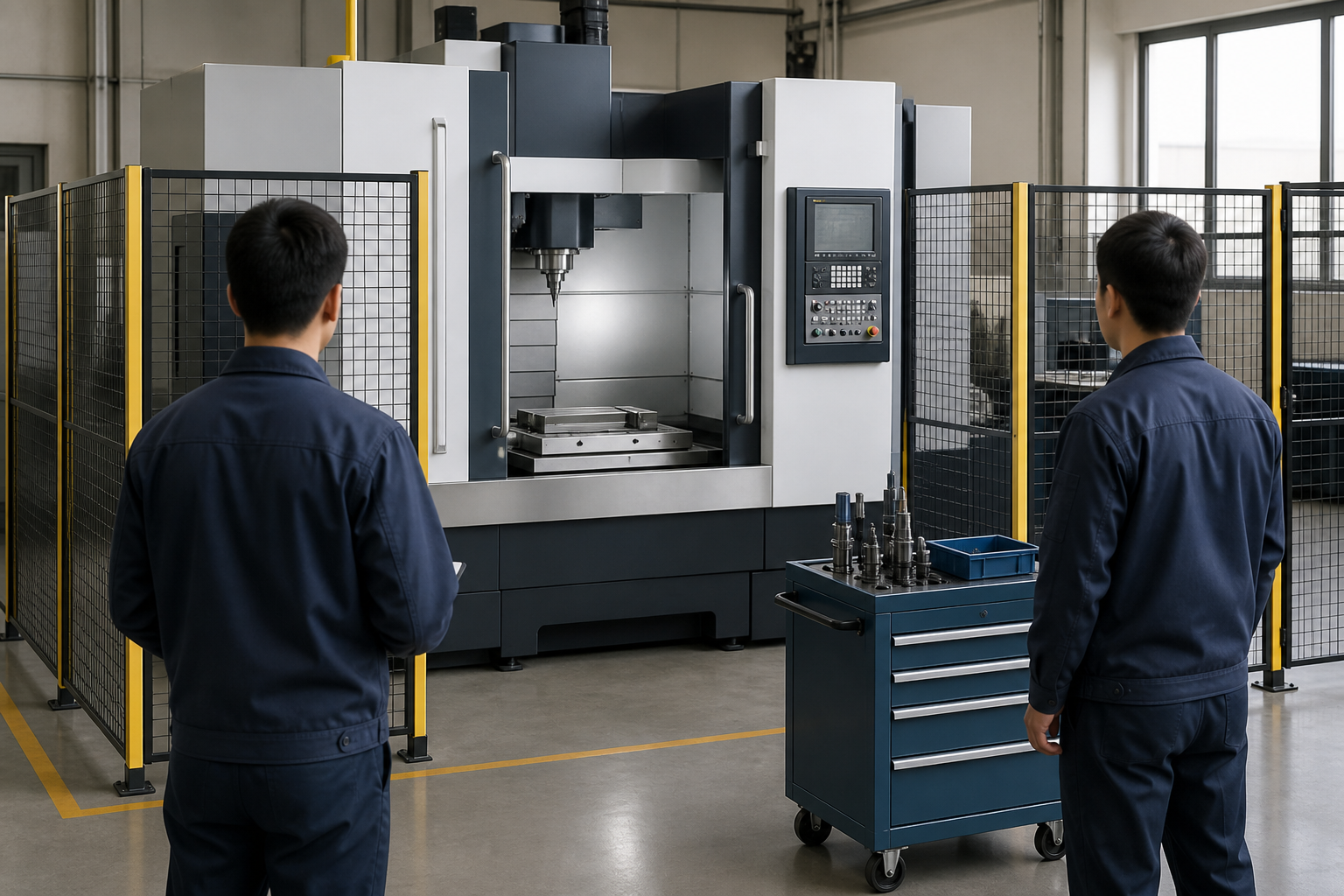
Maintenance says the equipment is repaired, and the production supervisor wants to restart immediately to recover output. As the operator presses Start, tools are still beside the guard and another maintenance worker is still collecting cables behind the machine.
‘Fault resolved’ and ‘approved to resume production’ are two different states. The former indicates the repair may have been successful, while the latter requires proof that personnel safety, equipment integrity, restoration of protective measures, and product quality all meet the required conditions.
For repairs involving electrical, mechanical, hydraulic, pneumatic, thermal, or other hazardous energy sources, follow the plant’s energy control procedure to complete isolation and verification before proceeding with the four-step resumption confirmation process below.
Step 1: Clean the shop floor and confirm equipment completeness
Inventory tools, spare parts, temporary supports, waste materials, and removed components. Check if guards, interlocks, sensors, fasteners, and wiring have been restored.
OSHA requires that before removing locks and restoring energy, the equipment and work area be inspected, unnecessary items be removed, and the condition of equipment components be confirmed to be intact. Site cleanup is not about tidying up, but about meeting resumption conditions.
Step 2: Clear personnel and complete responsibility handover
Verify that maintenance, operating, and collaborative personnel have left the hazardous area, and notify all affected individuals that the equipment is about to resume operation. The removal of locks or tags must be carried out according to the company's approved energy control procedure.
During shift change maintenance, clearly document who is still working, who takes over energy control, and which tests remain incomplete. OSHA's interpretive guidelines emphasize that the new shift must re-verify isolation, and cannot rely solely on the verbal conclusion from the previous shift.
Step 3: Restore protection for short-term power testing
First restore interlocks, protection, and safety parameters, then follow procedures to remove energy control. When electrical testing or positioning is required, supply energy only for the necessary duration, de-energize according to risk after testing, and restore control.
In no-load or low-risk mode, check rotation direction, pressure, temperature, speed, abnormal noise, leakage, and alarm. Production cannot commence if any protection is bypassed, parameters are not restored, or abnormalities lack responsibility assignment.
Step 4: Verify the first sample, then gradually scale up
No-load normal operation does not equate to product conformity. Load the correct tooling, materials, and program, and produce the first-off inspection under approved conditions. Check critical dimensions, appearance, functionality, and process parameters.
After the first-off inspection is qualified, start with a small batch run to observe if faults reoccur, if parameters drift, or if protections are falsely triggered. When maintenance has modified key components or control logic, process and quality should jointly confirm the production boundary.
A four-step card to resolve labor induction debates
The card retains four groups of sign-offs: site and equipment, personnel and handover, protection and testing, first-off inspection and ramp-up. Each group includes the responsible person, completion time, abnormal handling, and evidence location. If any group is missing, the status remains pending confirmation.
Maintenance teams fear prolonged downtime, production fears missed deliveries, quality fears incorrect product release, and safety personnel may not be on duty at night. Doing one more step may lead to accountability, while doing less reduces errors, becoming a self-protective approach. Some say 'It's not my responsibility,' and the resumption confirmation gets stuck at the handover point.
The plant manager must clarify authority and responsibility: who is responsible for accepting, transferring, handling, escalating, and closing anomalies, and what benefits come from timely reporting of incomplete items. How production, safety, maintenance, and quality should coordinate must also be included in the night shift mechanism.
Not all equipment requires the same level of sign-off. Some factories have simple equipment and low risk, so they can start by using paper cards for high-risk equipment. Medium-sized growing factories can link maintenance work orders with resumption status, while mature factories can integrate interlocks, parameters, and first-off data.
Automatic data collection is not suitable for every piece of equipment, and high-risk energy scenarios should not be generalized to all maintenance practices. Regardless of how simple the tools are, the completion of maintenance does not automatically make the equipment ready for production.
Factory owners can forward the four-step checklist to plant managers, workshop supervisors, and team leaders. They can randomly select a recently repaired machine and require shop-floor evidence of the four steps within two minutes. If the response is only 'Maintenance said it's okay,' they should first add resumption access control and not wait until an injury or batch defect occurs to ask who authorized the machine to start.
I am Huang Chaoxing, the inventor of the TreeMES stack-light MES system. Follow me for more practical factory-management methods.
