
Line Clearance Signed Off—Why Did the Previous Batch Label Enter the Next Order?
Early shift changeover involved packaging specification adjustment, operator completed line clearance, and the team leader signed off on the form. Midway through the new order, an inspector found the previous batch's labels in the workbench drawer, forcing a halt to inspect each box individually.
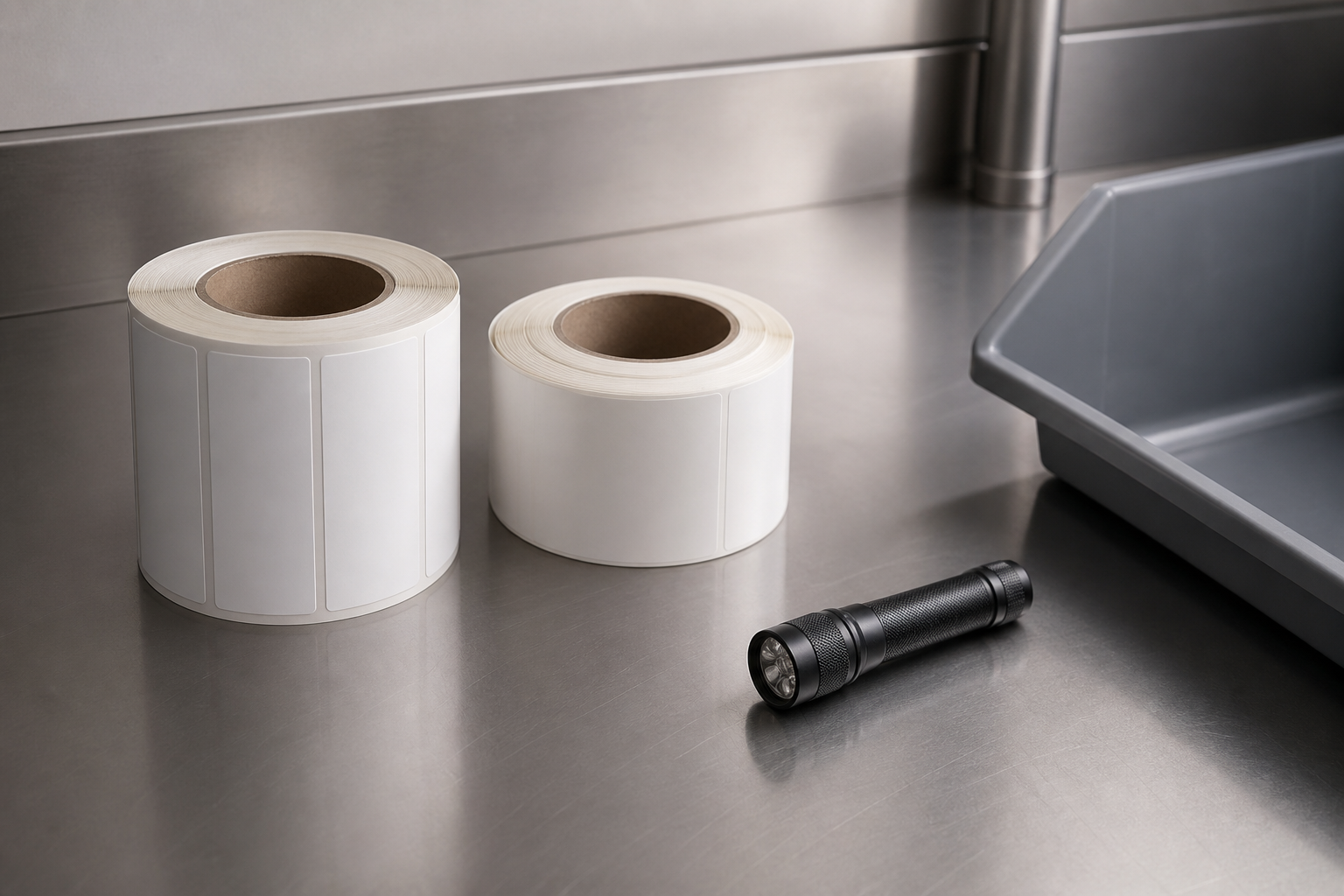
Early shift changeover involved packaging specification adjustments. Operators completed line clearance, and the team leader signed the form. Midway through the new order, an inspector found leftover labels from the previous batch in the workbench drawer, forcing a stop to inspect each box individually.
The most obvious conclusion is that the line clearance was not thorough. However, the real issue is often that while the form was signed by someone, it did not confirm that high-risk areas were actually inspected or that the quantity of old labels had been fully accounted for.
Why Can't a Signature Sheet Prevent an Old Label from Being Used?
Common line clearance forms only include three checkboxes: 'equipment, site, and materials cleared.' This reduces different risks to a single statement, making it easy for operators to follow a habitual inspection route, and for team leaders to only see the result, not the inspection path.
Labels may be left in the printer output bin, on the workbench shelf, at the bottom of the returnable container, next to the waste bag, or in the rework area. If the form does not specify a position, clearing the field becomes a memory-dependent action.
Usage quantities are often overlooked. The amount issued by the warehouse, the amount used, scrapped, or returned shop-floor must match. If they don't, the missing labels may still be present shop-floor. Missing either a spatial inspection or quantity balance means the process is not truly complete.
Why Did Shop-Floor Personnel Still Sign Despite Knowing the Risks?
Such issues commonly occur in growing factories with multiple product types, small batch sizes, and frequent line changes. Operators are responsible for changeover speed, team leaders for output, and quality personnel for release. However, who has the authority to extend line clearance time is often unclear.
In smaller factories, line clearance can be cross-verified by team leaders and quality personnel. Mature factories have automated verification systems, but manual judgment is still required for abnormal discrepancies. Different levels of control require both spatial and quantitative evidence.
Actively reporting 'two labels are still missing' means the entire line will be halted, and the reporter may be questioned about management issues. The safest self-protection action becomes signing off and starting the machine first, then explaining the anomaly once it actually occurs.
Factory owners need to clarify: quantity discrepancies can lead to a pause, with team leaders organizing the search and quality personnel determining whether to release the batch. The person who discovers the discrepancy should not be penalized for a justified line stop, while those who conceal the gap bear responsibility.
It is also necessary to clearly document who accepts the order, who handles it, when it escalates, to whom it is transferred if unresolved, and who closes the issue. This ensures that proactive reporting reduces batch isolation rather than making the reporter solely responsible.
Convert Clearing into Three Verifiable Actions
The first step is to check the space. Follow a fixed route to inspect supply points, printing stations, workbenches, equipment gaps, in-process areas, rework areas, and waste areas. Each location must have inspection results, not just a single overall check.
The second step is to balance the quantity. Place the usage, consumption, scrap, return, and in-process occupancy in one line for verification. Only when the discrepancy is zero or has a physical location and approved explanation can the next step be taken.
Perform reverse confirmation in the third step. After the first box of a new order is produced, not only should the label text be verified, but the product, batch, and specifications on the label should also be scanned and compared with the current work order binding information to prevent incorrect batch numbers from being used despite correct styling.
The System Should Leave Evidence, Not More Forms
Each line changeover should generate a single clearance event, linking the old and new work orders, executor, reviewer, inspection path, label balance, and first box verification. Unfinished items should remain visible and cannot be covered by a general signature.
Abnormal closures should also be independently documented. Where missing labels are found, whether they have entered the product, which boxes need to be isolated, and who approved the resumption should all be linked to this line changeover to avoid the next shift only seeing 'completed'.
the factory owner only checks three things weekly: the number of times label quantity discrepancies occur, the number of times leftover items are found after clearance, and the number of products isolated due to line changeovers. Repeated issues at the same location should prompt changes to shop-floor storage and inspection order, not just continued emphasis on diligence.
The true value of clearance is not to speed up signing, but to ensure that anything left from the previous batch cannot quietly enter the next order.
I am Huang Chaoxing, inventor of the TreeMES stack-light MES system. Follow me for insights into the management logic behind frontline stories in manufacturing.
