
Work Instruction Revised—Why Is the Previous Parameter Sheet Still beside the Machine?
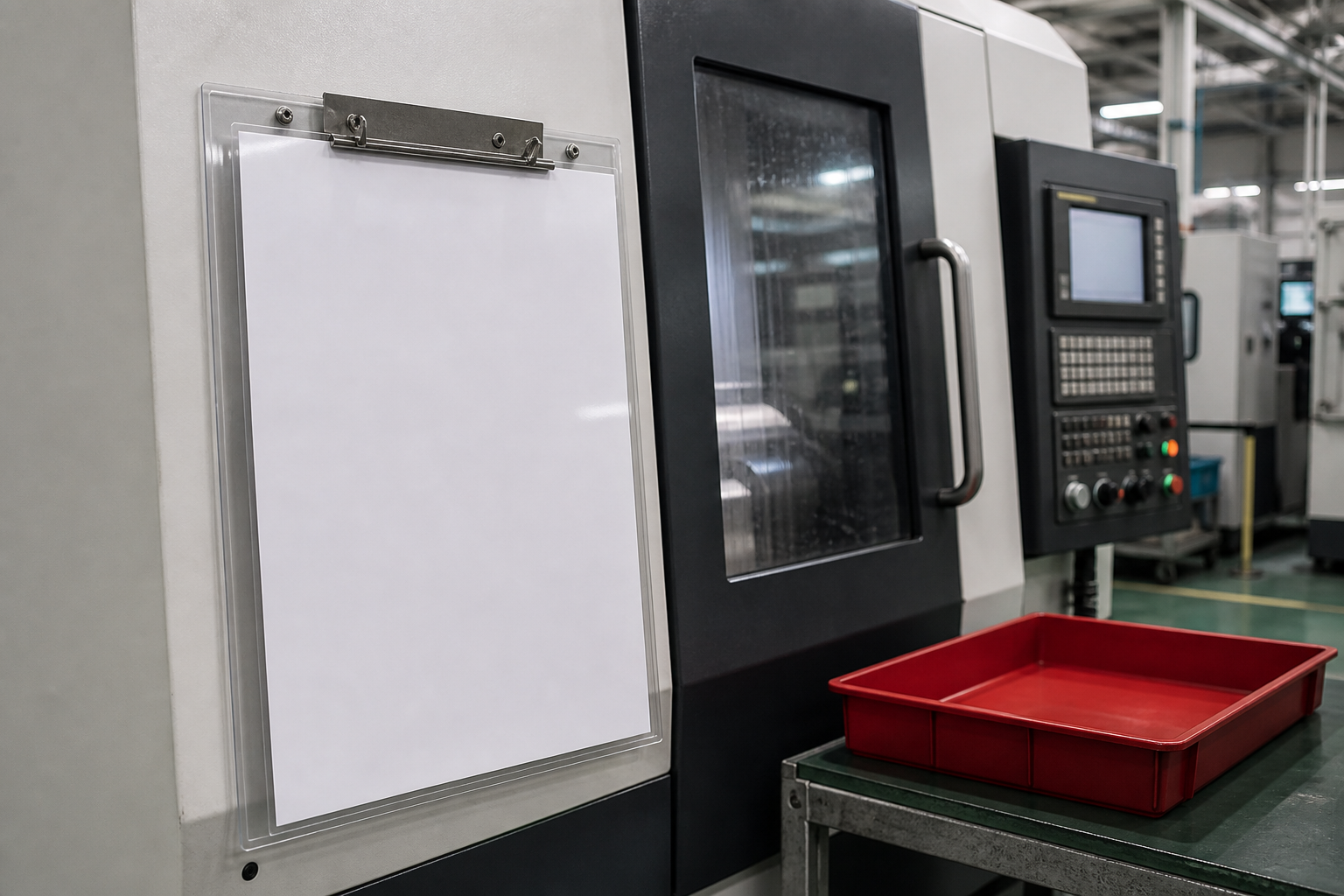
During the night shift startup, the dimensions of the first batch of parts continuously exceeded the upper limit. The process engineer checked the system records and found that the new parameter sheet had been approved two days earlier. However, the laminated process card next to the machine was still the previous version, and the operator set the parameters based on the old values on the paper.
Why Is the Previous Parameter Sheet Still beside the Machine?
During the night shift startup, the dimensions of the first batch of parts continuously exceeded the upper limit. The process engineer checked the system records and found that the new parameters had been approved two days ago. However, the laminated process card next to the machine was still the previous version, and the operator set the parameters based on the old values on the paper.
the factory owner is likely to ask: "The new version wasn't already distributed?" But "approval completion" only indicates that the document is effective in the system, not that the correct version has reached the workstation, nor does it mean the old version has lost its influence.
21:40, the new version is in the system and the old version is at hand
This is a common scenario in growing factories during version changes. During the day shift, the change notice was received, and "read" was replied in the group chat. During the night shift handover, there was no process engineer on site, and the operator chose the closest and most familiar paper card.
He was not intentionally violating the rules. Checking the terminal requires walking an additional dozen meters, the file name in the system is similar, and the paper card still has handwritten experience values from the last machine setup. For someone who needs to start the machine within ten minutes, the old version is the most reliable answer.
If management only asks "Why didn't you check the system?", the frontline will quickly respond "Read", but it won't change the actual retrieval path. Version control must manage the final version that the operator actually uses, not just the status in the document library.
22:05, even if the first item passes, the risk will not be eliminated
The first-off unit may initially fall within tolerance, then drift as tool temperature rises or material conditions vary. If the record says only ‘first-off inspection passed,’ no one can tell which parameter revision and work instruction were used or who completed the verification.
The US FDA's Good Manufacturing Practice requires written procedures and their revisions to be reviewed and approved, with deviations documented and explained. While industries differ, a common reminder applies: approval, execution, and deviation must form a continuous chain of evidence.
22:30, seal the entrance to the old version first
The first step is not to issue another notice, but to establish a revision clearance process. Before the new version takes effect, collect paper cards, board photos, shared disk copies, and personal printed versions from each workstation. For items that cannot be recovered, clearly mark them as obsolete and assign responsibility.
The second step is to provide each workstation with a unique entry point. After scanning the workstation code, only the currently valid version is opened, displaying product, process, equipment, version, and effective time. Operators no longer need to guess which file is the latest among multiple files with the same name.
The third step is to include the version number in the first-off inspection record. Equipment parameter confirmation, first-off inspection, and release must all reference the same version number. When versions are inconsistent, release is locked, not left to inspectors to judge based on experience that 'it should be fine'.
The fourth step is to provide an official channel for emergency deviations. If temporary parameter changes are needed during night shifts, the reason, scope, authorized person, and recovery conditions must be recorded. Without such a channel, reasonable adjustments may be written on paper corners and copied by the next shift.
Factory owners should treat this as an issue related to delivery, quality, and cost. Those who actively accept orders with old versions cannot be held responsible; shift supervisors are responsible for upgrades, process engineers for closure, and cross-shift issues must have clear handover procedures. It is not acceptable to leave problems for night shifts with just a 'not my responsibility' statement.
Before handing over, use three back-checks to verify the closed loop
Randomly select three workstations and trace back from the machine to the system: check if the current execution document is the valid version, whether the first-off inspection record includes the same version number, and whether the old version has been marked as invalid. Any mismatch at any point cannot be resolved by simply adding a signature.
Small factories can use controlled paper cards with expiration dates; medium-sized factories are better suited to have work orders, equipment, and process versions automatically linked; maturely managed factories should also check whether offline terminals and interface caches are updated in a timely manner.
Not all factories need complex systems, but any size must clearly define permissions, responsibilities, boundaries, and authorization. The factory owner can forward this checklist to the plant manager, workshop supervisor, and team leader, starting with verifying one production line.
The truly effective metric is not the 'change notice sign-off rate,' but the number of workstations where the old version was found after the change took effect, the number of times version mismatches were intercepted, and whether deviations can be closed before affecting more batches.
I am Huang Chaoxing, inventor of the TreeMES stack-light MES system. Follow me to understand the management logic behind frontline stories in manufacturing.
