
Alarm Cleared—Can the Machine Be Reset? Check Safeguards, People, Energy and First-Off Quality
Alarm Cleared—Can the Machine Be Reset? Check Safeguards, People, Energy and First-Off Quality
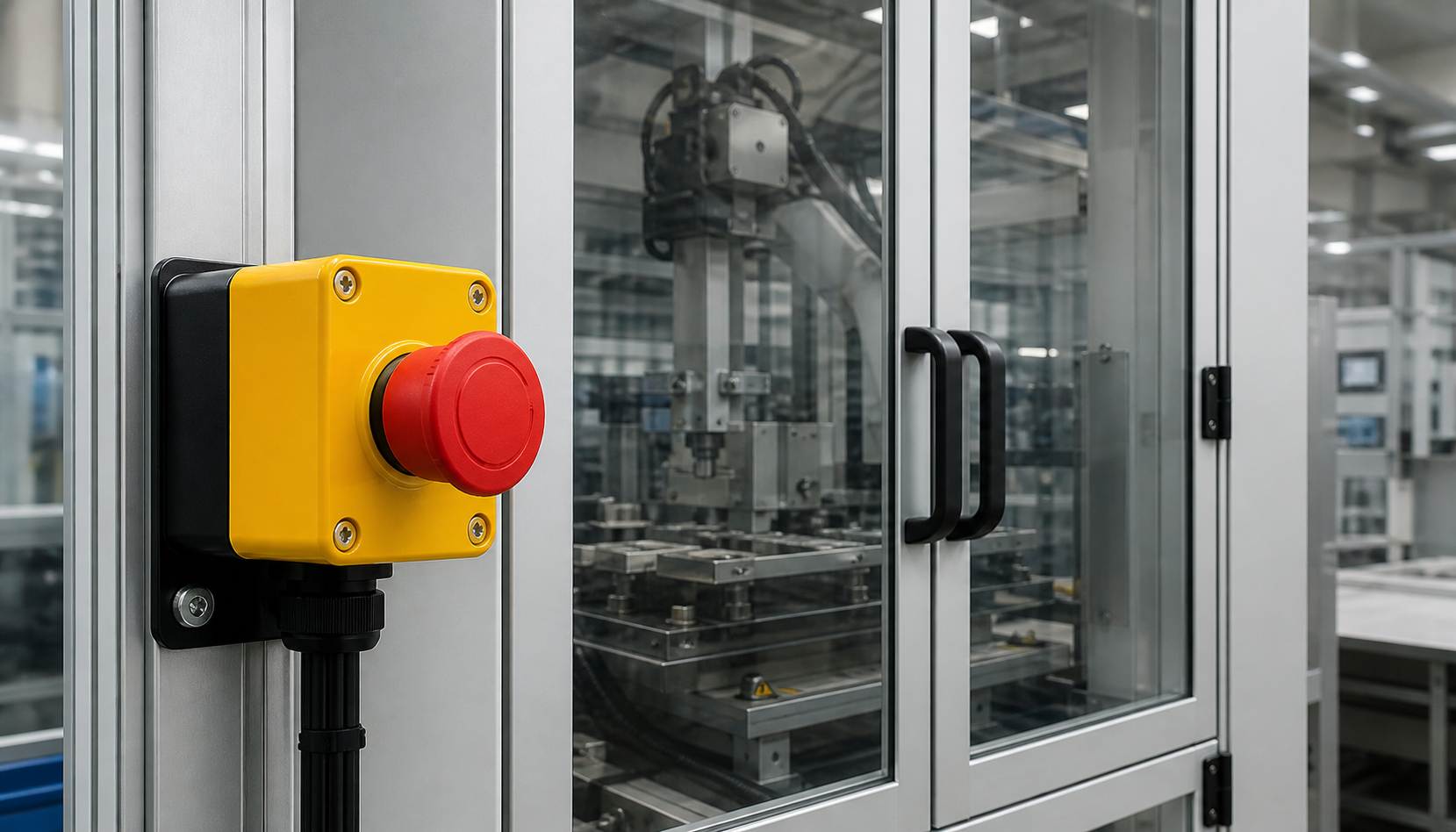
A machine suddenly alarms and stops. After the operator clears the jam, the red text on the screen disappears. The team leader urges to resume production, and the operator's finger is about to press the reset button, but no one confirms whether the maintenance personnel have left the back of the machine.
The disappearance of the alarm only indicates that the triggering condition may have temporarily recovered, not that the machine is ready for safe and stable restart. For factory owners and shop-floor supervisors, resetting is not a button press but a re-approval process.
Check if Protection is Restored
First, check if protective doors, guards, interlocks, light curtains, emergency stops, and safety positions are restored. Any missing, damaged, or bypassed protective components, such as removed guards, temporarily shielded sensors, or tools stuck at the door edge, may turn 'alarm cleared' into a new risk.
OSHA machine protection guidelines require safeguards to prevent personnel from contacting operating points, pinch points, and rotating parts. Before resuming service after maintenance, it is also necessary to confirm that the protective devices are in place and functional.
First, the reset person walks around the machine's hazardous area and checks the protective status according to the checklist. Any missing, damaged, or bypassed protection must not be justified by production pressure and must be handed over to authorized personnel for handling.
Check if Personnel Have Cleared the Area
Confirm there are no personnel in the startup risk zone on the operator side, equipment backside, within the guardrail, on the platform, or at adjacent workstations. When multiple people are handling a fault, one designated person should count the personnel and issue a unified restart command; individuals should not assume others have already checked.
OSHA requires checking the area during the equipment return-to-service procedure to ensure that energizing and starting the equipment will not endanger employees and to notify affected personnel that the equipment will resume operation.
Step two involves the team leader accepting the work order and verifying personnel presence; if someone has not confirmed, the process should not proceed. An operator reporting "someone is still inside" cannot take responsibility; otherwise, the shop floor may remain silent to avoid criticism.
Check if Energy is Restored According to Procedure
If the handling process involves reaching into a hazardous area, removing guards, maintenance, adjustment, or potential accidental startup, the stop button should not be considered as energy isolation. The factory's procedure should be followed to identify electrical, gas, hydraulic, mechanical potential energy, and residual pressure.
OSHA's hazardous energy control standard requires preventing unexpected energization, startup, or release of stored energy during maintenance and explicitly prohibits unauthorized personnel from restarting equipment that has been locked out or tagged out.
Step three involves re-energizing only after authorized personnel confirm the job is complete, tools are removed, locks are removed according to procedure, and affected personnel are informed. Alarm reset cannot replace energy control, and screen prompts cannot replace shop-floor confirmation.
Verify the First Piece
The machine being operational does not necessarily mean the process has been restored. Issues such as jamming, overload, power interruption, or sensor anomalies may alter positioning, clamping, temperature, pressure, and count states. Therefore, the first piece after resuming production should be verified based on risk, selecting dimensions, appearance, or functionality.
Link the alarm code, corrective action, person who reset, reset time, and first-off inspection results to the same downtime event. If the first-off piece is nonconforming, retain the downtime status and escalate the issue. Continuous trial runs should not be used to mask problems.
Combine the Four Items into a Reset Card
Before resetting, ask only four questions: Is the safeguard intact? Are personnel cleared from the area? Has energy been restored according to the procedure? Is the first-off verification scheduled? If any answer is unclear, the status remains 'pending confirmation,' not 'ready to reset.'
Small factories can use controlled cards next to the equipment, medium-sized factories can link the four items to an alarm work order, and mature factories should automatically match reset conditions based on alarm type. Not all alarms require the same process, but safety boundaries must never be omitted.
Randomly review ten reset records weekly to verify consistency between alarms, personnel, safeguards, energy, and first-off inspections. If records are completed in just seconds, management should be shop-floor to confirm whether it is genuine inspection or merely checking off four boxes.
The most valuable metric is not the average reset speed, but the number of subsequent alarms, first-off anomalies, and bypasses of safeguards after reset. Speed can be optimized, but risk cannot disappear from the records.
I am Huang Chaoxing, inventor of the TreeMES stack-light MES system. Follow me for more practical factory-management methods.
