
Electronic Signatures Are Live—Why Is Proxy Signing Harder to Detect?
In the era of paper inspection forms, proxy signing could still be detected through handwriting and timestamps. With electronic records, the system displays name, time, and 'confirmed,' making managers more likely to trust that a signature in the system means it was done by the individual.
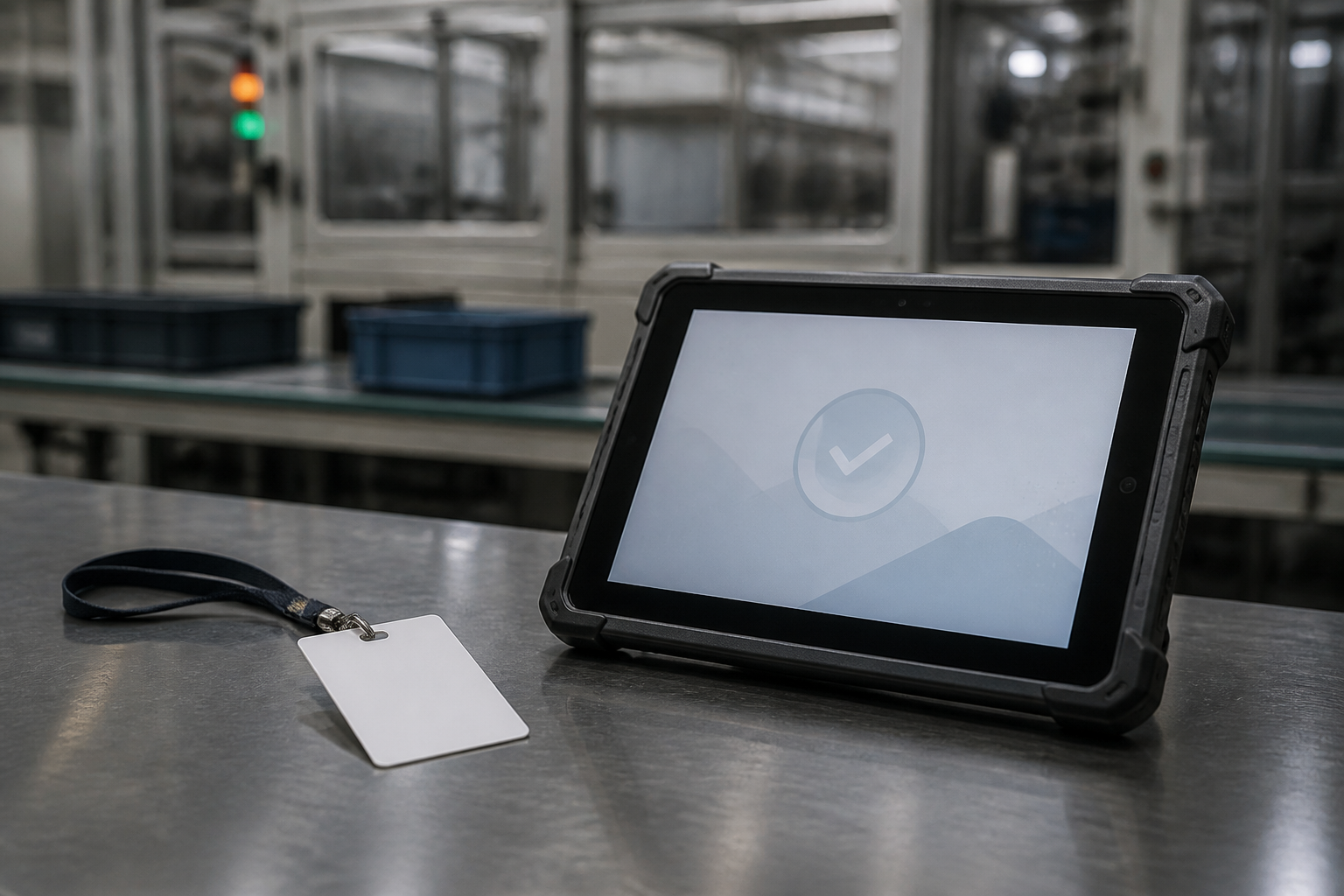
After electronic signatures go live, why are proxy signatures harder to detect?
During the paper inspection form era, proxy signing could still be detected through handwriting and timestamps. With electronic records, the display shows name, time, and 'confirmed,' making managers more likely to trust that a signature in the system means it was done by the individual.
Electronic signatures replace handwriting with identity credentials but do not automatically address account sharing, persistent login, password sharing, or retroactive signing. The cleaner the interface, the stronger the false sense of correctness.
The value of a signature is to link the action to a specific person
The U.S. Electronic Records Rule requires each electronic signature to belong to one individual and prohibits reuse or reallocation. Organizations must also verify personal identity before establishing a signature. It applies to specific regulated scenarios, while general factories can adopt the logic of responsibility binding.
Another requirement states that non-biometric signatures must use at least two different identification components and can only be used by the true holder. The focus is not on re-entering a password but ensuring that 'who did what confirmation on which record' cannot be easily transferred.
If a team shares an account or a supervisor asks a clerk to sign retroactively, the system only records the account action, which cannot reliably indicate that the individual viewed the shop floor and took responsibility for the judgment.
Proxy signing is usually not a matter of personal morality
Medium-sized growing factories are most prone to this contradiction: signature responsibility is delegated to positions, but actual approval authority remains concentrated among a few supervisors. When people are not shop-floor, work orders still need to proceed, making proxy signing the default method to maintain delivery.
Executives are willing to sign on behalf of others because refusal is seen as delaying work; managers tolerate it due to excessive pending tasks; system administrators keep generic accounts to ensure operations can continue during night shifts if issues arise. Everyone is addressing immediate problems, diluting the responsibility chain.
If management only issues a directive prohibiting proxy signing without adjusting authorization scopes, proxy rules, or response time limits, the shared passwords will be hidden more deeply on the shop floor. Technical controls must be designed alongside real permissions.
Examine four signals first, then discuss system compliance
The first signal is whether the same account signs from impossible locations or consecutively within an extremely short time frame. The second is whether signing times consistently cluster around shift changes, clearly separating from actual operational hours.
The third signal is whether a large number of records are consistently completed by a small group of managers. The fourth is whether accounts, though real-name, remain logged in for long periods, allowing anyone passing through the terminal to continue operations.
The FDA's electronic system Q&A emphasizes trust and reliability as key objectives for electronic records and signatures, citing strong login credentials combined with multi-factor authentication as identity verification methods. Tools can raise the threshold, but cannot replace shop-floor authorization design.
Three steps to bring signature back to real responsibility
The first step is to list high-risk signature records. Identity verification should answer 'who' through personal accounts, appropriate authentication, session timeout, and alerts for abnormal logins.
Second, clarify the meaning of the signature. Approval, review, execution, or witnessing cannot share ambiguous confirmation buttons. Before signing, key results, anomalies, and attachments should be displayed.
Third, verify the context of the signature. After signing, retain the time, subject, version, and audit trail. When modifications occur, preserve the original value, reason, and modifier.
When proxy signing is necessary, avoid using borrowed accounts. Establish authorized proxies with start and end times, clear scope, and traceable sources. High-risk approvals still require verification by the individual or a second party. Proxy signing is a visible institutional arrangement, not a hidden password sharing.
Small factories can start by eliminating generic accounts. Medium-sized factories should review the boundaries of approvals and proxy signing. Mature factories should also monitor abnormal signature patterns. Control strength can be tiered, but identity and responsibility must never be disconnected.
Randomly review ten high-risk signatures each month. Ask the signatory to recount what they saw, the anomalies, and their judgment at the time. If they cannot explain, even a complete green checkmark only indicates the process was clicked through.
Management should focus not on the coverage of electronic signatures, but on the number of shared accounts, the proportion of after-the-fact signatures, abnormal logins, proxy usage, and the number of times signatures are overturned afterward. These signals reveal whether the accountability chain is trustworthy.
I am Huang Chaoxing, inventor of the TreeMES stack-light MES system, and I focus on analyzing shop-floor management and digitalization trends in manufacturing.
