
Shift Handover without ‘No Problems’: Use These Four Fields
Shift handover without 'no problems': Use these four fields
Shift Handover without 'No Problems': Use These Four Fields
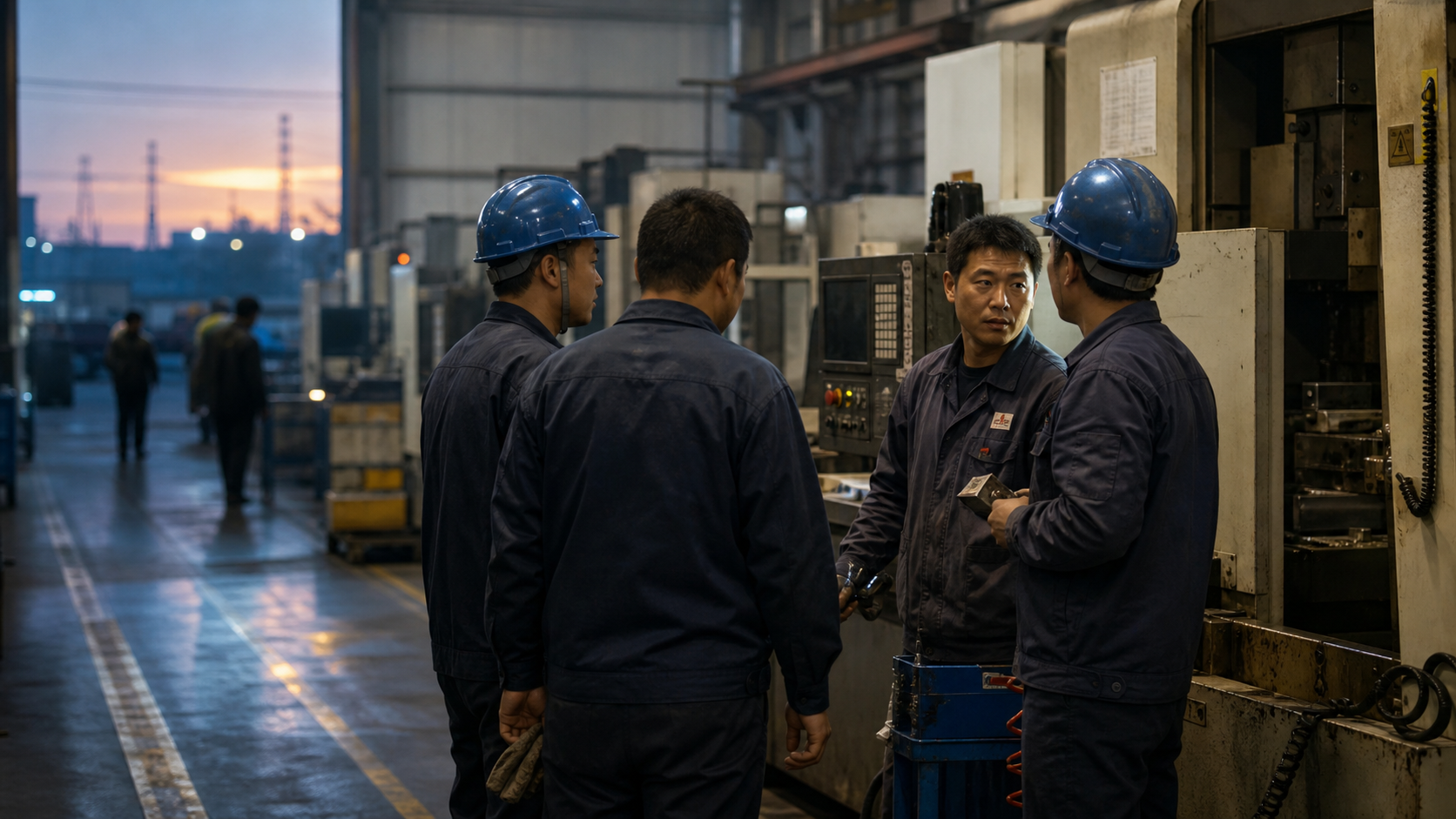
Before the night shift ends, the equipment has just resumed operation, temporary parameters have not been verified, a batch of products awaits quality retesting, and the protective cover left by the maintenance team has not been fully reset. During the morning shift handover, only the phrase 'the machine has been started' is heard, and ten minutes later, production proceeds at the normal pace. When dimensional fluctuations reoccur, all parties claim they believed the previous shift had already addressed the issue.
The biggest risk in shift handover is not missing a form, but treating 'already said' as 'the other party has understood and taken over.' Effective handover should clearly communicate the unfinished work, abnormal conditions, temporary measures, and next actions, with the incoming shift confirming by repeating the information.
For factory owners, shift handover is not about assigning more responsibility, but aligning authority and accountability. When more work means more mistakes and less work means fewer mistakes, the outgoing shift may say 'it's not my responsibility,' and the incoming shift is reluctant to take ownership. Without clear rules for transfer, escalation, handling, and closure, the safest way for both parties is to minimize documentation.
1. What Should I Say First? It’s Not Over Yet
Do not just write 'equipment has been repaired.' Instead, specify the progress of the repair, which protective measures have not been restored, how many test runs have been completed, and who still needs to sign off. Any cross-shift work should retain its current status to prevent the incoming shift from inferring the shop-floor situation from the final conclusion.
The 'unfinished work' section should at least include the object, completion percentage, remaining actions, and prohibitions. For example, 'main spindle sensor has been replaced, continuous operation for two hours pending verification, verification before the first-off inspection must be intensified' is more informative than 'equipment is normal.'
2. Where Are the Risks? Let the Successor Know
Abnormalities should not only record equipment failures but also include affected orders, batches, workstations, and time frames. Quality pending, material substitution, parameter drift, equipment bypass, and staff shortages are all abnormal conditions that must be communicated.
Teams can establish that high-risk abnormalities must be handed over face-to-face, while routine matters can be confirmed during pre-shift meetings. The handover form should not be overly long; the focus should be on placing the most likely misjudgments for the incoming shift at the forefront.
3. Validity Period and Expiry Conditions
On the shop floor, common temporary measures include additional testing, reduced speed, manual confirmation, and temporary material substitution to maintain production. Without time limits, these measures can easily evolve from emergency solutions into new default standards.
Each temporary measure must specify who approved it, which batch or time point it applies to, and under what conditions it must be stopped. If the incoming shift only sees 'already resolved,' they may mistakenly treat ongoing monitoring measures as permanent solutions.
4. What’s the Next Action? Hand Over Responsibility, Not Just News
The last column should only include three items: who is taking over, what must be done before a certain time, and where to confirm after completion. Without the name of the incoming shift and feedback time, the handover is merely information transfer, and the work remains without an owner.
The incoming shift should restate key issues and confirm the status of equipment, materials, and work-in-progress shop-floor or in the system. Verbal communication can provide context, while written records establish accountability, and neither should replace the other.
5. Start with Three Types of High-Risk Handovers
The first category is cross-shift maintenance, the second is quality pending decision, and the third is temporary parameters or substitute materials. Conduct random checks for one week to determine if repeated confirmation, missed actions, or responsibility disputes occur after handover, then decide whether to expand the fields.
Turn the four columns into a checklist: first check unfinished work, second verify anomalies and temporary measures, third confirm next action, responsible person, and feedback fields; then review any missed items after the shift.
Small factories can use a whiteboard, medium-sized factories can embed the four columns into team records, and large factories should avoid redundant entries across multiple systems. The handover logic remains the same regardless of the tool: preparation, two-way communication, and incoming shift verification. Missing any step means the process is incomplete.
What owners truly care about is not how many people sign daily, but whether unfinished tasks remain clearly defined in status, boundaries, and responsibility after shift changes. As long as the four columns are clearly communicated, the early shift does not need to guess what the night shift left behind.
I am Huang Chaoxing, inventor of the TreeMES stack-light MES system. Follow me for more practical factory-management methods.