Training Signed Off—Why Do New Operators Still Need Constant Supervision?
Training Signed Off—Why Do New Operators Still Need Constant Supervision? Despite the training form being signed off in the afternoon before shift change, with records for equipment, safety, and quality, the new operator was unable to independently start the machine when asked by the team leader. He did not know which parameter group needed reconfirmation after changing the product specification, nor could he clearly explain which actions he could take after an alarm. The experienced technician had to remain by his side, causing the production schedule to be delayed.
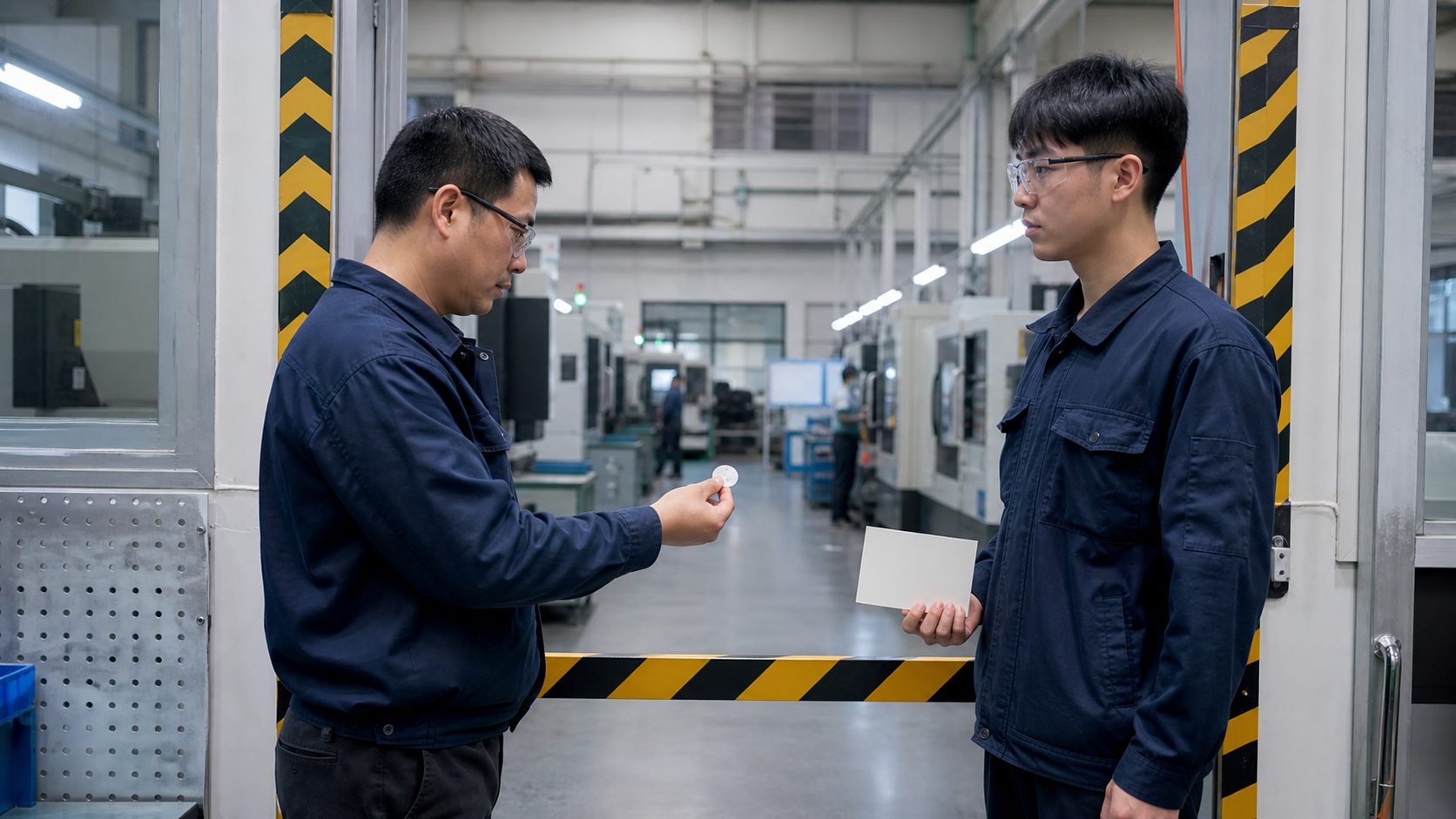
Before the afternoon shift change, a new employee's training form had been signed off, with records in equipment, safety, and quality sections. When the team leader asked him to operate the machine independently, he didn't know which parameter group to reconfirm after changing the specification, nor could he explain which actions he could take after an alarm. The experienced technician had to remain by his side, forcing the production schedule to be delayed.
Complete training records do not mean supervisors can confidently let a new operator work independently. The issue is usually not a lack of care. Many factories reduce having heard an explanation, watched a demonstration, and demonstrated competence to the same checkbox. A signature only proves that training occurred; independent authorization also requires the operator to identify risks, perform the task, handle deviations, and ask for help in real work.
For the owner, this is not a minor issue for the training department. A position that long relies on the experienced technician's supervision will simultaneously occupy two people; when deadlines are tight, the shop floor may skip the practice phase. What needs to be improved is not a new form, but the clear boundaries from learning, practice, verification to authorization.
In reality, the master does more, the more mistakes; the fewer, the fewer mistakes. The safest self-protection is to continue doing the work. The team leader fears taking responsibility and will say 'it's not my responsibility,' unwilling to accept the task. As a result, the gap remains untransferred, escalated, addressed, and closed.
1. Distinguishing Between 'Understanding' and 'Being Able to Do'
Classroom explanations solve the knowledge of rules, shop-floor demonstrations solve the visibility of actions, and independent operation verifies whether the task can be completed stably. These three cannot be replaced by the same signature.
Take changing specifications as an example. The new employee must not only repeat the steps but also locate the correct process on the designated equipment, verify the materials and tooling, complete the first-off inspection, and explain the stop conditions when deviations occur. Only when both the result and judgment are correct is the task considered passed.
2. Breaking the Position into Verifiable Tasks
The phrase 'equipment training completed' is too vague, making it impossible to assess what the operator can actually do on the shop floor. Break down the position into specific tasks such as normal start-up and shutdown, changeover, first-off inspection, common alarms, abnormal reporting, and cleaning. Record and verify the date, equipment scope, and validity status for each task.
3. Let Senior Technicians Verify Results, Not Complete the Work for Newcomers
Experienced technicians are most likely to take over directly under time pressure, resulting in new operators watching many times but still failing to complete tasks independently. During training, allow the new operator to operate first, then have the experienced technician observe key points and only intervene when safety, quality, or equipment risks are encountered.
The verifier should document specific gaps, such as missed safety checks, incorrect parameter selection, or failure to report abnormalities, rather than simply writing 'not yet proficient.' Once gaps are clearly identified, targeted retraining can be conducted without repeating the entire course.
4. Reconfirmation After Changes in Equipment, Process, or Tasks
Being able to operate one machine does not mean the operator can directly take over another model. Similarly, being able to handle regular orders does not guarantee the ability to manage new materials or special processes. When equipment, processes, materials, or work organization change, the original authorization must be reassessed for continued applicability.
5. Factory Owner Randomly Checks the Shop Floor After Signing Once a Week
Randomly select a new employee and a task, and ask four questions: Can they complete it independently? Who conducted the shop-floor verification? What situations require stopping? Is re-verification needed when switching equipment? If any of these questions remain unanswered, the training loop remains incomplete on paper.
Factory owners can use a checklist to review: First, verify the authorization boundaries; second, check the shop-floor results; third, confirm the gap fields, responsibilities, benefits, and next verification date.
Small factories can begin with two or three critical tasks. Medium-sized factories should connect authorization status to shift scheduling. Large or mature factories should avoid accumulating certificates while task boundaries remain unclear. Regardless of tool complexity, shop-floor performance should determine whether an operator is authorized to work independently.
Not all positions require the same level of detail in certification; some factories start with high-risk equipment and critical quality processes, which actually makes it easier to establish a solid system.
The true completion of training is when employees can consistently complete tasks within clear boundaries and know when to stop and who to ask for help when encountering situations beyond their capability. Only then can experienced technicians feel confident in letting go.
I am Huang Chaoxing, inventor of the TreeMES stack-light MES system. Follow me for in-depth insights into the management logic behind frontline stories in manufacturing.