
Can a Fixture Run after Changeover? Check ID, Machine Model, Condition and Service Life
Can a Fixture Run after Changeover? Check ID, Machine Model, Condition and Service Life
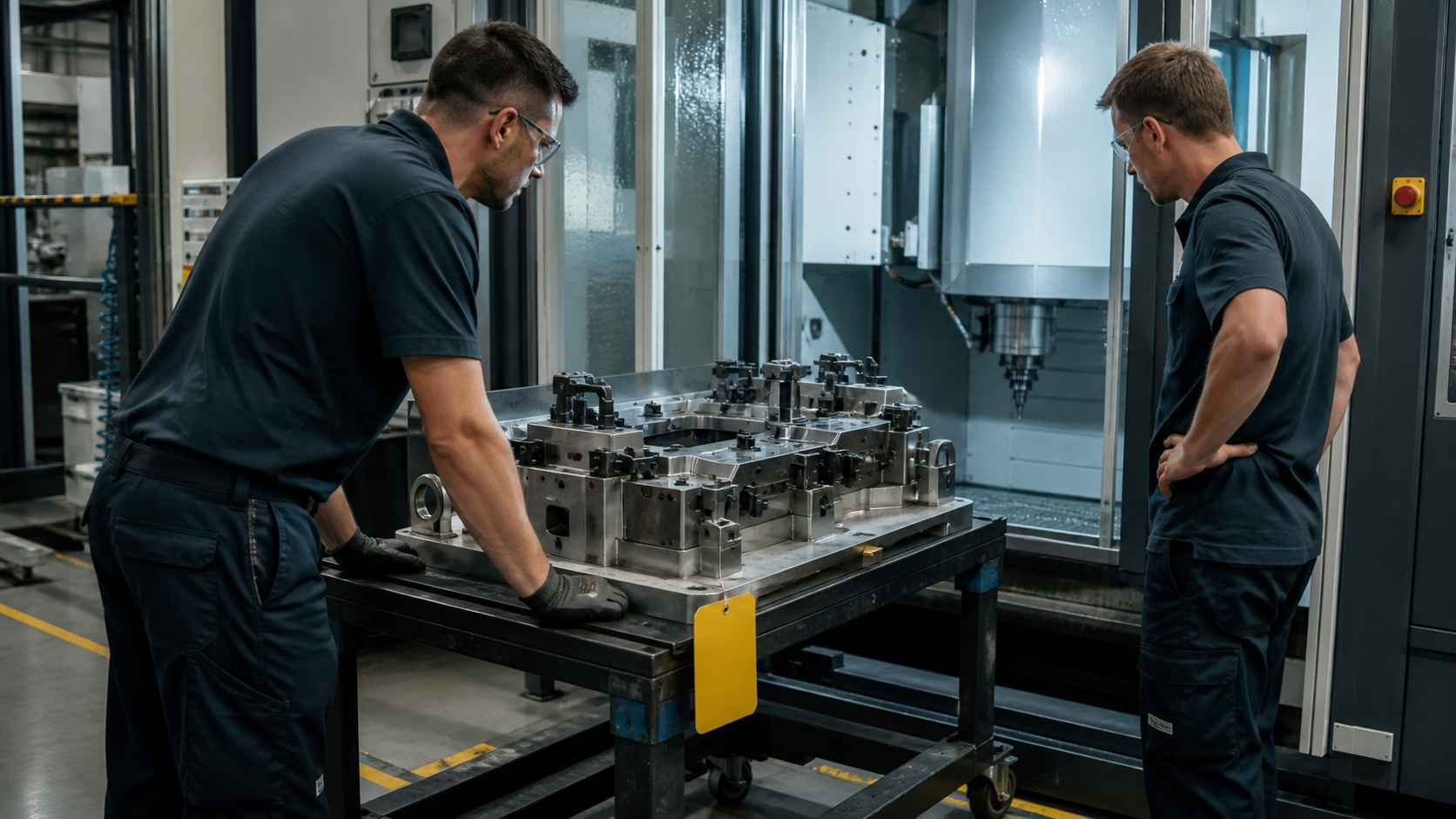
With only twenty minutes left for changeover, the technician removes a set of fixtures from the fixture rack. The appearance is almost identical to the previous set. The barcode can be scanned, and the bolts can be installed, so the team prepares to start the machine. The real risks often lie after it appears to be usable: different applicable machine models, incomplete maintenance status, or the service life has reached its limit.
This method is suitable for medium-sized growing factories with a variety of products and small batch sizes. Factory owners do not need to add a long table; they only need to require that before a fixture is used on the machine, the technician checks and confirms the ID, machine model, condition, and service life. If any of these items are unclear, the fixture should be isolated first.
Step 1: The number must refer to a unique object
First, confirm that the shop-floor label, system inventory, and issuance records match the same ID. Simply recording 'a fixture for a certain product' is insufficient, as the same model may have multiple sets, and their maintenance, wear, and modification history may differ.
The ID should also be traceable to the current storage location and the latest usage work order. If the physical fixture has no label, the label is reapplied, or one ID corresponds to two physical fixtures, stop the issuance immediately. This is not a clerical error, but it means that all subsequent status judgments lose their reference.
Step 2: The model must align with both the product and the equipment
A fixture being able to be installed on the equipment does not mean it is suitable for the current product. Verify the applicable product, equipment model, key interfaces, and current process version, especially paying attention to any added locating pins, sensors, and error-proofing structures after modifications.
The changeover supervisor should input the target machine and product into the issuance conditions upon task assignment. The warehouse issues based on these conditions, and the team leader verifies shop-floor. The team leader has isolation authority and is responsible for machine startup verification; the warehouse and specialized positions must clearly define their coordination boundaries.
Step 3: The status must be available and released
The status should at least distinguish between available, pending inspection, under repair, scrapped, and isolated. Completion of repair does not automatically mean the fixture is available; it must have an inspector, inspection time, and release conclusion. Temporary repairs should clearly state the risks, allowable scope, and termination conditions, and should not place the responsibility solely on the person who accepts the order.
When involving disassembly, adjustment, or testing, the requirements for controlling hazardous energy on the equipment must be followed. Clear away tools and materials, have personnel exit the hazardous area, and perform testing according to procedures. After testing, re-isolate and restore protection; do not use production progress to replace safety steps.
Step 4: The lifespan depends on whether it can last through this run
Do not only check if the life has reached zero; calculate whether the remaining cycles can cover the current job order and leave room for first-off adjustment and abnormal rework. Life management can be based on cycles, production volume, or time, and the same metric definition must be provided at the time of issuance.
If the remaining life is insufficient, choose to replace, reduce the job order, or schedule an intermediate replacement, and prepare spare parts in advance. It is most undesirable to first put the fixture into operation and then observe, as mid-cycle failure can combine downtime, quality, and traceability issues.
Turn four columns into three ledgers
The first book is the asset ledger, managing unique numbering, machine type, and location; the second is the status ledger, managing inspection, repair, isolation, and release; the third is the usage ledger, managing job orders, machine-on time, usage cycles, and machine-off results. The three ledgers are linked through the same numbering.
Before starting the shift, the team needs a clear conclusion: if all four columns are passed, the fixture is allowed to be used; if any column is not passed, it should point to the responsible person. Professional positions should accept the order, transfer or escalate when necessary, verify and close the issue, then the team rechecks.
Not all factories need to establish three accounts at once. The factory owner can forward this checklist to the plant manager and shift leader. They can first test one high-frequency fixture for a week, then review issues such as wrong pickup, misuse of pending inspection, and insufficient service life.
The goal of fixture management is not to make records thicker, but to answer four questions before starting the machine: whether the correct set is being used, whether it is suitable for this machine, whether it is officially released, and whether the remaining service life can complete this order. Once these are clarified, the first-off inspection can have a reliable starting point.
I am Huang Chaoxing, inventor of the TreeMES stack-light MES system. Follow me for more practical factory-management methods.
