
Higher Automation, Longer Downtime from Small Failures: Why?
Higher Automation, Longer Downtime from Small Failures: Why?
Why does a glitch cause longer downtime as automation increases?
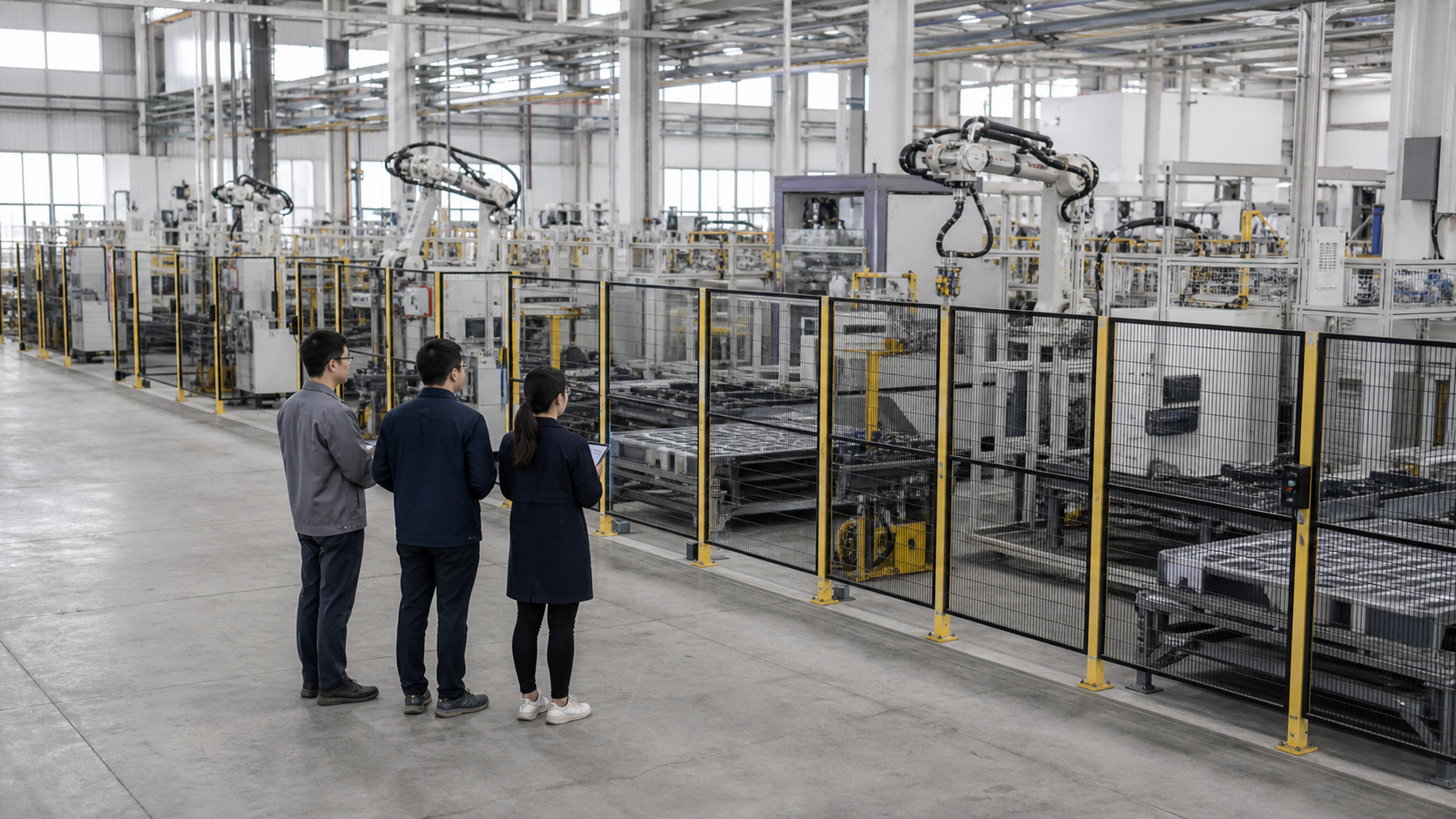
An automated production line typically requires only two operators, with stable cycle times and real-time data. One day, a barcode reading station went offline, the mechanical arm was undamaged, and there were no product quality issues, yet the entire line was halted for three hours. Everyone knew how to operate the system, but no one dared to confirm where to safely resume.
This contrast is increasingly common in many factories. Automation has reduced repetitive tasks and connected equipment, networks, data, and control logic into a longer dependency chain. Efficiency has improved, but recovery capabilities may not have kept pace.
Why do small faults become magnified?
When a manual workstation fails, the team knows how to isolate the equipment and transfer materials. However, an automated line links barcode reading, recipes, robots, conveyance, inspection, and production reporting through interlocks. A missing signal causes subsequent steps to wait.
After a stoppage, equipment personnel check the actions, IT personnel check the interfaces, and quality personnel worry about repeated processing. With different permissions, responsibilities, and risks, if there is no shared boundary or coordination rules, confirmation time can be longer than repair time.
More challenging are intermediate states: a pallet has entered the station but the program is incomplete; products have been processed but the system has not reported them; the barcode was read successfully, but the recipe was not sent. A direct reset may cause repeated actions, while clearing everything would result in the loss of conforming in-process goods.
Automation projects cannot just accept normal beats
Many projects focus on capacity, cycle time, and continuous operation during acceptance, rarely proactively creating faults to test recovery. The result is detailed normal procedures but only one sentence, 'Contact the supplier,' when an anomaly occurs. The first step should be to list the anomaly scenarios.
True acceptance must cover scenarios such as network disconnection, power failure, sensor malfunction, reading failure, data timeout, and manual emergency stop. For each scenario, the system must answer: where is the system stopped, which actions are locked, what is the current product status, and who has the authority to proceed.
Recovery procedures must be tested through shop-floor drills. The existence of backup files does not guarantee recovery; the availability of manual mode does not mean employees know when to use it. An untested plan is merely a sense of security on paper.
Define safe landing points for each key node
The so-called safe landing point is a state in which equipment, products, and data can be confirmed to be consistent after a fault occurs. For example, when the robotic arm returns to the waiting position, the pallet stops at the unique identification position, the current process is not counted repeatedly, and the quality status remains frozen.
Each critical node should record entry conditions, allowed operations, and exit verification. Recovery personnel first bring the system to the nearest safe state, then sequentially restore interfaces, equipment, and production tasks, rather than repeatedly pressing reset at random.
Break down the average time to repair
A line stop can be divided into six stages: discovery, isolation, diagnosis, repair, recovery, and verification. If genuine part replacement takes only fifteen minutes, but recovery takes two hours, adding more spare parts will not solve the problem.
In reality, production fears line stops and responsibility, equipment fears premature reset, information systems are reluctant to make business judgments, and quality will not unconditionally cooperate. Without mechanisms for order acceptance, handover, escalation, and closure, doing more can lead to more errors, prompting each position to choose self-protection.
Management should identify which segment of the process is waiting the longest: unapproved permissions, misaligned cross-system statuses, slow remote connections from suppliers, or missing quality verification after recovery. Only by identifying the longest wait can investments be placed on the real bottleneck.
Efficiency and resilience should be designed together
Manufacturing resilience is not about preventing equipment failures indefinitely, but knowing how to maintain safety, minimize impact, and restore operations quickly when disruptions occur. Monitoring and prediction can detect risks in advance, but they cannot replace clear response responsibilities and recovery procedures.
Not all factories need to immediately overhaul their entire production line. This retrospective approach is suitable for mid-sized growing factories with established divisions and reliance on suppliers. Factory owners can forward the steps to plant managers, shop floor supervisors, and team leaders, and conduct a fault site verification during one incident.
The maturity of automation is not only reflected in fewer people needed during normal operations, but also in the ability to handle anomalies without relying on a single experienced technician or supplier. As systems become more interconnected, safety checkpoints, recovery sequences, and verification evidence must be clearly designed in advance.
I am Huang Chaoxing, inventor of the TreeMES stack-light MES system. Follow me for ongoing analysis of shop-floor management and digital transformation trends in manufacturing.
