
Every Inspection Box Says Normal—Why Did the Machine Stop? Check Standard, Reading, Trend and Action
Every inspection box indicates normal—why did the machine stop? Check standard, reading, trend, and action.
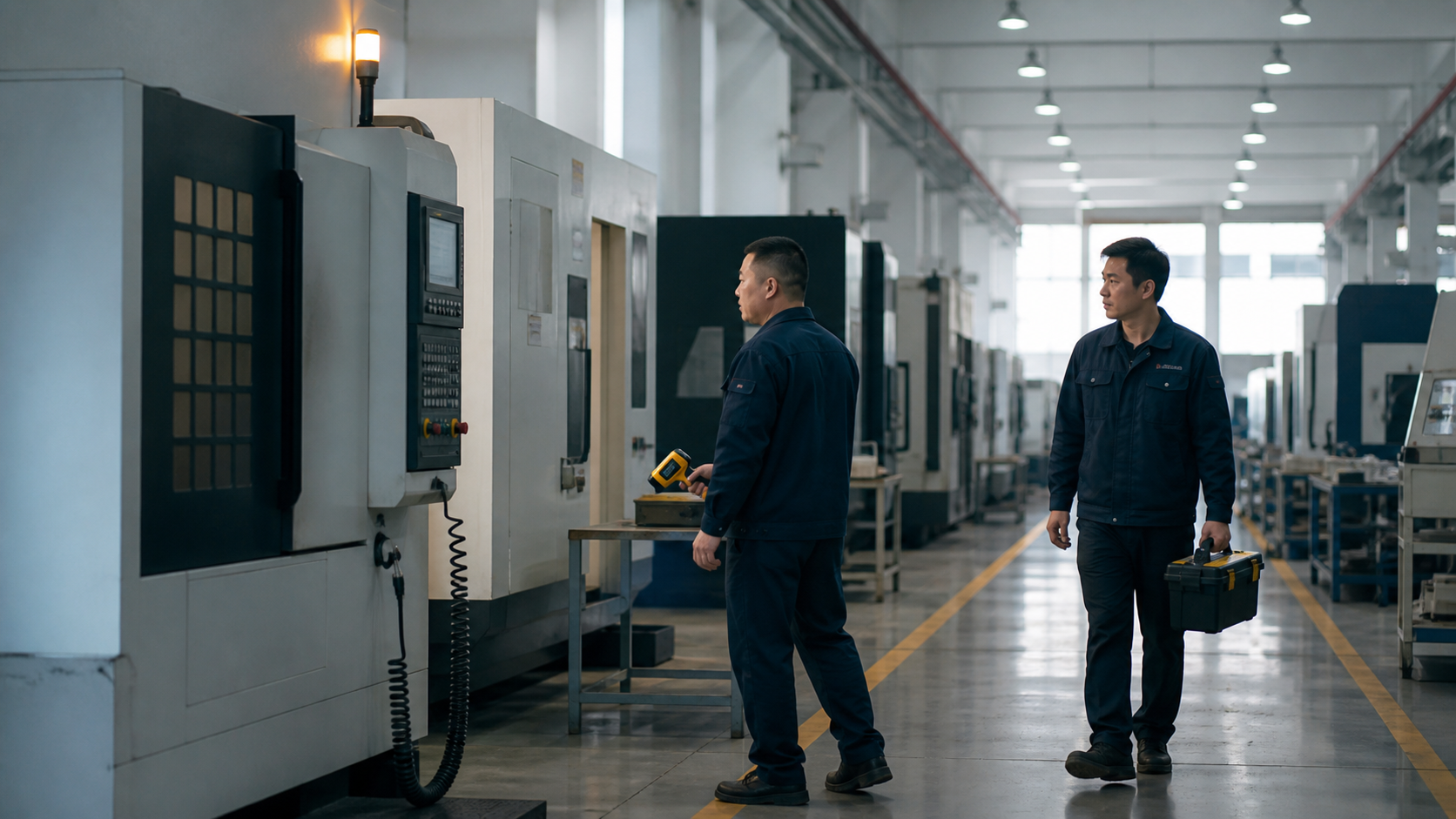
The early shift inspection was just completed, with all items checked off. Less than two hours later, the spindle temperature alarm triggered, causing the entire line to stop for maintenance. The team claimed there were no abnormalities in the morning, but maintenance found upon reviewing the records that the temperature had been rising continuously for three days, though it never exceeded the upper limit each time.
This approach is suitable for medium-sized factories with a large number of machines and limited dedicated maintenance resources. Inspection is not about proving that employees have been shop-floor, but using comparable information to determine whether the equipment can stably complete the next production segment.
Column 1: Standards should be written as judgeable boundaries
‘Normal sound, normal temperature, normal lubrication’ may seem simple, but in reality, it fully relies on individual experience for judgment. A different team or a different employee may give different conclusions for the same machine.
Each item should at least specify the inspection location, method, allowable range, and abnormal level. For items requiring instrument measurement, do not use ‘normal’ instead of numerical values; for those requiring listening and observation, provide reference conditions and typical abnormal phenomena.
Standards should also correspond to current operating conditions. Equipment temperature and vibration differ under no-load, full-load, and different speed conditions. Discussing a unified upper limit without considering products, speed, and load can easily misreport normal fluctuations and miss degradation under specific operating conditions.
Column 2: Measured values should retain original results
Checklists are marked but trends are erased. Temperature rose from 42°C to 58°C, although both values are below the 60°C upper limit, the change itself warrants investigation.
Key parameters should retain numerical values, units, timestamps, and measuring tools. Automatically collected data must correspond to specific equipment and measurement points; manual measurements should avoid reusing data from the previous shift. Missing data, faulty instruments, and actual zero values must be distinguished.
For items that cannot be quantified temporarily, abnormal characteristics should still be recorded, such as where unusual noise occurs during a specific action, where oil traces appear at an interface, or where looseness happens in a particular direction. The more specific the description, the easier it is for maintenance to reproduce the issue.
Column 3: Trends depend on the rate of change
Single exceedances are suitable for alarms, while slow degradation requires trend analysis. By comparing the latest seven readings or the most recent production cycle, one can observe mean values, fluctuations, and rate of change to detect situations where values have not exceeded limits but are approaching them.
Trend analysis should also consider maintenance activities and changeovers. After replacing bearings, tools, or lubricants, the baseline may change; restarting after prolonged downtime should not be directly combined with continuous production data.
Start with three to five key measurement points rather than plotting all data as curves. Prioritize parameters with significant impact on faults, stable measurements, and existing historical records, allowing trends to effectively support maintenance planning.
Column 4: Disposition must point to the next action
After identifying an anomaly, merely noting 'maintenance notified' does not close the inspection loop. Records should clearly specify whether to continue monitoring, operate at reduced load, schedule a shutdown, or stop immediately, along with the responsible person, deadline, and verification conditions.
Yellow light items should have a re-measurement time, and red light items should block startup. After maintenance, re-measure to confirm values return to allowable ranges. Trial operation and first-off inspection may be required if necessary. Without verification results, the status cannot be directly changed back to normal.
Weekly review and shop-floor verification
Management should conduct weekly spot checks on four categories: unclear standards, missing measurements, deteriorating trends not escalated, and overdue actions not verified.
Not all factories need to implement all equipment changes simultaneously. This checklist is suitable for mid-sized growing factories with incomplete authorization. Factory owners can forward it to plant managers, shop floor supervisors, and team leaders, and test it on one key piece of equipment for one week.
Equipment supervisors should have diagnostic authority and bear responsibility for conclusions. After a team accepts a task, it can be transferred to a specialist. If an anomaly is overdue, it should be escalated. The inspection can only be closed after verification is complete. If boundaries and coordination conditions are unclear, employees may fear line stoppage and responsibility, leading to more work and more errors, making inspections prone to just checking boxes.
The value of inspections lies not in filling pages with checkmarks, but in leaving actionable signals before a failure occurs. Connecting standards, measurements, trends, and actions enables maintenance to transition from reactive repairs to planned, evidence-based maintenance.
I am Huang Chaoxing, inventor of the TreeMES stack-light MES system. Follow me for more practical factory-management methods.
