AI Now Helps Make Shop-Floor Decisions—Why Accountability Must Be Explicit
AI Now Helps Make Shop-Floor Decisions—Why Accountability Must Be Explicit
Why Exception Responsibilities Must Be Explicit After AI Takes Over Shop-Floor Decisions
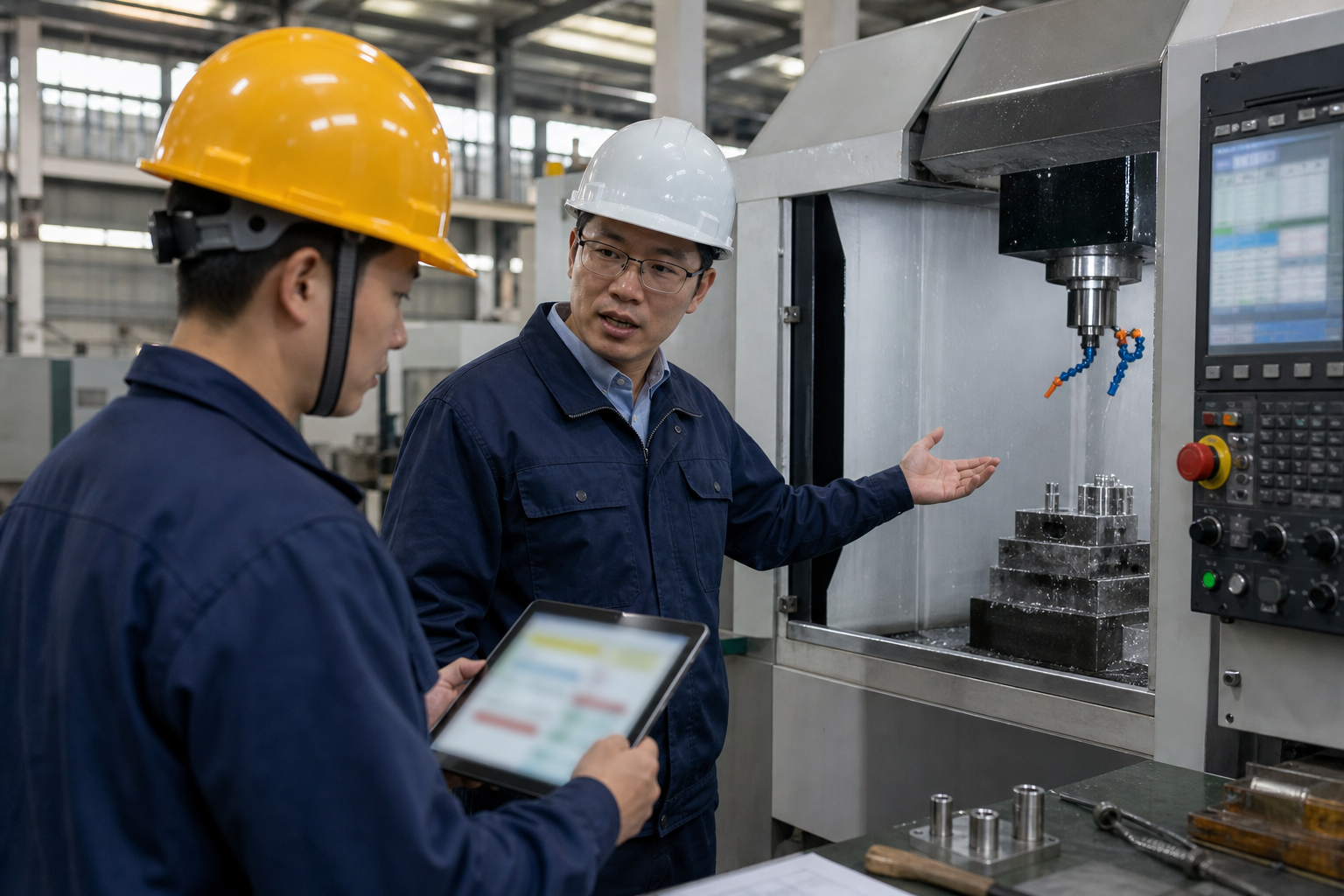
In the past, experienced technicians decided whether to stop machines after equipment alarms. Now, systems provide risk levels, cause rankings, and even direct production recommendations. While management sees faster responses, frontline workers may face another issue: if AI recommendations lead to deviations, who is accountable?
Many factories treat AI deployment as a functional delivery: model performance, interface connectivity, and usable pages mark project completion. However, once AI enters production scheduling, quality control, and maintenance decisions, technical issues become management issues, as recommendations alter human actions and risk exposure.
AI Will Not Automatically Take Over Job Responsibilities
Systems can calculate and suggest, but they cannot hold organizational authority. Whether operators can override recommendations, whether team leaders can halt production, how long specialized roles respond, and how much misjudgment cost management accepts—none of these are determined by model parameters.
Without clear boundaries, frontline workers may adopt two self-protective approaches: either mechanically follow system instructions and blame the algorithm after incidents, or completely bypass the system and continue relying on familiar confirmations. The former hides responsibility in code, while the latter turns investment into costly decoration.
Define the Four Roles First
The first type is the recommendation provider, responsible for explaining which shop-floor signals the AI uses, its scope of application, and current confidence boundaries. It can be a system, but must also have corresponding product or data owners to maintain rules.
The second type is the shop-floor decision-maker, responsible for accepting, rejecting, or escalating recommendations based on specific conditions. The decision page should show key evidence, not just red, yellow, or green conclusions; it should also allow users to leave rejection reasons.
The third type is a professional reviewer responsible for handling quality, equipment, or process judgments that exceed shop-floor authority. The system should clearly define response timeframes and alternative paths, and should not leave all anomalies in an unattended to-do box.
The fourth type is the risk owner, typically a manager responsible for delivery, quality, cost, or safety outcomes. They must determine which scenarios allow for automatic execution, which require manual confirmation, and which must be paused for verification regardless of workload.
Record "Why," Not Just "What You Clicked"
Many systems only retain accept or reject buttons without preserving the original input, model version, suggested content, and human rationale. Even with complete records, it remains unclear whether the issue stemmed from data distortion, model boundaries, shop-floor changes, or permission design flaws.
A minimal traceability chain can consist of five elements: input snapshot, suggestion and version, final decision, decision-maker, and subsequent results. When deviations occur, data, rules, or permissions should be adjusted based on this chain, not attributing the problem solely to "staff not following the system."
Measurement Standards Must Also Change
AI projects should not focus solely on adoption rates. High rates may indicate frontline reluctance to reject suggestions, while low rates may suggest recommendations are disconnected from the shop floor. It is also important to examine out-of-bound suggestions, manual rejection reasons, escalation closures, and similar deviations.
Factory owners can start by testing a low-risk scenario, such as maintenance work order priority suggestions. The first step is to clearly define the suggestion, decision, review, and risk owner. The second step is to establish records of input, version, decision, responsible person, and results. The third step is to review manual rejections and abnormal closures weekly.
This governance model is more suitable for mid-sized growing factories that already have basic roles defined. Small, loosely structured factories can reduce the number of roles but cannot allow system recommendations without clear accountability; large or mature factories must prevent responsibilities from being divided too finely, leading to delays and no one taking ownership.
In practice, operators fear being held responsible for rejecting system suggestions, while team leaders may choose to do less to avoid mistakes, and specialized roles may view escalation as an extra burden. Management must define authority boundaries, response deadlines, and closure mechanisms, ensuring that those who raise concerns gain benefits and risks are visible in a timely manner.
As AI becomes more integrated into the shop floor, responsibility must remain clear. True reliable intelligence is not about handing judgment over to a score, but ensuring that machine suggestions, human authority, and management responsibility align on the same evidence chain.
I am Huang Chaoxing, the inventor of the TreeMES stack-light MES system. Follow me for ongoing analysis of shop-floor management and digital transformation trends in manufacturing.