
Tightening Tool Passed—Why Was the Bolt Loose at the Customer?
At the last station of the assembly line, the electric torque wrench turned green, and the system recorded a qualified torque. Days later, during customer unpacking and installation, the bolt at the same location was found loose. Production confirmed the equipment was functioning properly, quality checked the qualified records, yet the delivery risk remained unresolved.
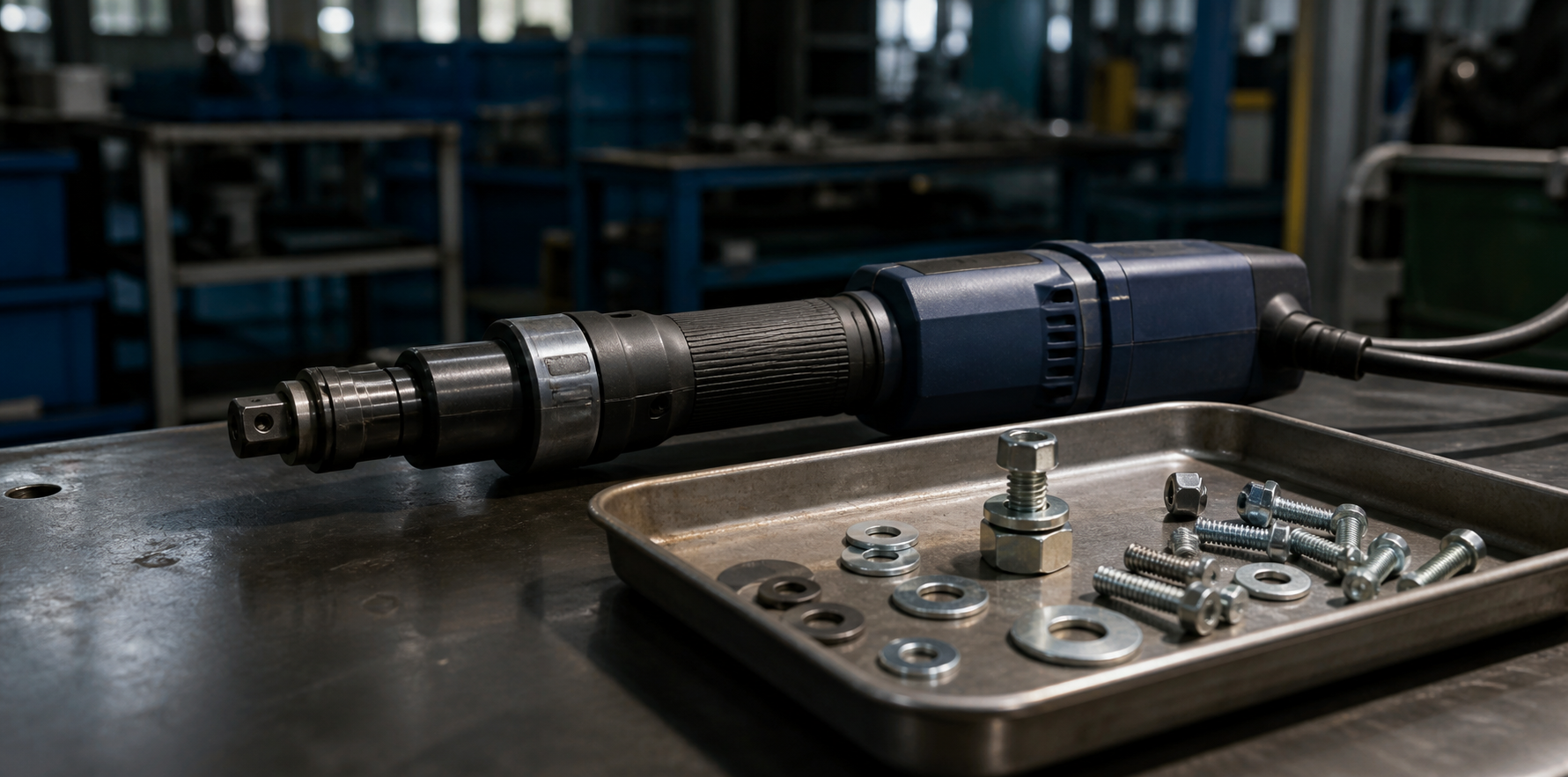
Why Was the Bolt Loose at the Customer If the Tightening Gun Was Certified?
At the last station of the final assembly line, the electric torque wrench turned green, and the system recorded a qualified torque. A few days later, during unboxing and installation testing, the customer found the bolt at the same location loose. Production confirmed the equipment was functioning properly, quality reviewed the qualified records, yet the delivery risk remained unresolved.
If you are a factory owner or quality manager, after reading this, you can trace the issue along four lines: the joint, the program, the tool, and responsibility, rather than solely pursuing accountability based on a single torque record.
The most common misjudgment in this scenario is equating 'the tool achieving the set torque' directly with 'the joint obtaining sufficient clamping force.' A green light indicates that one action met the program conditions, but it cannot independently confirm that the part is properly seated, the thread condition is correct, and the preload is accurate.
Green Light Records Input, Not All Results
NASA's fastener documentation distinguishes between applied torque and net torque. The input torque must first overcome friction and self-locking resistance from the thread and contact surfaces, with the remaining portion forming the axial load.
This means that when threads are oily, coatings change, there are chips in the hole, washers are installed incorrectly, or parts are not properly seated, the same displayed value may correspond to different clamping effects. Focusing only on the final number hides changes in assembly conditions behind a single green light.
NASA-related standards also indicate that the preload under torque control itself has a distribution. The factory should manage a validated process window, rather than blindly trusting an isolated number.
The Joint Wasn't Fully Seated, and Looseness Was Revealed on the Second Load
During assembly, if the wiring harness bracket is tilted or the seal is not properly compressed, the torque gun may complete its action prematurely. During transportation vibration or after the customer reassembles, the layers may realign, causing the original clamping force to decrease.
A Qualified Tool Must Be Proven Usable at the Time
NIST indicates that both excessive and insufficient torque can affect fastening safety, and torque tools require testing and calibration; in precision applications, tools should also be recalibrated after accidental drops.
A calibration certificate within its validity period only confirms that the tool has passed inspection at a certain point in time. On the production floor, it is also necessary to record shift inspections, bit wear, maintenance and replacement, drop incidents, and program call results. Using old capability conclusions after equipment component replacement can create gaps.
Turn One Tightening into a Four-Step Evidence Chain
First, identify the batch and surface condition of the bolt, nut, washer, and mating parts. Second, confirm the program, gun number, bit, and workstation version. Third, simultaneously assess anomalies in torque, angle, sequence, and re-tightening. Fourth, conduct random inspections of the connector status and trace the loosening results back to specific assembly records.
If an operator finds a connector not properly seated but can only take responsibility for rework, their most reasonable choice might be to continue tightening until the green light. The team leader should have the authority to stop the line and isolate the issue. The process engineer is responsible for determining the inspection window, quality for release, and equipment for tool capability. Responsibilities should not be assigned to a single person.
the factory owner should only ask three questions weekly: What has been verified beyond the green light, can anomalies be traced back to specific connectors, and does the person who found the issue have the authority to stop work. Doing so will transform the qualification record from a single screenshot into a traceable assembly evidence.
Not all standard bolts require full traceability, but risk levels should be categorized based on safety, functionality, customer complaints, and rework costs. Low-risk areas can be simplified, while high-risk areas must not be omitted.
Small, loosely managed factories can start by focusing on the top ten critical points. Growing mid-sized factories should clearly define handover rules for processes, quality, equipment, and production crews. Mature factories must also ensure system completeness while preventing unreviewed shop-floor conditions.
When the shop floor leads to more work leading to more errors, and discoverers have responsibility but no authority, the most practical self-protection is to not report. Abnormalities should be promptly transferred and escalated to the appropriate position for handling and closure.
Forward the four-step evidence chain to the plant manager, quality, and assembly supervisors. Each person should only confirm the part they are authorized to handle, and agree on who will escalate and when the issue will be closed if cross-departmental cooperation is lacking.
I am Huang Chaoxing, inventor of the TreeMES stack-light MES system. Follow me for insights into the management logic behind frontline stories in manufacturing.
